
Palm oil farmers urge Finance Minister to reconsider crude palm oil export levy increase
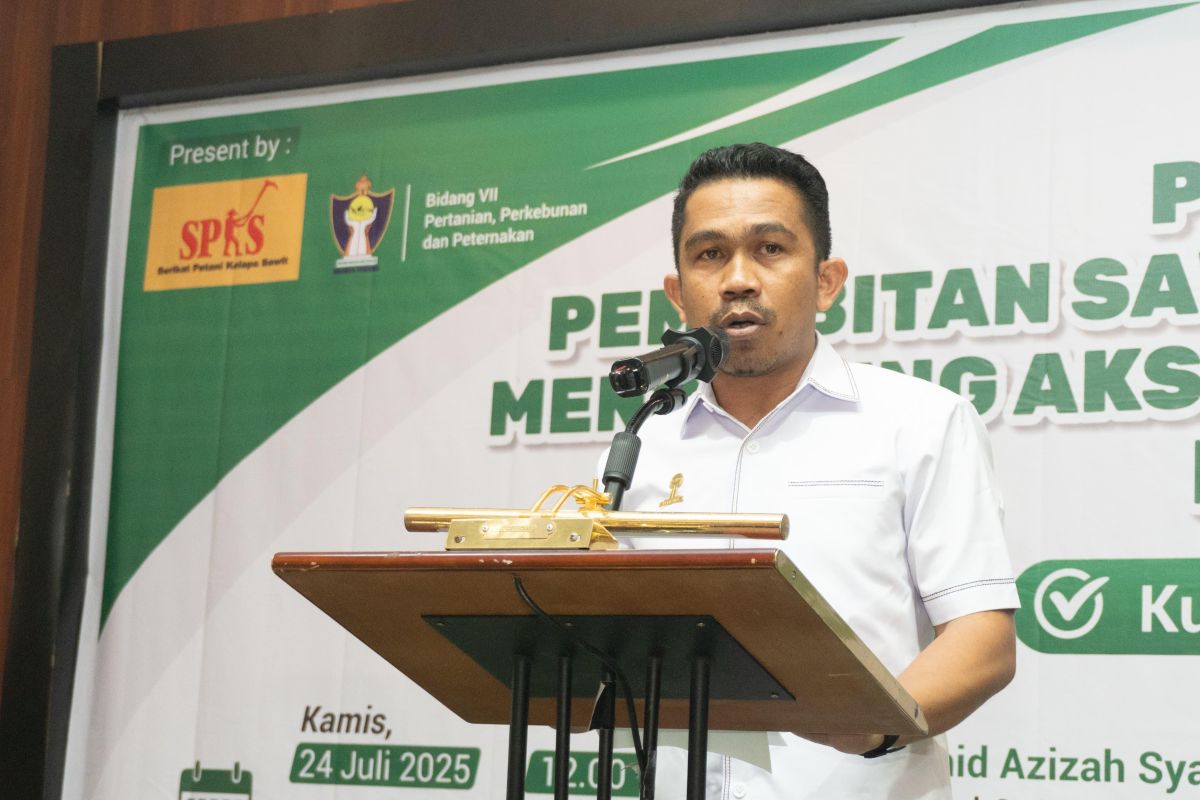
Jakarta — The Indonesian Palm Oil Farmers Association (SPKS) has formally called on Finance Minister Purbaya Yudhi Sadewa to reconsider the planned increase in crude palm oil (CPO) export levies to 12.5 per cent from the previous 10 per cent, citing severe hardship for smallholder palm oil farmers.
“We categorically reject and urge the cancellation of this levy increase policy,” said SPKS General Chairman Sabarudin in Jakarta on Sunday.
The CPO export levy increase, stipulated under Ministry of Finance Regulation Number 9 of 2026, was established by the government to support financing for the mandatory biodiesel blending programme expansion from B40 to B50.
According to Sabarudin, the policy would substantially depress fresh fruit bunch (TBS) prices at the farm gate. If the CPO export levy rises by 2.5 per cent to 12.5 per cent, fresh fruit bunch prices could fall by between Rp500 and Rp800 per kilogramme, he cautioned.
This price decline would significantly impact smallholder farmer incomes, particularly amid sluggish global economic conditions and rising production costs in the plantation sector.
SPKS argues that the levy increase merely compounds the burden already facing farmers struggling with higher input costs, including fertiliser price inflation and elevated operational expenses.
According to SPKS calculations, a nationwide fresh fruit bunch price decline of this magnitude would inflict estimated losses of Rp85 billion to Rp100 billion monthly on Indonesian palm oil farmers, equivalent to approximately Rp1.2 trillion annually.
Sabarudin contends that the policy disproportionately taxes farmers to finance biodiesel programmes. “We demand the government conduct comprehensive evaluation of mandatory biodiesel policy,” he said.
The initiative delivers minimal benefits to farmers but substantially enriches corporations operating in the biodiesel industry, he argued. Many large corporate-affiliated palm oil mills continue purchasing fresh fruit bunch through middlemen or brokers, meaning farmers receive prices 30-40 per cent below government-set rates.
“Ironically, many large corporate-affiliated mills still purchase fresh fruit bunch through intermediaries, causing farmers to sell at significantly reduced prices,” Sabarudin stated.
Sabarudin expressed frustration that smallholder farmers remain largely neglected by government support, particularly from the Ministry of Energy and Mineral Resources (ESDM) in biodiesel programme implementation.
According to Sabarudin, approximately 90 per cent of export levy revenue—between Rp40 trillion and Rp50 trillion annually—finances subsidies for large corporate biodiesel operators. Meanwhile, programmes directly benefiting smallholder farmers, such as the Smallholder Palm Oil Rejuvenation Programme (PSR) and plantation infrastructure assistance, remain severely underfunded.
“Most funds go to biodiesel subsidies for large corporations, whilst farmer programmes remain very limited,” he said.
SPKS estimates that biodiesel industry companies receive between Rp50 trillion and Rp60 trillion in subsidies, predominantly sourced from CPO export levy revenues.