
Palm Oil Entrepreneurs Concerned as Fertiliser Suddenly Becomes Scarce and Prices Rise: What's Behind It?
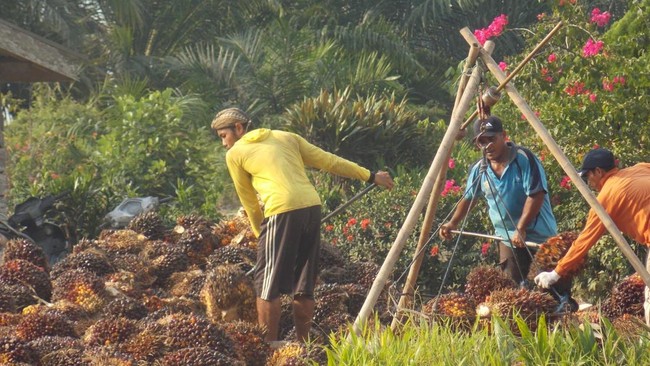
Rising production costs in palm oil plantations are beginning to impact industry players. Not only is pesticide projected to jump 20%–30%, but fertiliser prices have already started climbing and are reported to be increasingly difficult to locate in the market.
PT Saraswanti Anugerah Makmur President Director H. Yahya Taufik (fertiliser specialist) stated that fertiliser price increases have occurred since geopolitical tensions escalated.
“Prices have started rising. They’ve gone up, and stocks have disappeared as well,” Yahya told CNBC Indonesia during an interview in Jakarta on Thursday, 12 March 2026.
He explained that urea fertiliser has been hit hardest because the cost of raw material gas has also surged.
“Ever since this war began, prices have risen. Urea fertiliser alone has climbed from Rp420 to Rp720 per kilogramme. Urea is taking the hardest blow because its gas feedstock has become expensive,” he stated.
According to Yahya, fertiliser price increases are driven by two primary factors: geopolitical conflict and rising global energy and logistics costs.
“It’s been hit by two things. Alongside the war is fuel price increases. Furthermore, ships are avoiding the Middle East. They must take a longer route via Africa,” he explained.
Logistical disruption is also occurring in the Baltic Sea, a critical global trading route.
“The Baltic Sea is frozen. There are now more than 100 ships in the Baltic Sea. They cannot leave the Baltic Sea. From St. Petersburg onwards, and mostly potash cannot be exported,” he added.
Meanwhile, Indonesian Palm Oil Association (Gapki) Chairman Eddy Martono stated that these conditions make rising plantation input prices inevitable. He believes it is not only fertiliser that will increase, but pesticides as well.
“Everything will certainly rise in price. Not just fertiliser, but pesticides too. Well, what we’ll do is reduce its usage, for items that are truly essential,” said Eddy in the same interview.
According to him, facing rising production costs, both companies and smallholder farmers will likely curtail fertiliser and pesticide use to maintain cash flow.
“Everything will go up. It will just go up, and then it’s a matter of each regulating their own usage,” he stated.
“For example, if fertiliser prices rise, both at the company and smallholder farmer level, they may postpone fertiliser applications. They won’t immediately apply fertiliser as they normally would. That’s definitely what will happen. To ensure their cash flow remains manageable,” he continued.
Eddy believes this situation is unavoidable because it is driven by global factors beyond the control of business operators.
“We can’t complain about this. How can we complain? It’s an international situation. So there’s nothing we can do,” he said.
Additionally, Gapki anticipates that global geopolitical tension could affect global palm oil market demand. Eddy noted that rising logistics costs could prompt importers to hold back purchases.
“If we look at the impact on the global market… if this war doesn’t end soon, demand will certainly fall. Why? Because importers will also consider that with rising costs, the total transport costs are high,” he explained.
He stated that current export shipping costs for palm oil have increased substantially, driven by higher freight charges for rerouted shipments and increased shipping insurance.
“For palm oil, our export costs have risen an average of 50%. The cost of freight and insurance. There are actually other additional costs, but I won’t mention them. It’s actually more than that if we have to take a roundabout route,” said Eddy.
“This means they can ultimately reduce their purchases,” he added.
Meanwhile, Gapki General Secretary Hadi Sugeng Wahyudiono stated that industry players currently can only pursue efficiency measures whilst monitoring global developments.
“What Gapki is doing in light of this war is simply streamlining ourselves. We continue to develop scenarios within each company internally. Whatever can be made efficient, we make efficient,” said Sugeng.
He stated that palm oil industry players can only adapt to the various global impacts occurring.
“Since we cannot reject the global impacts that occur, we must accept them. So in principle, we improve internally. Whilst we also continue to wait and see how the situation develops. That’s all we can do,” he concluded.