
Palm Oil Boss Reports to Agriculture Minister: Replanting Slow Due to Farmers' Reluctance to Fell Trees
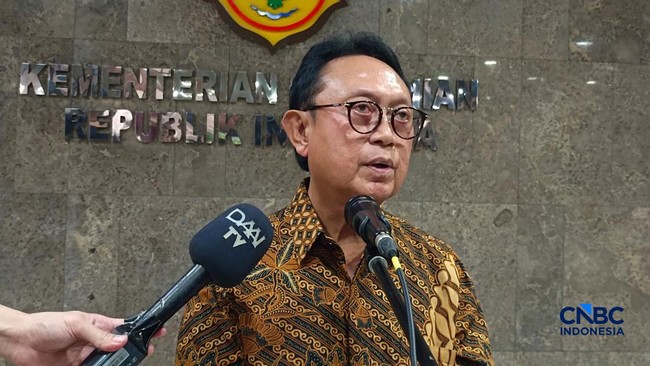
Jakarta – The Chairman of the Indonesian Palm Oil Producers Association, Eddy Martono, reported to Agriculture Minister Amran Sulaiman regarding the current slowdown in the national Smallholder Palm Replanting Programme (PSR).
One of the primary reasons cited is farmers’ reluctance to fell palm trees whilst they remain productive. This reluctance is especially pronounced when fresh fruit bunch (TBS) prices are favourable.
Eddy made these remarks following a meeting with Agriculture Minister Amran at the Ministry of Agriculture office in Jakarta on Wednesday, 11 March 2026.
During the meeting, Eddy explained that national palm oil production has actually increased, but greater production potential is still hindered by slow replanting progress on smallholder plantations.
“I reported to the Minister about the condition of our palm oil sector. We are grateful that in 2025 we saw production increases. From crude palm oil, approximately 51 million tonnes, or with palm kernel oil, a total production of 56 million tonnes,” said Eddy.
According to him, the production increase occurred because previously replanted company plantations have begun entering their productive phase. However, the Smallholder Palm Replanting Programme at the farmer level is not running optimally.
“The reason for this increase is due to company replanting efforts that have started producing. However, I also highlighted that there are obstacles. If the Smallholder Palm Replanting Programme were running properly, our production could be significantly higher. Currently, one could say the PSR is stagnant,” he said.
Eddy explained that the primary obstacle is not merely a matter of licensing or administration. Rather, many farmers choose to retain their palm trees because they still generate income.
“I told the Agriculture Minister that this is not merely a licensing problem. The issue is that farmers are sometimes unwilling. For example, right now, with TBS prices at Rp3,000 per kilogramme, they refuse to fell their trees,” he noted.
According to Eddy, farmers’ greatest concern is losing their income during the waiting period until new plantings resume production.
“So they say, ‘What will I eat if I fell my trees?’” he explained.
For this reason, he believes a solution is needed to guarantee farmers’ livelihood sustainability during the replanting period. One option discussed was temporary living cost support whilst awaiting the new plantings to start producing.
“This requires a solution. How can we solve it? Modern palm varieties now produce within 2.5 years. So there should be livelihood guarantees, along with intercropping options,” said Eddy.
“I presented this, and the Minister agreed. We will discuss how to increase our production significantly beyond current levels,” he added.
Furthermore, Eddy believes the issue must be a collaborative effort between government and industry players. Without a solution for farmers, the smallholder replanting programme will continue progressing slowly.
“Yes, I proposed to the Minister that this is a shared responsibility. First, we must help farmers with living costs during the waiting period. We need to consider where those funds come from—whether from export levies or elsewhere—but this is crucial for the PSR,” he said.
According to him, aged palm plantations do need replacement to maintain productivity. However, without a clear support scheme, farmers tend to delay replanting.
“Frankly, farmers have no alternative proposal. But I can see here that they will certainly not want to do it. They will say ‘what will I eat?’, right. That is what we must solve together,” he concluded.