
Palm Farmers Change Farming Methods, Productivity Begins to Improve
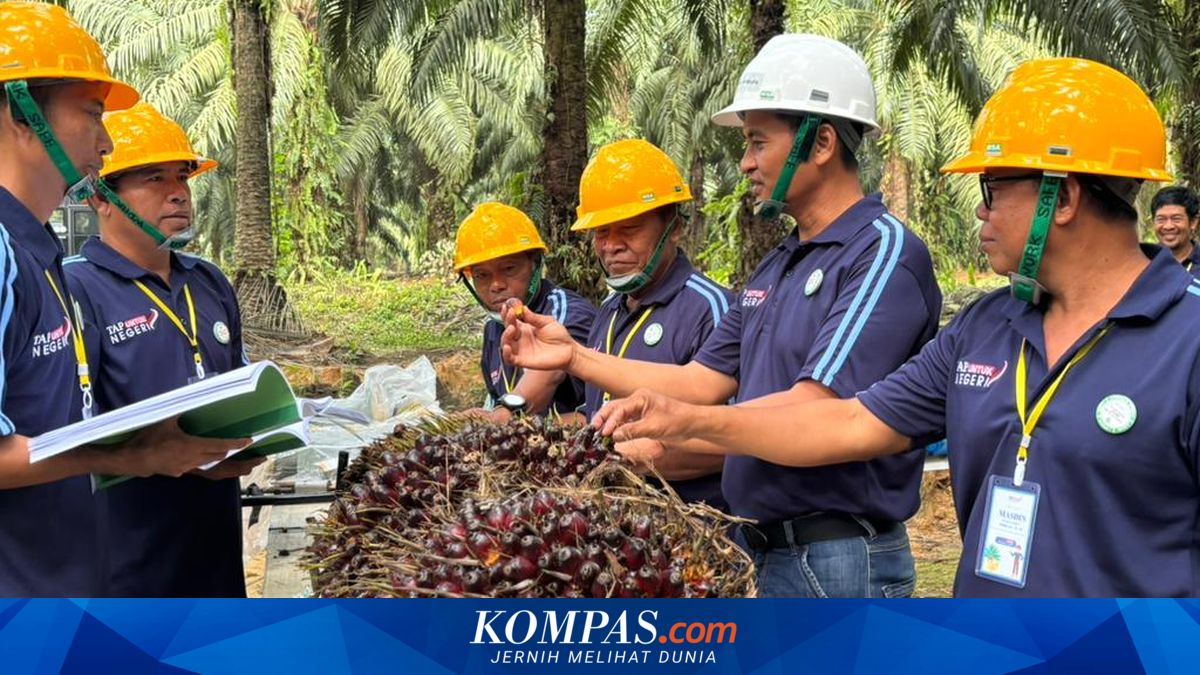
Palm farmers are beginning to feel the impact of changes in farming practices after receiving hands-on training. Previously reliant on inherited habits, they are now managing their plantations in a more structured and measurable manner.
One such case is that of Maijan, a palm farmer from Suak Putat Village, Sekernan, Muaro Jambi, Jambi. He is now more disciplined in fertilisation, from measuring doses to determining the right application timing, following the Quality and Prosperous Farmers (PERKASA) training initiated by PT Triputra Agro Persada Tbk.
“I used to think fertilising was simple, just scattering it. It turns out that how we fertilise determines the health of the planted palms,” said Maijan, in a press statement quoted on Friday (3/4/2026).
“If fertilisation is done correctly, the results will indeed be optimal. I only learned this during the PERKASA training at PT Brahma Binabakti, which was very beneficial for us palm farmers. We gained a lot of experience on seedling, maintenance, and harvesting that we can directly apply in our plantations,” he explained.
Through this training, farmers are starting to understand the importance of proper agronomic practices, from selecting fertilisers and doses to effective application timing. This change forms the initial foundation for sustainably increasing smallholder plantation productivity.
With this approach, farmers are encouraged not only to understand theory but also to directly practise precise plant maintenance techniques in their plantations.
Durham, a palm farmer from Muara Pias Village, Long Kali, Paser, admitted that the training addresses various issues faced in the field, from seedling quality to pest attacks.
“There are many challenges in the field, especially regarding seedlings and pests. We used to work based on habits alone,” said Durham.
“So when plants didn’t bear fruit, we didn’t know if it was due to the seedlings or the maintenance method. After joining the PERKASA training, we understand the correct system and practices. This knowledge is very helpful in improving plantation management so that yields can be better,” he continued.
Additionally, the company provides agronomy consultation services via WhatsApp at 0811-2220-12210. This service can be used not only by training participants but also by the general public who want to learn better palm management.
The company also distributes the book TAP for the Nation: Sharing Experiences for the Nation, which summarises agronomic standard procedures in simpler language.
“So far, palm farmers have only relied on self-taught experience, and their harvests have been unsatisfactory,” said Feidy Rogi, a PERKASA training participant from Gunung Rampah Village, Mook Manaar Bulatn, West Kutai, East Kalimantan.
“This book is very helpful for us to continuously improve good and correct plantation management so that harvest results become increasingly optimal,” he stated.
Through this approach, changes are growing from the smallholder plantation level. When knowledge meets the right practices, farmers no longer merely work based on habits but are beginning to transform into more skilled business actors.