
Palace Ensures Free Nutritious Meals and Village Cooperatives Budget Not Cut Amid Budget Efficiency Drive
Jakarta — The government is planning budget efficiency measures to maintain the state budget (APBN) deficit below the 3% threshold. Geopolitical tensions in the Middle East have triggered rising oil prices, which will burden fuel subsidy expenditures.
Under the most pessimistic scenario, Indonesia’s crude oil price (ICP) reaching US$115 per barrel could push the APBN deficit to 4.06%.
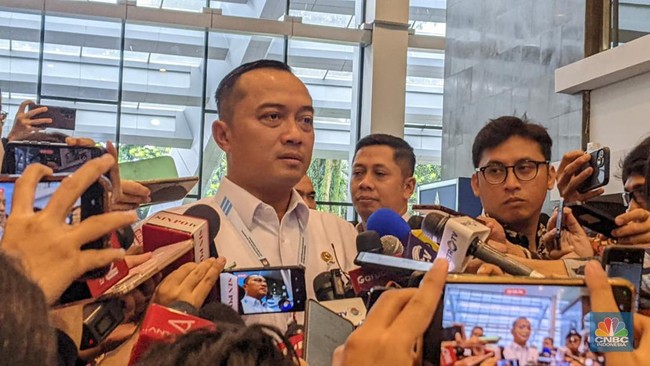
State Secretariat Minister Prasetyo Hadi assured that budget cuts would target unproductive expenditures. He explained that fiscal budget adjustments are calculated on an annual basis. The government has been continuously reviewing budgets for savings since last year, ranging from overseas official travel to postponable expenditures.
Currently, the government continues to identify non-productive budget items for savings, driven by the escalating impact of Middle East tensions.
“We did not anticipate war and escalation either. But we frequently coordinate and meet to conduct this process. We review and identify what is non-productive and what can be delayed. For example, building construction that does not yet exist and does not hinder ministry performance — we postpone that for now. This falls within our purview and naturally within the Finance Ministry’s,” Prasetyo explained.
On this occasion, Prasetyo emphasised that flagship government programmes such as free nutritious meals (Makan Berigizi Gratis), red-and-white village cooperatives (Koperasi Desa Merah Putih), and community schools would not be cut or reallocated.
“Absolutely not. We prefer to reduce ineffective or low-impact expenditures that will be reallocated so that productive, high-impact programmes that help alleviate the people’s burden are prioritised,” he said.
Previously, Finance Minister Purbaya Yudhi Sadewa outlined efficiency steps, though could not yet disclose specific budget line items to be saved.
“If fuel prices keep rising, then the first approach is efficiency. We have already prepared the necessary steps by ministries and agencies. We have asked them to prepare them — what percentage of their budgets will be cut,” he stated during a Limited Coordination Meeting chaired by Economic Coordinating Minister Airlangga Hartarto on Monday, 16 March 2026.
During the coordination meeting, each ministry or agency has been asked to prepare portions of budgets that can be cut. “We have asked them to prepare — what percentage of their budgets will be cut,” he reaffirmed.
Purbaya stated that the budget efficiency directive also applies to the National Nutrition Agency (BGN), which implements President Prabowo Subianto’s priority programme of free nutritious meals.
“There are supplementary budget allocations that create bloat. So with the current budget, we first focus on programmes that already exist. We postpone additions for now until circumstances permit, but clearly it is not possible now,” Purbaya said.
The Finance Ministry will begin calculating the extent of budget efficiency the government will implement starting next week to anticipate fluctuations in global crude oil prices, which frequently exceed US$100 per barrel or exceed the APBN’s macro assumption of US$70 per barrel, owing to the US-Israel-Iran conflict.
“But execution is not certain yet — if we want to cut, which ones do we want to cut, roughly like that. Later they will adjust their policies based on the Finance Ministry’s cuts,” he noted.
Purbaya emphasised that efficiency is the best option to anticipate global crude oil price pressures rather than widening the APBN deficit, as the government need not increase fiscal burden through additional debt.