
Pakistan's Two-Front Nightmare
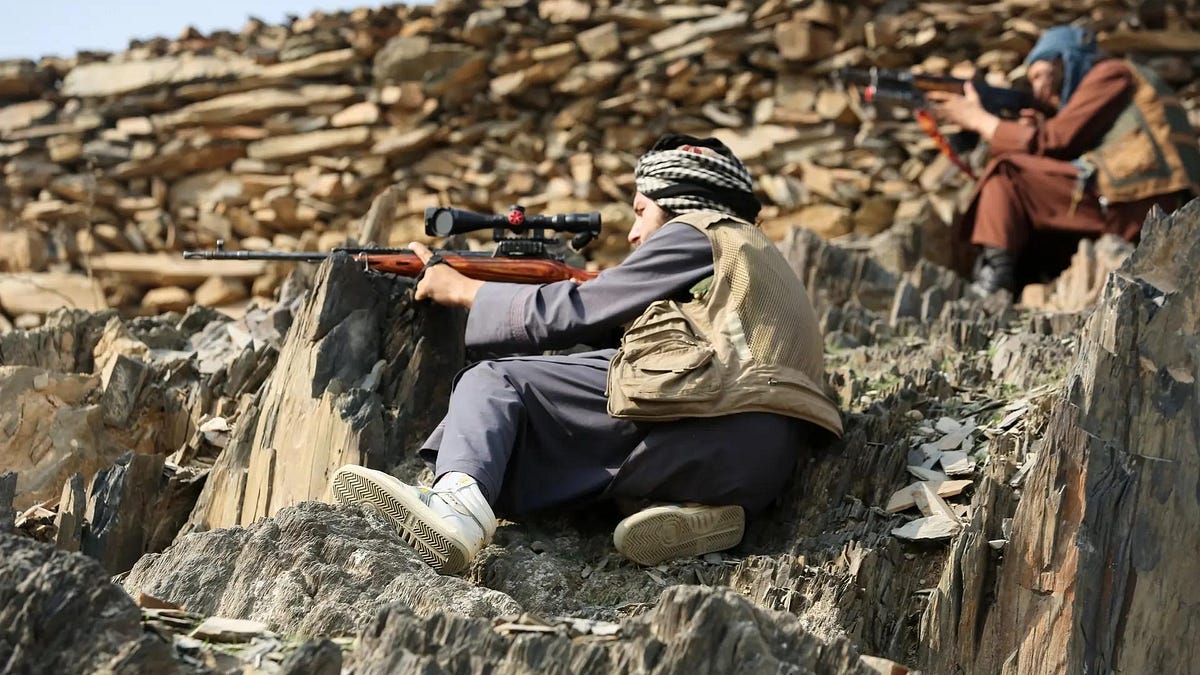
By: Salman Rafi Sheikh
The Pakistan–Afghanistan border is once again aflame. What began as sporadic skirmishes after the Taliban’s return to power in Kabul in August 2021 is now a full-fledged interstate confrontation, unfolding at a moment of unusual strategic vulnerability for Pakistan. As tensions escalate on its western frontier, a broader regional war—pitting the United States and Israel against Iran—is intensifying to the south. The convergence of these crises risks placing Pakistan in the middle of a perfect geopolitical storm that could stretch its security apparatus and destabilize its fragile internal equilibrium.
Border Conflict Years in the Making
The immediate roots of the current crisis lie in the aftermath of the Taliban’s return to power following the US withdrawal in 2021. Islamabad initially hoped that the Taliban’s victory would stabilize its western frontier, which is why it was keen to help broker the 2020 Doha Pact between the US and the Taliban to end the 18-year war. Instead, relations between the two countries have deteriorated steadily.
At the center of the dispute is the presence of the Tehrik-i-Taliban Pakistan (TTP) in Afghanistan. Pakistan has repeatedly accused Kabul of allowing the militant group to operate from Afghan territory and launch cross-border attacks. Pakistani officials have made clear that normalization with Kabul is impossible unless the Taliban dismantles TTP sanctuaries. More recently, Pakistan has also begun to claim that Kabul supports Baloch separatist groups, including the Balochistan Liberation Army (BLA). Islamabad also claims that Kabul’s ties with New Delhi have turned Afghanistan into an India-backed geopolitical nexus against Pakistan.
International assessments have echoed these concerns. United Nations monitoring reports note that the TTP remains one of the most serious militant threats in the region and continues to operate from bases inside Afghanistan. The consequences have been visible inside Pakistan. Violence has surged sharply, with 2025 becoming the deadliest year in more than a decade, recording over 3,400 deaths – up from 1,950 in 2024 – in militant attacks and counteroperations. Much of this violence has been attributed to the TTP, which has grown stronger since the collapse of the Afghan republic. This deteriorating security environment has spilled over into interstate confrontation. Pakistan has increasingly resorted to cross-border strikes against alleged militant hideouts in Afghanistan. One such operation in February targeted suspected TTP camps in eastern Afghan provinces such as Nangarhar and Paktika.
These strikes have triggered retaliation from Afghan forces and intensified clashes along the roughly 2,600-kilometer Durand Line, one of the most volatile borders in South Asia. In recent weeks, the conflict escalated dramatically, with Pakistani airstrikes and Afghan counterattacks producing significant casualties and raising fears of a broader war.
Both sides deny responsibility for the escalation. Pakistan insists it is targeting militant infrastructure, while the Taliban government accuses Islamabad of violating Afghan sovereignty. Diplomatic mediation by regional actors, including Qatar and Saudi Arabia, has so far failed to produce a durable ceasefire.
When Regional Wars Collide
Yet the border conflict, serious as it is, represents only part of Pakistan’s emerging security dilemma. The real danger lies in the geopolitical overlap between the Pakistan-Afghanistan conflict and a wider confrontation unfolding across the Middle East. As tensions escalate between the United States, Israel, and Iran, Pakistan finds itself increasingly drawn into the strategic calculations of its Gulf allies, particularly Saudi Arabia. Islamabad and Riyadh maintain close military ties, including defense cooperation agreements that envisage mutual assistance in the event of external threats. If Iran’s confrontation with the United States and Israel expands into a broader regional war, Saudi Arabia could seek stronger security support from Pakistan. That possibility carries enormous strategic risks for Islamabad.
First, Pakistan shares a long and sensitive border with Iran through the province of Balochistan. Any escalation involving Iran could quickly spill across this frontier. Iran-Pakistan relations have historically been uneasy but manageable; a larger regional war could transform the border into another flashpoint. Unrest along the Iranian frontier would intersect with the longstanding insurgency in Balochistan. Separatist groups operating in the province already exploit porous borders and regional rivalries. If instability deepens along Pakistan’s southern flank, these groups could gain new opportunities for external support and operational expansion. Perhaps most importantly, the overlap of conflicts could provide Afghanistan’s Taliban leadership with strategic leverage.
If Pakistan becomes preoccupied with tensions involving Iran and Saudi Arabia, Kabul may feel emboldened to intensify pressure along the Durand Line. Even limited escalation could stretch Pakistan’s military resources, forcing it to manage simultaneous crises on multiple fronts.
The strategic implications are stark. A conflict that began as a cross-border counterterrorism dispute could evolve into a broader regional confrontation involving several states and multiple militant actors.
The Risk of Internal Destabilization
Beyond geopolitics, Pakistan faces a profound internal security risk if these crises converge. Militant violence in the country is rising. Groups such as the TTP and the Islamic State’s regional affiliate, Islamic State–Khorasan Province (IS-K), have demonstrated both resilience and operational capability in recent years. Their attacks target security forces, state institutions, and civilians alike. A wider regional war involving Iran could open another dangerous front: sectarian violence.
Pakistan is home to one of the world’s largest Shia pop