
Overtaking India, Pakistan Seizes the Diplomatic Stage in Iran Conflict
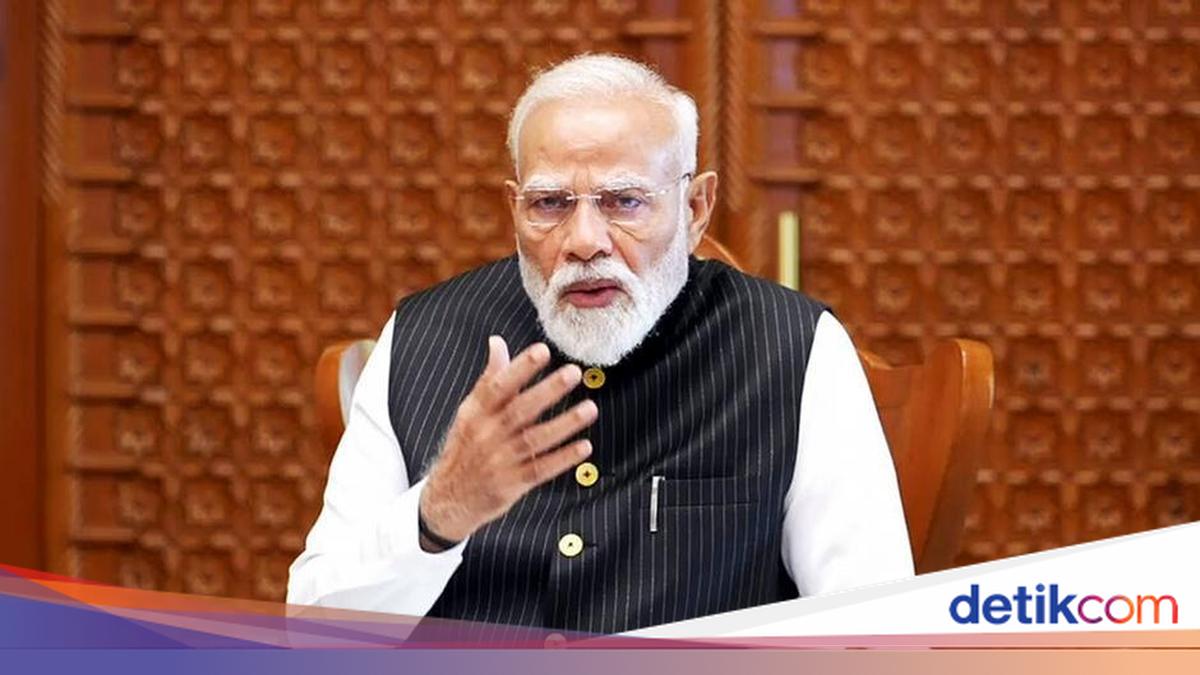
The United States-Israel war with Iran has led to increasing fuel shortages in India, pressure on the rupee exchange rate, and millions of Indian workers in Gulf countries monitoring the situation with growing anxiety.
However, one month after the conflict began, it is Pakistan, not India, that has positioned itself as a mediator.
Pakistan’s Foreign Minister Ishaq Dar stated earlier this week that Islamabad will soon host talks between the United States (US) and Iran, although neither Washington nor Tehran has confirmed Pakistan’s diplomatic role.
In contrast, India has adopted a more measured message. New Delhi has exercised restraint, calling for de-escalation, while working through quiet diplomatic channels and prioritising energy security and the safety of its diaspora.
Opposition increases pressure on Modi
However, the government’s stance has also drawn criticism from the opposition.
Rahul Gandhi, leader of the Congress Party serving as the opposition in India, described India’s foreign policy under Prime Minister Narendra Modi as a “universal joke.”
Congress Party parliamentarian Jairam Ramesh also criticised Modi’s policy.
He wrote on platform X that after India’s “undoubted military success” in its action against Pakistan during Operation Sindoor in May 2025, “Pakistan’s diplomatic engagement and narrative management are far superior to the Modi government.”
Experts point out that internationally, Islamabad’s role gives it direct visibility and relevance, particularly in Washington, by positioning itself as a useful bridge amid high tensions.
India maintains a middle position
Shanthie Mariet D’Souza, president of Mantraya, an independent research forum, said the Modi government portrays the conflict as a distant war that does not require Indian intervention.
“This perspective contradicts previous efforts to position India as a potential mediator in the Ukraine war, as well as the significant impact the Iran war has had on India’s energy security,” D’Souza told DW.
“While this stance may not yet affect Modi’s domestic popularity, a prolonged conflict with economic consequences for India is likely to impact approval ratings for the government,” she added.
D’Souza also said India’s lack of neutrality limits its ability to act as a mediator and weakens its claims to strategic autonomy.
Harsh Pant, head of the strategic studies programme at the Observer Research Foundation (ORF) in New Delhi, said much will depend on how long the war lasts.
“If the crisis continues, if pressure on India increases, and if the government cannot manage it domestically, there will be an impact on the Modi administration,” he told DW.
“India’s initial response shows solidarity with Arab countries, where relations with them continue to grow and are very important. India must protect its interests there,” he added.
Can Pakistan stop the Iran war?
India’s Foreign Minister S. Jaishankar stated that India will not act as a “mediator” like Pakistan in the ongoing US-Israel war with Iran.
Jaishankar’s comments responded to suggestions that India emulate Pakistan’s role, while affirming that New Delhi sees itself pursuing an independent foreign policy and not acting as an intermediary in conflicts driven by other parties.
Modi stated that although the conflict in the Middle East and disruptions in the Strait of Hormuz pose “worrisome” challenges to energy security, the government is ensuring stable domestic supplies by utilising strategic reserves, diversifying imports from 41 countries, and engaging in diplomatic efforts to ease tensions.
Ajay Bisaria, former Indian High Commissioner to Pakistan, said India does not face immediate domestic political impacts, but policy experts are concerned that the country appears too cautious and not actively influencing developments, especially compared to Pakistan’s more assertive approach.
“Among strategists and policymakers, there is a quiet acknowledgement that India is not shaping outcomes in a region where it has major interests,” Bisaria told DW.
“The contrast with Pakistan’s role as a mediator may raise questions about whether New Delhi is too cautious at a time of geopolitical shifts.”
Pakistan’s window of opportunity as a mediator
Nevertheless, Bisaria emphasised that Pakistan’s role should not be overstated.
“Pakistan’s benefits are tactical facilitation. India’s strength lies in balance, multi-alignment, and long-term strategic autonomy. The challenge for New Delhi is to turn that position into visible influence when diplomatic opportunities arise,” he said.
“It acts as a conduit, not a power broker. This is consistent with past patterns. Islamabad has historically often facilitated US back-channel diplomacy, from opening relations with China in 1971 to the Iran hostage crisis in 1981,” Bisaria added.
According to the former diplomat, the advantage Pakistan gains is visibility and relevance in Washington at a time when India is on the sidelines.
“That may translate into short-term diplomatic influence or goodwill. However, structurally, the balance with India remains unchanged. India’s global weight, economically, strategically, and diplomatically, far surpasses Pakistan’s,” he said.