
Over Three Days, 20 Trucks Deployed to Haul Piling Rubbish at Kramat Jati Market
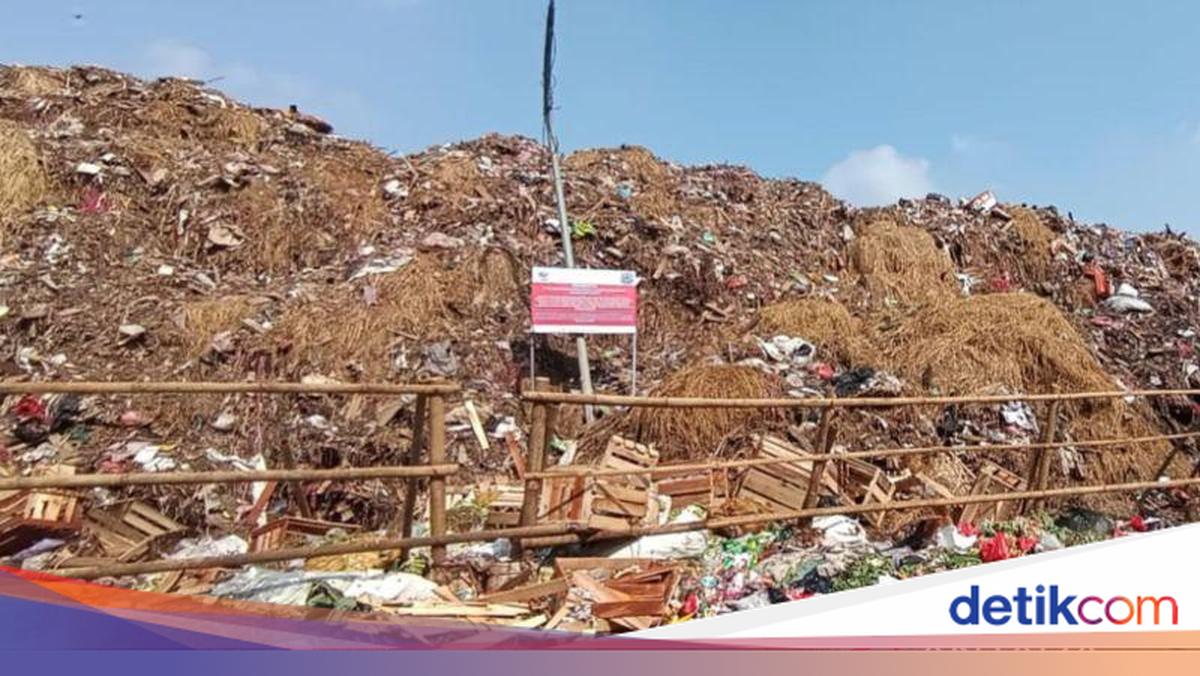
The East Jakarta Environment Agency (LH) stated that over the past three days, it has been working to remove piles of rubbish at the Kramat Jati Main Market. Each day, approximately 20 trucks have been deployed to transport the rubbish to the Bantar Gebang Integrated Waste Processing Site (TPST). “Over three days, we have assisted with rubbish transport at the Kramat Jati Main Market, from Friday (27/3) to Sunday (29/3), as an emergency step to alleviate the rubbish buildup in that market area,” said the Head of the Kramat Jati Sub-District Environment Agency Implementation Unit, Dwi Firmansyah, as quoted by Antara on Monday (30/3/2026). According to Dwi, this transport is temporary and not a takeover of responsibility. He stressed that rubbish management in the market area is the obligation of the operators, namely Perumda Pasar Jaya, as part of the commercial zone. Dwi explained that the DKI Jakarta Environment Agency does not have the authority to fully handle rubbish in business areas. The assistance provided is solely to prevent broader impacts from the rubbish buildup, which could disrupt the environment and public health. “We cannot clean it up completely because this is not stray rubbish. There is a responsible party as the rubbish producer,” said Dwi. He also reminded that waste management by business actors is regulated in various laws, including Law No. 18 of 2008 on Waste Management and Law No. 32 of 2009 on Environmental Protection and Management, which has been updated through Law No. 11 of 2020 on Job Creation. Under those regulations, every rubbish producer is obliged to reduce and handle rubbish from the source. This is further reinforced by DKI Jakarta Regional Regulation No. 3 of 2013, which requires business actors to provide their own waste management facilities and infrastructure. Besides authority issues, limitations on the Bantar Gebang TPST disposal quota also pose a challenge. Kramat Jati Sub-District only has a quota of 16 trucks per day for rubbish disposal, following restrictions after a landslide incident at the site. With these limitations, priority for transport is given to rubbish from residential areas. Meanwhile, commercial areas such as markets, shopping centres, hotels, and restaurants are expected to manage their rubbish independently. “Our priority remains residents’ rubbish. For commercial areas, they should already have their own management system,” Dwi emphasised. Furthermore, he highlighted the composition of rubbish at the Kramat Jati Main Market, which is dominated by organic waste. He assessed that this type of rubbish has great potential to be processed into compost or other useful products, so it does not need to be disposed of at the final processing site. Meanwhile, the Manager of the Kramat Jati Main Market, Agus Lamun, appreciated the assistance from the DKI Jakarta LH Agency. He acknowledged that his side is working to increase independent waste management capacity. In the short term, the market operators have been running a programme to process organic waste into compost, around one tonne per day. In addition, weekly rubbish sorting is carried out with the same volume, as well as the use of rubbish as livestock feed by the community. However, according to him, these efforts are still not enough to match the daily rubbish volume, estimated at 150 to 200 tonnes. As a result, rubbish buildup still occurs at several points in the market area. He also said that in the future, the market operators plan to operate five independent rubbish trucks starting in May to support transport to the Bantar Gebang TPST. Not only that, cooperation is also being established with the Bandung Institute of Technology to design an integrated waste management system based on technology. “We hope that during this transition period, there will still be support from the LH Agency until our independent management system runs optimally,” said Agus. It is known that several traders at the Kramat Jati Main Market in East Jakarta have complained about the towering piles of rubbish that have not been transported, disrupting buying and selling activities. They complained that the condition disrupts buying and selling activities, especially due to the pungent odour and increasingly narrow road access.