
Outsourcing Not Abolished, These 6 Jobs Are Permitted - The Regulations
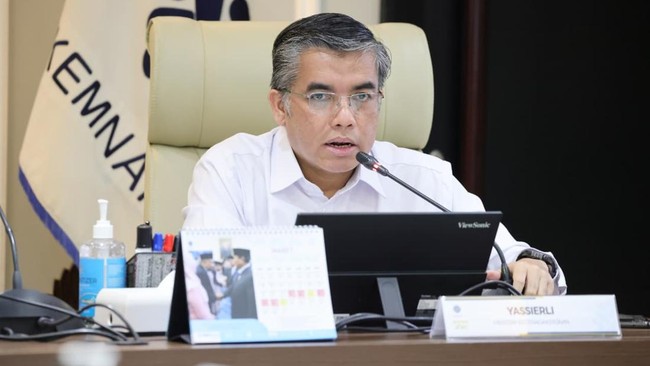
Jakarta, CNBC Indonesia - The issue of outsourcing work often sparks controversy in Indonesia. Not surprisingly, the government recently issued Ministerial Regulation on Manpower No. 7/2026 on Outsourcing Work as the basis for new rules on outsourcing jobs.
Manpower Minister Yassierli stated that this regulation was released on Labour Day, 1 May 2026, as the government’s effort to ensure that outsourcing practices run more fairly and provide clear protection for workers.
“This Manpower Ministerial Regulation is a follow-up to the Constitutional Court Decision No. 168/PUU-XXI/2023, which mandates restrictions on outsourcing jobs. The policy aims to provide legal certainty, strengthen the protection of workers’ rights, and maintain business continuity,” Yassierli said in his statement, quoted on Saturday (1/5/2026).
Under this regulation, the types of outsourcing work are explicitly limited to certain fields only. Namely, cleaning services, provision of food and beverages, security, provision of drivers and worker transportation, operational support services, and support work in the mining, oil and gas, and electricity sectors.
In addition, the employing company that delegates part of its work to an outsourcing company is required to have a written agreement. That agreement must at least include the type of work outsourced, duration, work location, number of workers, work protection, as well as the rights and obligations of the parties.
Outsourcing companies are also required to fulfil all workers’ rights in accordance with applicable laws and regulations, including wages, overtime pay, working hours and rest periods, annual leave, occupational safety and health (K3), social security for health and employment, religious holiday allowances, and rights regarding termination of employment (PHK).
Yassierli stated that this Manpower Ministerial Regulation also regulates sanctions for employing companies or outsourcing companies that do not comply with the established provisions.