
OSS Reform: Investment Ministry Streamlines Business Licensing for Micro Enterprises
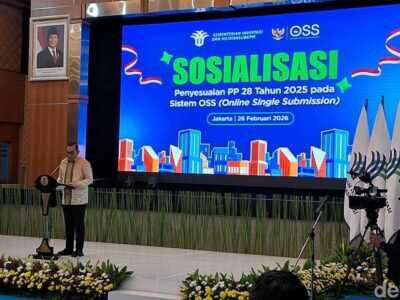
Jakarta – The Ministry of Investment and Downstreaming/Capital Investment Coordinating Board (BKPM) has demonstrated its strong commitment to supporting national economic growth by continuously striving to simplify business licensing processes, especially for micro-enterprises. This effort is realized through the optimization of the Online Single Submission (OSS) system, an integrated platform designed to simplify and accelerate licensing processes throughout Indonesia. This initiative was born in response to the many complaints received by BKPM from business actors regarding the complexity and difficulties in accessing licenses, which has long been one of the main obstacles in the development of their businesses.
Wakil Menteri Investasi dan Hilirisasi/BKPM, Todotua Pasaribu, openly acknowledged that his office often receives complaints about the difficulties in using the OSS system, especially in the process of selecting the Business Identification Number (NIB). The NIB is a legal identity for business actors that must be owned to carry out business activities legally in Indonesia. However, according to Pasaribu, most of the obstacles faced by business actors actually stem from the issue of the Conformity Approval for Space Utilization Activities (PKKPR) or location permits. The PKKPR itself is a document that states the conformity between the planned business activities and the regional spatial plan.
“We often receive complaints from various parties, including from fellow Ministers and Deputy Ministers, as well as from their electoral districts. The main complaint is that small business actors have difficulty obtaining an NIB. We have accommodated all these complaints and continue to seek the best solutions to overcome them,” said Todotua at the Socialization of the Amendment to Government Regulation Number 28 of 2025 on the OSS System, which was held on Thursday (February 26, 2026).
Realizing the importance of the role of micro-enterprises in the national economy, the Ministry of Investment and Downstreaming took a strategic step by making adjustments to the rules for issuing NIBs through Government Regulation (PP) Number 28 of 2025. This adjustment is focused on providing convenience for micro-enterprises in obtaining business licenses, so that they can operate legally and contribute more to economic growth.
Pasaribu revealed that currently there are approximately 40 million micro-enterprises in Indonesia that do not have an NIB. This number is very significant and shows the great potential that has not been maximized. Meanwhile, the Ministry of Investment and Downstreaming has successfully issued approximately 15 million NIBs for individual companies, both micro and large scale. This figure shows positive progress, but it still needs to be further improved so that all micro-enterprises can have NIBs and operate legally.
“We realize that improvements to the OSS system are very necessary so that the business licensing process can run faster and more efficiently. The progress in the number of NIBs issued is extraordinary. I still remember when I was first appointed, about two weeks later I saw that the OSS figure was still in the range of 10,960. Now, after a year and a half in government, the figure has reached 15 million,” he said.
Pasaribu added that currently there are 372 types of business activities included in licensing through OSS. Of these, as many as 181 permits have a service level agreement (SLA) with the relevant technical ministry. The SLA is an agreement that sets service standards and the time for completing licensing. Furthermore, Pasaribu explained that several ministries have even reached 100% agreement in the context of implementing the SLA with a positive fictitious mechanism. The positive fictitious mechanism means that if a license application is not responded to by the authorized agency within the time period set in the SLA, then the application is deemed approved. This aims to speed up the licensing process and provide legal certainty for business actors.
For example, in the processing of the Conformity Approval for Space Utilization Activities (PKKPR) or Environmental Impact Analysis (EIA) for the construction of a hotel, the government and the technical ministry have ensured that the license will be issued no later than 28 days. This provides certainty for investors in the hotel sector and encourages investment in that sector.
“Of the 372 types of permits, about 180 permits are included in the context of the positive fictitious service level agreement. One of the easiest examples is the hotel licensing service. In 28 days, we can provide certainty that the permit will be issued,” he added.
The OSS reform effort is expected to have a significant positive impact on the national economy. By simplifying business licensing for micro-enterprises, it is hoped that more micro-enterprises will be able to operate legally and contribute to economic growth. In addition, easier licensing can also attract new investment and create jobs. The Ministry of Investment and Downstreaming is committed to continuing to improve the OSS system and coordinate with various related parties, including technical ministries, regional governments, and business associations, to ensure that the OSS system can run effectively and efficiently. Thus, it is hoped that the investment climate in Indonesia will become more conducive and can attract more investment from both domestic and foreign sources. In addition to focusing on simplifying business licensing for micro-enterprises, the Ministry of Investment and Downstreaming also continues to strive to improve the quality of licensing services for all types of businesses, both small, medium and large scale. This is done through the development of a more sophisticated and integrated OSS system, as well as improving the capacity of human resources that serve in licensing services. With the various efforts that have been made, the Ministry…