
ORI: Development Planning Inseparable from Public Service Quality
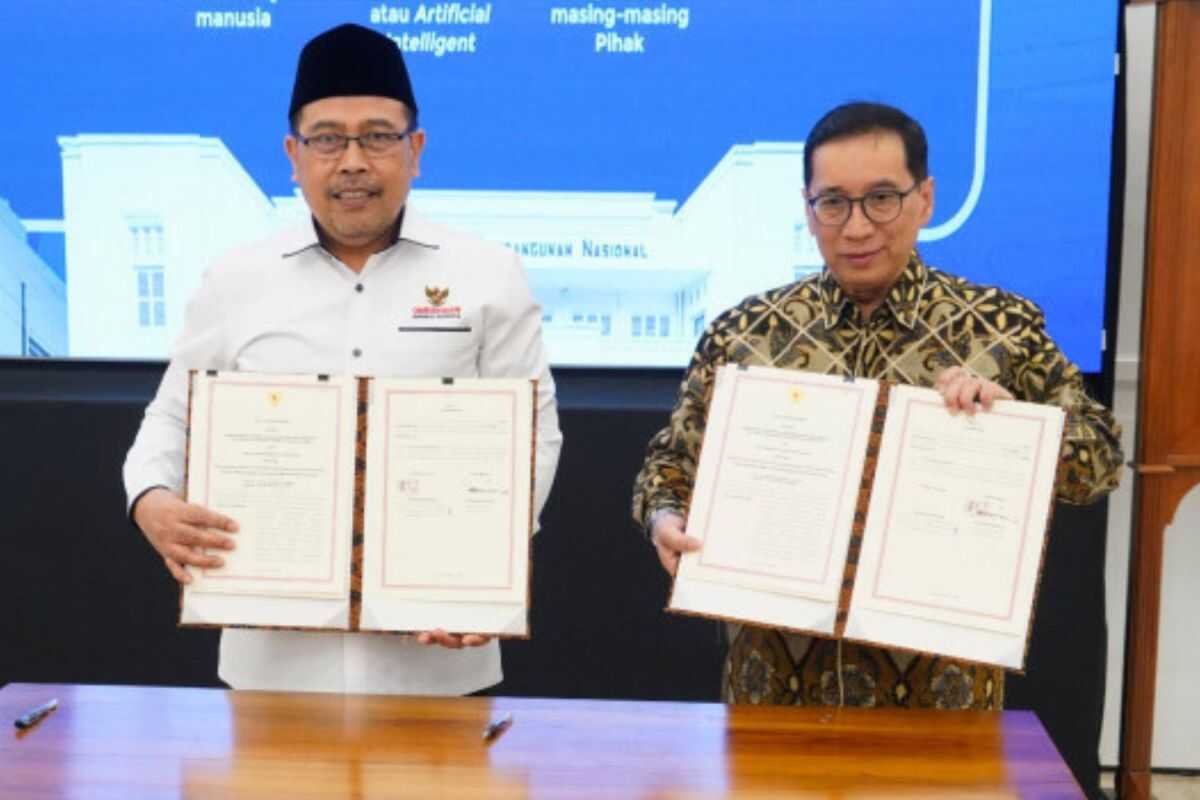
Jakarta (ANTARA) - Indonesian Ombudsman (ORI) Chairman Mokhammad Najih has affirmed that national development planning cannot be separated from the quality of public services.
“Every development policy ultimately comes down to how the state serves its citizens in a fair, effective and civilised manner,” Najih said when contacted in Jakarta on Tuesday.
He therefore considers the Memorandum of Understanding signed between himself and the Deputy Minister of National Development Planning (PPN)/Bappenas in Jakarta on Monday (9 February) to be an important milestone in integrating the public service oversight function into the national development policy planning process.
He stressed that this is not merely an institutional collaboration, but rather an affirmation of the paradigm that public service must be the primary orientation of development.
Najih explained that the cooperation aims to optimise the public service oversight function within the national development policy planning process so that development is truly oriented towards the needs of the public.
He outlined that the scope of the cooperation encompasses the prevention of maladministration from the policy planning stage, the acceleration of handling and resolution of public complaints, as well as the exchange of relevant and accountable data and information.
Additionally, it covers human resource capacity development and the utilisation of information technology and artificial intelligence to support adaptive and responsive public services.
He revealed that over the past five years, the Indonesian Ombudsman and the Ministry of PPN/Bappenas have maintained a strong working relationship.
Since 2025, ORI has developed a new approach, shifting from merely conducting compliance surveys on public service delivery to formulating Indonesian Ombudsman Opinions, aimed at producing higher-quality assessments in efforts to prevent maladministration.
Previously, the Indonesian Ombudsman focused on measuring compliance with public service standards.
Najih expressed confidence that the synergy between the Ministry of PPN/Bappenas as the architect of national development and the Indonesian Ombudsman as the public service oversight body will produce development policies that are more sensitive to the needs of the public whilst strengthening the application of general principles of good governance.
Through this cooperation, the Indonesian Ombudsman is prepared to contribute by providing oversight data and findings as inputs for planning, strengthening evidence-based policy approaches, and conducting periodic monitoring and evaluation of the Memorandum of Understanding’s implementation.
He also expressed his appreciation and gratitude to the Ministry of PPN/Bappenas for establishing the partnership.
Meanwhile, Deputy Minister of PPN/Bappenas Febrian Alphyanto affirmed that national development is not solely measured by economic growth or infrastructure development.
This is because, he said, development is ultimately a matter of public trust that the state is present, working and serving in a fair and responsible manner.
“Public service is the most tangible face of the state or government itself,” Febrian said.
He added that the Indonesian Ombudsman plays a strategic role in ensuring that various principles of good governance are implemented, meaning that development planning is inseparable from the quality of public services.
In the 2025-2029 National Medium-Term Development Plan (RPJMN), the government has positioned public service quality as a top priority so that development planning is responsive to the real needs of the public.
Febrian expressed his hope that the collaboration would make a tangible contribution to strengthening national development planning, both in terms of institutional frameworks, policy, and the development of human resources with integrity.