
Organising a Safe and Secure Mudik Wave
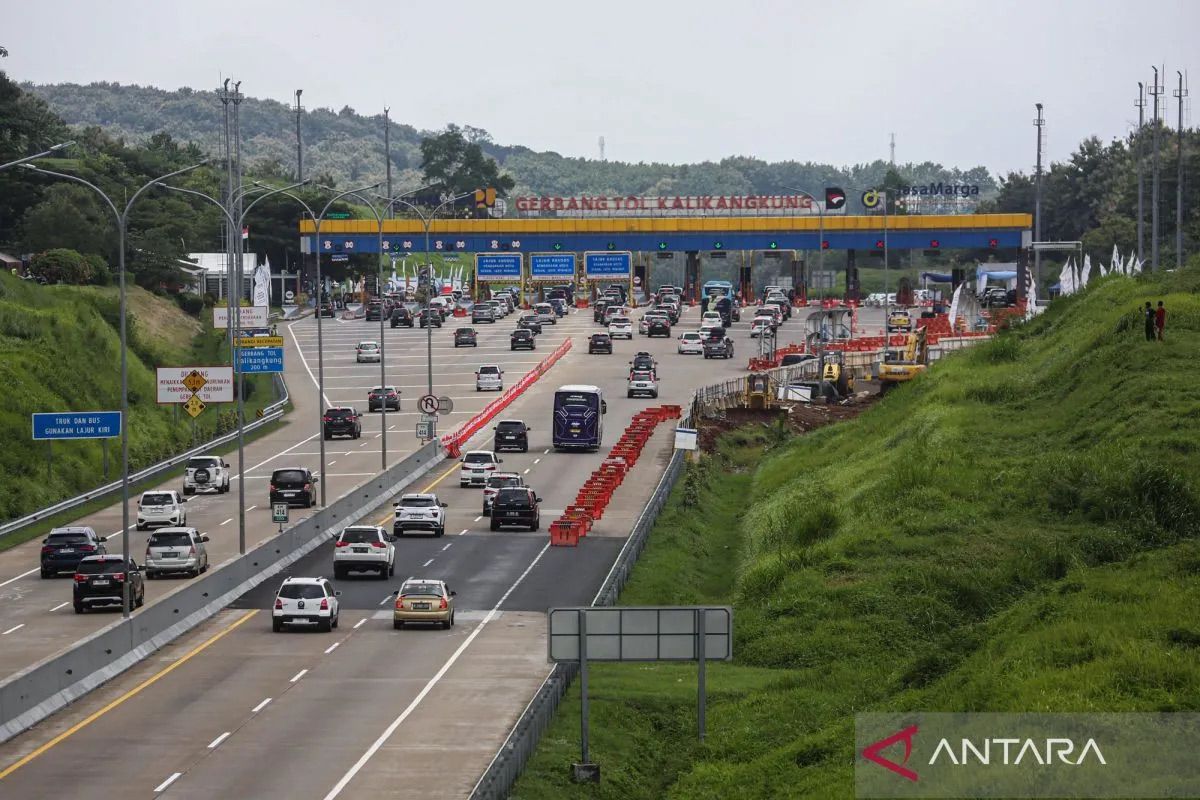
Synergy across sectors is the key to ensuring smoothness and safety, accompanying the public’s journey throughout the Lebaran period. Jakarta (ANTARA) - The movement of hundreds of millions of people across Indonesia makes the 1447 Hijriah/2026 CE Lebaran transportation a major test. This test has been navigated in a more organised, smooth, and controlled manner this year. The Ministry of Transportation states that the potential movement of the public during this year’s Lebaran transportation reaches 143.92 million people based on a survey involving various institutions to map national travel patterns. The survey was conducted together with the Bandung Institute of Technology’s Affiliated Research and Industry Institution, the Central Statistics Agency, and the Ministry of Communication and Digital Affairs, involving 55,000 respondents from various regions in Indonesia. Through this survey, the government obtained a comprehensive picture of public mobility, which serves as the basis for formulating strategies to manage the mudik and return flows for Lebaran. However, field realisations show higher numbers, with total movement reaching 147.55 million people. This reflects the high mobility of the public as well as the effectiveness of policies in anticipating the national travel surge. Mudik is not merely a journey, but a return home to meet loved ones during Eid al-Fitr. The government always ensures that this moment proceeds safely, orderly, and provides comfort until the return flow back to the land of migration. Government Strategy The government is organising the 1447 Hijriah Lebaran transportation waves through a series of integrated policies so that the large public mobility remains within safe, orderly, and secure corridors. This readiness is realised through the Ministry of Transportation’s steps to prepare national transportation infrastructure and services to face the 2026 Lebaran transportation. All of this is done to guarantee the smoothness, safety, and comfort of public travel during the mudik and return flow periods. Minister of Transportation Dudy Purwagandhi stated that various aspects have been prepared comprehensively, from transportation facilities to land, sea, air, and crossing infrastructure, as the main foundation for smooth movement. These efforts are strengthened by airworthiness checks for every mode of transportation, as well as economic stimuli in the form of 17-18 percent aircraft ticket discounts for the period of 14-29 March 2026. This policy targets 3.3 million economy class passengers on domestic flights. Similar incentives are also applied to other modes, such as a 30 percent discount on PT Pelni (Persero) ship tickets for departures from 11 March to 5 April with a target of 445,000 passengers, as well as a 30 percent discount on train tickets for 1.2 million passengers during 14-29 March. In the crossing sector, the government provides support to PT ASDP Indonesia Ferry in the form of up to 100 percent port service tariff discounts from 12-31 March, aimed at serving 945,000 vehicles and 2.4 million passengers. Not stopping at tariff incentives, the government together with state-owned enterprises also presents free intermodal mudik programmes. This step becomes an important strategy to reduce the use of private vehicles, especially motorcycles, while suppressing accident rates during the Lebaran period. Mobility management policies are also strengthened through the implementation of work from anywhere (WFA) as stipulated in the Minister of State Apparatus Empowerment and Bureaucracy Reform’s Circular Letter Number 2 of 2026. This scheme is divided into two phases, namely 16-17 March and 25-27 March, to distribute public movement more evenly. In addition, adaptive traffic engineering is implemented through cooperation with the Indonesian National Police, especially on toll roads, accompanied by the addition of crossing fleets to anticipate vehicle surges. Flow control is also carried out through restrictions on goods transportation operations from 13-29 March, both on toll roads and arterials, to maintain the smoothness of mudik and return flows. These restrictions apply to vehicles with three or more axles, including trucks with trailers and articulated vehicles, as well as carriers of mining products, excavations, and building materials. Nevertheless, several vehicles remain exempt, such as carriers of fuel/oil and gas, livestock, fertiliser, and disaster aid, to ensure the distribution of vital logistics continues. All these policies are outlined in a Joint Ministerial Decree involving the Ministry of Transportation, the National Police Traffic Corps, and the Ministry of Public Works as the legal umbrella for traffic regulation during the 2026 Lebaran period. In its implementation, supervision is carried out digitally through monitoring of transportation nodes, movement surveillance, drone live streaming, to real-time public complaint systems. Monitoring is also integrated with weather data and early warnings from the Meteorology, Climatology, and Geophysics Agency, as well as support from 7,159 CCTV cameras spread out and connected with regional governments, state-owned enterprises, and the private sector. To ease congestion towards ports, the government has prepared layered buffer zones in crossing port areas such as in Merak, Indah Kiat, to Ciwandan as temporary parking pockets. In line with planning