
Optimising Palm Oil Mill Effluent Can Strengthen National Economic Resilience
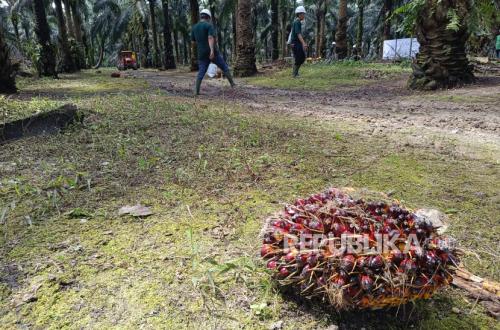
Optimising the utilisation of liquid waste from palm oil mills (LCPKS) is considered a strategic step to reduce Indonesia’s dependence on imported chemical fertilisers while strengthening national economic resilience. LCPKS should no longer be viewed as waste to be discarded but as a useful source of nutrients for agricultural production systems.
Soil science expert from IPB University, Basuki Sumawinata, stated that with production of 50 million tonnes of palm oil, Indonesia generates approximately 100 million tonnes of LCPKS per year with an average biological oxygen demand (BOD) of 25,000 ppm. BOD is a measure of the amount of dissolved oxygen used by microorganisms in the decomposition of organic matter.
“If managed with the appropriate scientific approach, this waste has the potential to replace part of the chemical fertiliser needs that have so far relied on imports,” said Basuki in a press statement in Jakarta on Sunday (12/4/2026).
According to him, LCPKS contains complete nutrients such as nitrogen, phosphorus, potassium, calcium, magnesium, and micronutrients. “This is a natural nutrient source with great value for palm plantations,” Basuki stated.
He explained that the high organic matter content makes LCPKS a primary source of organic carbon for soil. Without sufficient organic matter, Basuki said, soil loses its biological carrying capacity, and plantation productivity will decline in the long term.
As a result, farmers and plantation companies become increasingly dependent on chemical fertilisers. Therefore, Basuki believes that policies for processing LCPKS to achieve very low standards, such as BOD below 100 mg per litre, could potentially eliminate its economic benefits.
Under such conditions, almost all organic carbon would be lost, so LCPKS would no longer function as organic fertiliser. “If applied (BOD below 100 mg per litre) to all LCPKS in Indonesia, this could be seen as a waste of state funds because almost all of Indonesia’s fertiliser needs come from imports,” Basuki explained.