
Opinion: Sovereignty Risks Behind the Prabowo-Trump Tariff Agreement - Mongabay
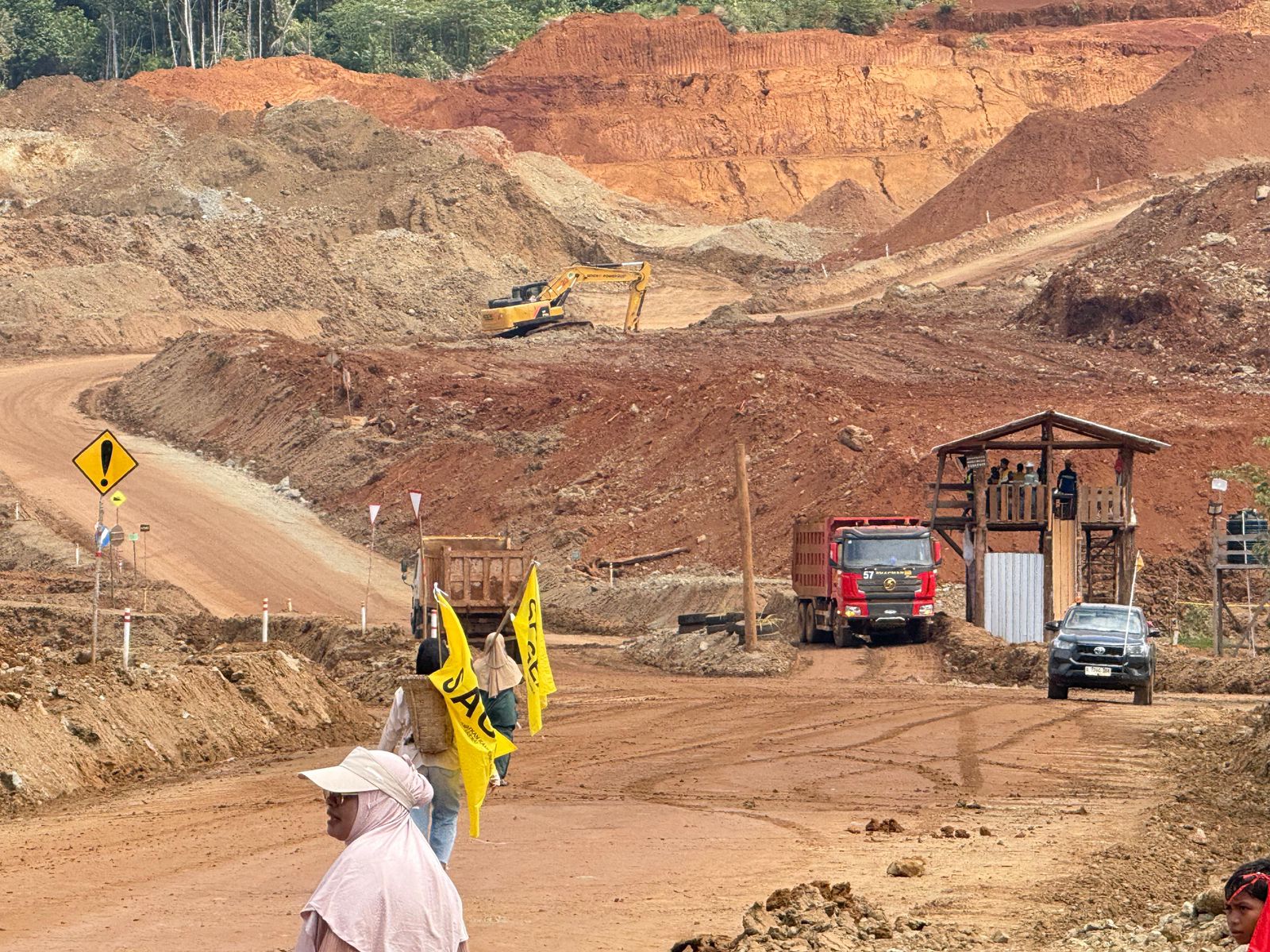
President Prabowo Subianto signed the “Agreement on Reciprocal Trade” (ART) with President Donald Trump in Washington DC on 19 February 2026. The day before, several business memoranda of understanding were also signed, including a tripartite MoU between Freeport McMoRan, PT Freeport Indonesia, and the Indonesian Government regarding the continuation of Freeport mining operations in Papua. In the public sphere, this series of agreements has been narrated as a leap in strategic trade and investment relations between the two countries. However, upon closer examination, the ART and MoU contain several provisions that risk eroding Indonesia’s sovereignty space, particularly in the extractive industry sector. Ironically, even before Indonesia has fully tested the contents of this agreement, its legal foundation in the United States is already shaky. The US Supreme Court on 20 February 2026 declared unconstitutional and revoked the legal basis for President Trump’s “reciprocal tariff” policy, just two days after the signing of the Indonesia-US ART. This means that on the US side, the legal framework supporting this agreement has collapsed, while in Indonesia, the ART is still treated as if it is valid and worthy of follow-up. Grasping Indonesia through Regulation Jaringan Advokasi Tambang (Jatam)’s analysis of the ART’s substance reveals how Indonesia’s decision-making space can be significantly affected. In the first part of the agreement, for example, Article 1.2 prohibits Indonesia from imposing quantitative restrictions on imports of goods from the US, including through import licences or commodity balance programmes. This provision has the potential to conflict with the Presidential Regulation on Commodity Balances, which has long been claimed as an instrument to align production and consumption for the needs of the population and national industry. Behind the technical term “quantitative restrictions” lies the consequence that the government could lose some space to regulate import volumes from the US if such regulation is deemed to disrupt their trade interests. Similarly, in Part 2 on “non-tariff barriers,” this extends the scope of influence. Articles 2.2 and 2.3, by referring to WTO standards, require Indonesia to accept US conformity assessment bodies as equivalent to domestic institutions and to eliminate restrictions that could “harm US exports.” On paper, this can be understood as an effort to harmonise standards. However, in practice, these articles could reduce Indonesia’s leeway to set stricter standards, for example, for public health or environmental safety, if they later fall into the category of barriers to the flow of goods from America. Interestingly, the labour and environment chapter in the ART appears rhetorically progressive. Articles 2.9 and 2.10 include commitments to prohibit forced labour and protect the environment. However, those provisions stop at a general level. There are no explicit obligations for binding human rights and environmental audits, no requirements for remediation of damage as a prerequisite for licence extensions, and no visible grievance mechanisms accessible to affected communities. Rights to free, prior, and informed consent (FPIC), recognition of customary rights, or cross-border litigation pathways are not specifically mentioned. At this point, the risk that emerges is the use of “environment” and “labour” language as legitimisation, while the corrective instruments needed in the field are weak. In contrast, Annex IV on energy is very concrete in directing Indonesia’s energy policy. This annex encourages Indonesia to facilitate the purchase of crude oil, refined petrol, LPG, and metallurgical coal from the US, and even to contribute to the development of coal export corridors on the US West Coast. The implication is that Indonesia risks becoming a permanent market for American fossil energy while also helping to finance its export infrastructure. In the context of the urgent need for a cleaner and fairer energy transition, obligations like this deserve critical re-examination: do they support or hinder the domestic agenda of reducing fossil fuel dependence? Article 2.12, which prohibits “discriminatory” VAT schemes against US companies, also poses its own challenges. Amid efforts to introduce environmental taxes or special levies on extractive commodities, especially from vulnerable areas, this provision could be used to challenge fiscal policies that in practice affect more American-origin companies. As a result, the government’s space to design tax instruments aimed at covering the social-ecological costs of mining could become even narrower. The chapter on digital trade and technology adds a new dimension that warrants consideration. Articles 3.1-3.5 and provisions in Annex III encourage Indonesia not to impose certain digital service taxes and require consultation with the US when drafting digital agreements with other countries. Amid the dominance of global tech giants, this policy could deepen Indonesia’s dependence on foreign digital infrastructure, including data, platforms, and networks. Giant data centres that support the digital economy and artificial intelligence require large supplies of electricity and water, triggering additional needs for energy and minerals like nickel, cobalt, and copper. Without careful regulation, accelerating the digital economy could bring significant environmental and social implications. The economic and national security dimension is aligned with the US security policy and sanctions architecture. Provisions in Part 4 and Annex III, for example, require Indonesia to adjust export policies, technology controls, and investment screening to parameters formulated by Washington. Indonesia is asked to use only communication technology suppliers deemed not to threaten infrastructure security based on US standards and to consult with them in screening.