
Opening and Closing of the Strait of Hormuz: When Will Plastic Prices Drop?
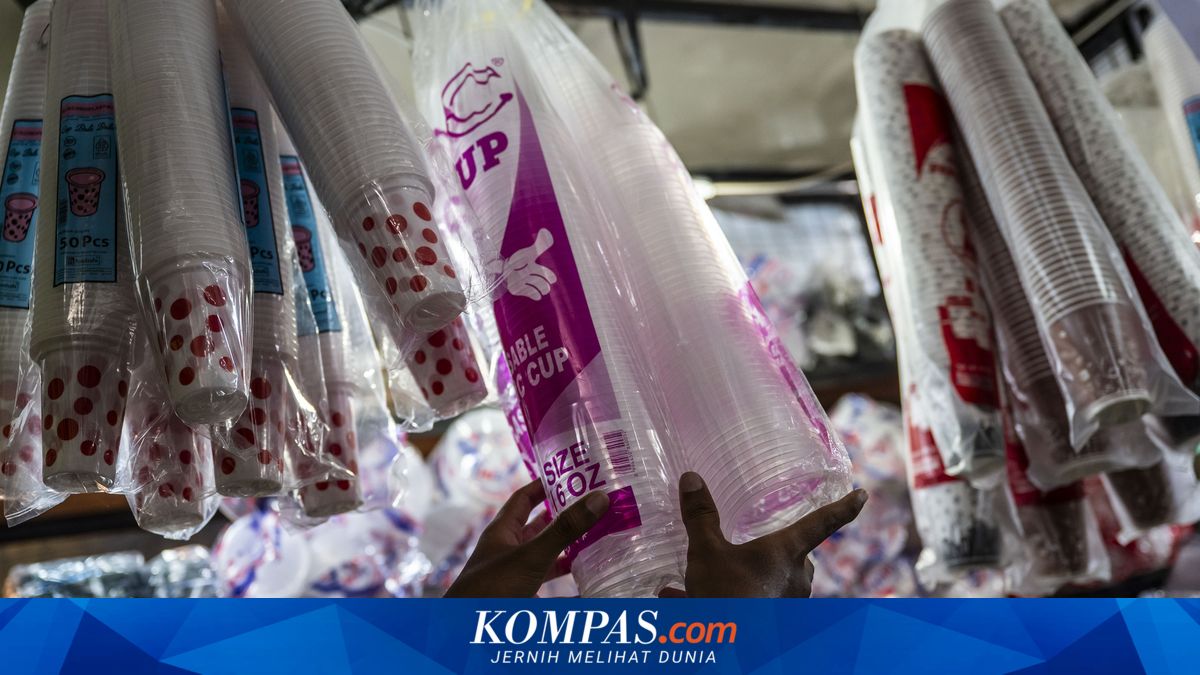
JAKARTA, KOMPAS.com - The Strait of Hormuz has been closed again after Iran briefly reopened this vital global trade route last Friday. This development was triggered by reports of attacks on ships attempting to pass through the area. Many parties had viewed the reopening of the Strait of Hormuz as potentially improving the impacts felt in Indonesia, such as the rise in plastic packaging prices. Economist and Executive Director of CORE Indonesia, Mohammad Faisal, explained that raw materials for plastic production, which are petrochemical products, indeed received positive sentiment from the reopening of the Strait of Hormuz. The smooth traffic would allow supplies to recover to normal levels. “Although the smoothness won’t happen immediately, there might be a lag time, so recovery can’t be too quick,” he told Kompas.com on Monday (20/4/2026). “Clearly, the reopening of the Strait of Hormuz should have a positive effect on price reductions,” he clarified. As a note, the products affected by the reopening of the Strait of Hormuz are oil, gas, and petrochemical products. “What will become smoother with the reopening of the Strait of Hormuz is the traffic of oil, gas, and petrochemicals,” he said. Faisal detailed that improvements in the petrochemical supply chain will affect plastic production. Meanwhile, commodities like oil and gas also influence the aviation industry, where ticket prices have risen due to increases in aviation fuel costs. Economist and Professor at the Faculty of Economics, Andalas University, Padang, Syafruddin Karimi, explained that the reopened shipping route could indeed reduce acute pressure on oil prices and improve market expectations. Nevertheless, plastic prices are formed by a longer and more complex chain than just crude oil. Plastics depend on feedstocks like naphtha and propane, then on olefins such as ethylene and propylene, and then on the operational capacity of petrochemical complexes. “The problem is, the last two risks have not fully recovered,” he stated.