
OpenAI Launches AI Image Verification Tool Based on SynthID and C2PA
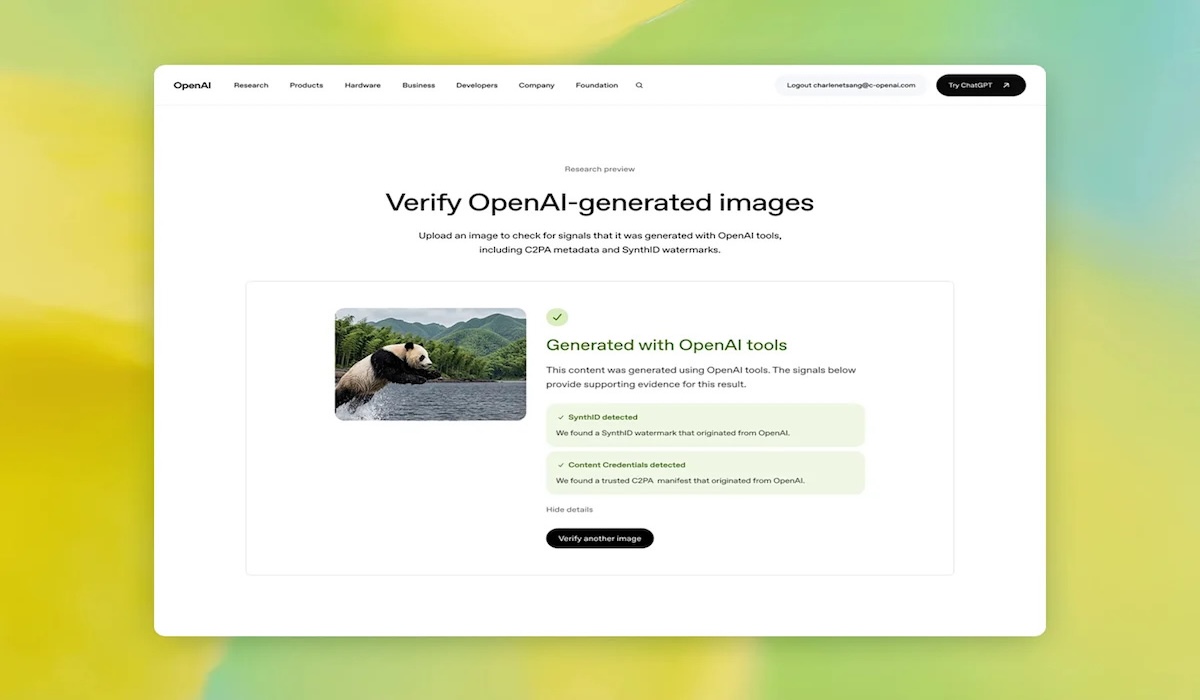
In the flood of AI-generated visual content on the internet, distinguishing between human-made and machine-made work has become an increasingly crucial challenge. Many would agree that image-based misinformation is now harder to detect than ever. OpenAI has pledged to address this by introducing pixel-level transparency for outputs from their models. This article reviews OpenAI’s latest image verification tool, which employs advanced watermarking technology to uphold the integrity of digital content.
OpenAI has officially launched an online image verification tool designed to detect whether a given image was created using their AI models, such as those powering ChatGPT, the OpenAI API, or Codex. The tool is available in a public preview phase as part of the company’s effort to build a more trusted digital ecosystem.
The verification system relies on a multi-layered approach, combining industry standards with metadata encryption technologies.
To ensure accurate AI detection, OpenAI integrates two main technologies operating in parallel.
How to Use OpenAI’s Verification Tool:
Although this is a major advance, the tool still has certain limitations that users should understand.
The tool’s arrival marks a new chapter in the fight against fake content. By combining informative metadata and a robust watermark, OpenAI aims to set new standards for content transparency in the age of artificial intelligence.