
One Year of Danantara: Overhaul of State-Owned Enterprises and Prabowo's Ambitious Targets
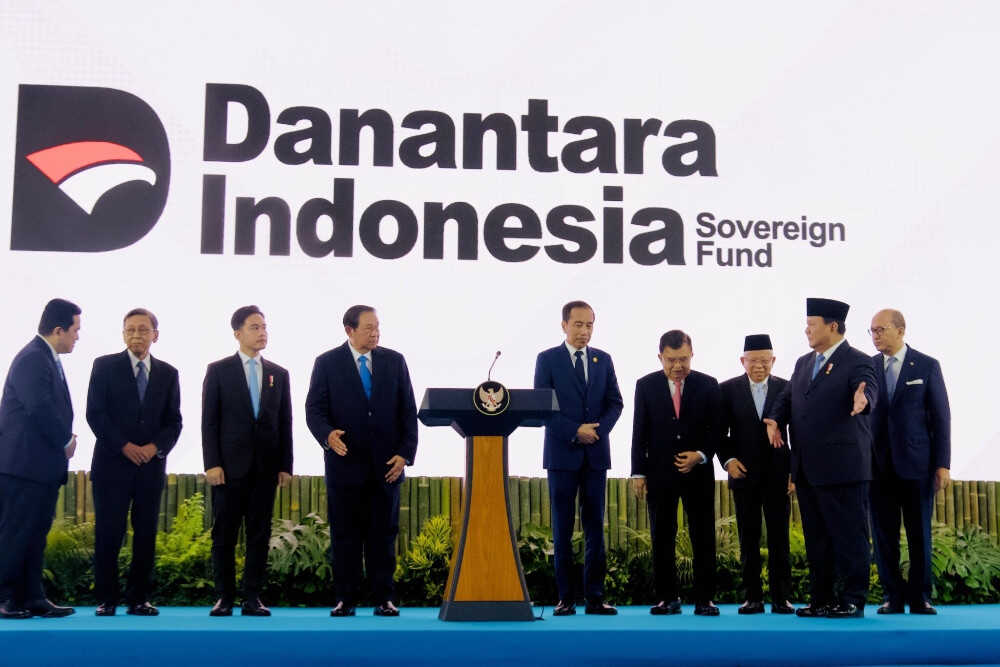
PT Danantara Investment Management Body (BPI Danantara) turns one year old on 24 February 2026. Born from President Prabowo Subianto’s grand vision to support the Indonesia Incorporated concept, Danantara operates as a superholding for state-owned enterprises (SOEs) whilst serving as a co-investor across various strategic economic sectors.
On 24 February 2025, the government officially introduced to the public the Investment Management Body (BPI) Daya Anagata Nusantara, or Danantara Indonesia, as the superholding institution managing state assets. The establishment of this sovereign wealth fund marks a new chapter in SOE transformation, with greater emphasis on commercial value and national development impact.
Since its launch by President Prabowo Subianto, the institution has become the new controller of state enterprises. Danantara’s activities throughout its first year have focused on strengthening the fundamentals of several SOEs deemed to play crucial roles in connectivity and strategic industries.
Rosan Roeslani, CEO of Danantara Indonesia, stated that Danantara’s one-year milestone represents an important turning point from the grand vision born of President Prabowo’s courage to ensure state assets are managed in a more integrated, disciplined, directed, and long-term investment-oriented manner for Indonesia’s future.
“In this one year journey, SOEs no longer operate independently, but move in harmony within one national orchestration,” said Rosan, as quoted from his Instagram post @rosanroeslani on Wednesday, 25 February 2026.
Rosan emphasised that SOE governance continues to be strengthened, investment direction is unified, global trust is built, and cross-border collaboration is expanded. Danantara, he continued, emphasises strategic steps based on the principles of credibility, transparency, and commitment to delivering sustained added value.
“This is the essence of One Danantara: one vision, one action, one force for a stronger Indonesia,” he said.
Pandu Sjahrir, Chief Investment Officer at Danantara, also shared reflections on Danantara’s one-year milestone on his personal Instagram account. Pandu referred to 24 February as serendipity—a sweet coincidence.
“This [24 February] is my late father Dr. Sjahrir’s birthday, and also marks one year of Danantara Indonesia’s journey. This moment makes me not only remember my father as family, but also reconsider the foundations and values he instilled long ago,” wrote Pandu.
According to him, Sjahrir did not teach values through grand words or slogans, but demonstrated through daily practice that maintaining integrity when no one is watching, shouldering responsibility beyond oneself, having the courage to make decisions whilst remaining humble to continue learning, and building something that can outlive our own names, are what matter.
“Today, I attempt to translate those values into Danantara Indonesia. Seeking to build an institution that does not rest on a single figure, time period, or particular situation,” he added.
According to him, Danantara is an institution rooted in long-term responsibility for Indonesia and must be built to be resilient through sound governance, good reputation, and objectives greater than any individual within it today.
For Pandu, like families, institutions also inherit values. If their foundation is strong, their impact will continue to grow across generations.
“Just as the values my father instilled can still guide me to this day, I hope Danantara Indonesia can become an institution that creates lasting impact for generations to come.”
2026: Danantara’s Year of Proof
Entering its first year, Danantara projects 2026 as a year to demonstrate execution of SOE restructuring, which will determine the direction of valuation adjustments or share price re-rating in the capital market.
Based on the report titled Danantara Indonesia Economic Outlook 2026, the state investment management body states that SOE restructuring has become an important variable in shaping the investment risk premium for the nation.
Therefore, Danantara’s primary target is to drive state enterprises to transform into entities more resilient to global financial market volatility and commodity price cycles.
One example is PT Telkom Indonesia (Persero) Tbk. (TLKM), which throughout last year streamlined subsidiaries and refocused on core competencies to reduce operational costs.
Beyond Telkom, the recovery narrative is also evident in other heavyweight emitters, such as airline operator PT Garuda Indonesia (Persero) Tbk. (GIAA).
GIAA is known to be focusing on operational rehabilitation through fleet reactivation. The proposed merger of Citilink and Pelita Air serves as a strategic catalyst to create cost synergies, particularly in fuel procurement.
Next is PT Krakatau Steel (Persero) Tbk. (KRAS). Despite debt burden constraints, gradual restructuring has reduced cash flow pressure for the company. As a result, KRAS shares rose more than threefold throughout 2025.
In the construction sector, Danantara is also consolidating seven state-owned works enterprises into a leaner entity. This move aims to make the construction sector competitive again in the capital market through asset recycling schemes.
Danantara has set a target for SOE net profit to reach approximately Rp350 trillion in 2026. This figure represents an increase compared to last year’s realisation of approximately Rp285 trillion.
The increase in this target is based on the results of transformation and restructuring carried out by Danantara over the past year.
Dony Oskaria, Chief Operating Officer of Danantara Indonesia, stated that SOE profit normalisation should actually reach Rp332 trillion in 2025. However, after making asset value write-downs (impairment) adjustments of approximately Rp55 trillion, SOE net profit fell to a range of Rp280 trillion to Rp285 trillion.
“In 2026, we are incorporating a work plan of approximately Rp35 [trillion]…” [article text appears to be cut off]