
One Year of Danantara: Assessing Progress, Shaping the Future
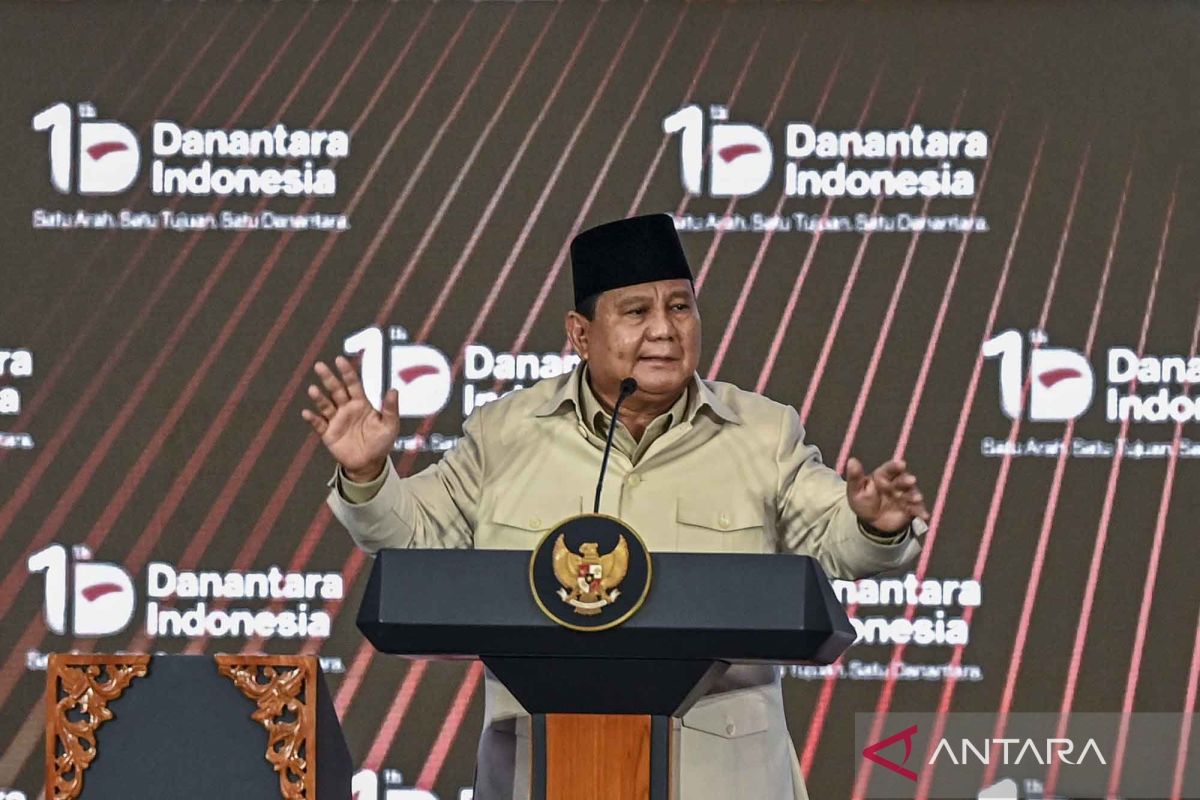
One year is sufficient to assess direction: whether Danantara is moving towards strategic objectives or losing momentum.
Jakarta — A great nation is not determined solely by territorial size, population, or natural resources. The more fundamental determining factor is the capacity to manage resources wisely and sustainably.
The history of global economics demonstrates that abundant resource reserves do not automatically guarantee prosperity. Many resource-rich nations become trapped in stagnation, whilst countries with limited natural resources have become global powers through effective economic governance.
Indonesia stands at precisely this juncture, positioned between two possibilities: becoming a nation that successfully builds robust economic systems and governance, or failing to properly manage its own potential and wealth.
With a population exceeding 275 million and an economy now worth more than 1.4 trillion US dollars, Indonesia is frequently described as one of the future economic powerhouses. Various international institutions even project Indonesia as one of the world’s largest economies by mid-century. However, potential can become both opportunity and illusion if not managed correctly.
It is in this context that the formation of Danantara becomes interesting to examine. One year after this institution’s establishment, reflection on its role becomes important—not merely to assess short-term performance, but to determine whether Indonesia is building a sufficiently strong institutional foundation for managing its own future.
Growth Without Transformation?
Over the past two decades, Indonesia has been praised as one of the success stories of economic stability in developing nations. Average growth of 5 per cent per annum, controlled inflation around 3 per cent, and a relatively low government debt ratio have been considered important foundations. However, a fundamental question emerges: is this stability sufficient to enable Indonesia to move up in economic class?
Many economists argue that Indonesia’s greatest challenge is no longer merely maintaining growth, but achieving economic transformation.
Economic structure remains dependent on commodities and domestic consumption. Manufacturing’s contribution has stagnated at around 19 per cent of GDP over two decades. Unequal distribution of growth benefits is evident. The Gini ratio has indeed fallen from 0.41 in 2011 to 0.38 in 2023, but gaps in access to financing, technology, and infrastructure remain substantial. This means growth has not yet been fully inclusive.
To accelerate transformation, Indonesia’s investment requirements are enormous. The World Bank estimates the ideal investment ratio at 35–40 per cent of GDP, whilst currently it stands at only 30–32 per cent. McKinsey Global Institute calculates that an additional 600 billion US dollars is required over the next two decades, particularly in infrastructure, energy, high-value manufacturing, and the digital economy.
The state budget clearly has limitations. Government spending is largely absorbed by routine expenditure and social programmes. Therefore, Indonesia requires additional instruments to manage economic resources more productively.