
One Year in Office: Semarang Mayor Agustina and Deputy Iswar Strengthen Public Health Services
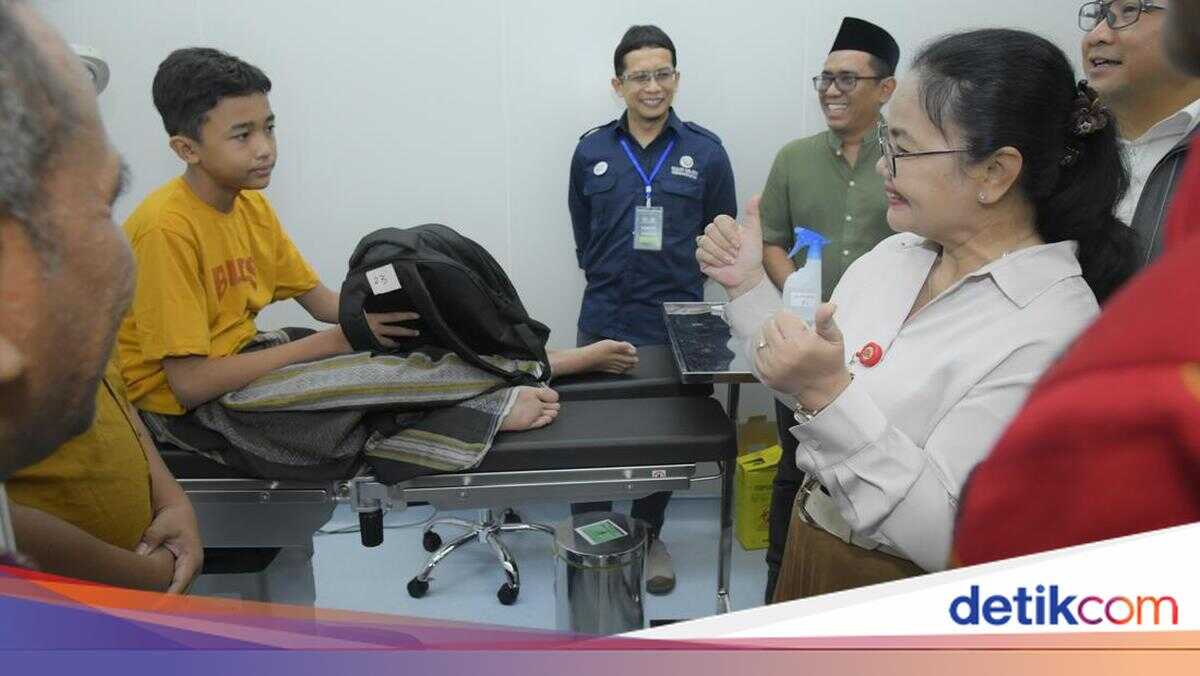
Exactly one year into the leadership of Semarang Mayor Agustina Wilujeng and Deputy Mayor Iswar Aminuddin, the health sector in the Central Java capital has recorded significant progress. Healthcare access has widened, public protection has improved, poverty figures have declined, and services for expectant mothers have become increasingly assured.
These healthcare services have been strengthened through the ‘Semarang Sehat’ (Healthy Semarang) programme, which positions health as a fundamental right of all residents. The programme targets not only treatment but also disease prevention, nutritional fulfilment, and guaranteed healthcare access for all segments of society.
“Health is every citizen’s fundamental right. We want to build a Semarang that is strong from within, and that begins with a healthy body, a strong spirit, an improving economy, and a sense of security when seeking medical treatment. Semarang Sehat is the embodiment of a government that is present to protect its people,” said Agustina in a written statement on Tuesday (24 February 2026).
These health development efforts have run in tandem with poverty alleviation initiatives. Over the past five years, the poverty rate in Semarang has declined consistently, from 11.84 per cent in 2020 to 9.36 per cent in 2025.
The year-on-year decline progressed from 11.25 per cent in 2021, to 10.98 per cent in 2022, 10.77 per cent in 2023, 10.19 per cent in 2024, and finally 9.36 per cent in 2025. This reduction has broadened residents’ access to healthcare, particularly for groups previously constrained by costs.
According to Agustina, improvements in health and the economy are inseparable. Healthy residents have greater opportunities to work productively, whilst economic improvement makes healthcare access increasingly available.
“Poverty and health are closely linked. Poor residents are vulnerable to illness, and sick residents can fall into poverty. That is why we intervene on both fronts simultaneously. Thankfully, the figures continue to show improvement,” she said.
One of the other key achievements has been the expansion of Universal Health Coverage (UHC) enrolment. The number of UHC participants in Semarang increased from 98,261 in 2024 to 228,859 in 2025, an addition of 130,598 participants within a single year.
“I often hear stories from residents who used to be afraid of going to community health centres or hospitals because they worried about costs. Now, with expanded UHC, they can come with peace of mind. That is a source of great happiness for us,” Agustina added.
The Semarang city government has also strengthened its stunting response through a number of integrated programmes targeting adolescents, expectant mothers, and toddlers. These efforts are aimed at ensuring optimal child development from an early age.
The Daycare Rumah Pelita programme targets 160 toddlers, whilst the Week Care programme reaches 105 individuals comprising 30 adolescents, 30 expectant mothers, and 45 toddlers across three community health centres. Additionally, the distribution of iron supplement tablets has been intensified to prevent anaemia, targeting 78,612 adolescent girls, 18,293 expectant mothers, and 261 brides-to-be. The Dapur Sehat Atasi Stunting (DASHAT) programme, which provides nutritional guidance and healthy eating education, also targets 78,612 adolescents and 18,293 expectant mothers.
Beyond this, maternal and child health services have also been expanded. Healthcare services for expectant mothers reached 17,636 individuals, for mothers giving birth 17,561, for newborns 27,091, and for toddlers 77,484. At the posyandu (integrated health post) level, toddler monitoring is conducted at 1,643 posyandu spread across 177 sub-districts with the support of 15,741 cadres.
“I am grateful to the Posyandu cadres. They are health heroes in their respective communities. Without them, these programmes would not reach mothers and children,” said Agustina.
In addition to services, throughout 2025 four community health centres were built or rehabilitated: Puskesmas Tlogosari Kulon, Kebokatan Phase 2, Pegandan Phase 2, and Genuk Phase 2. Three auxiliary health centres (Pustu) were also constructed and repaired, including Pustu Ratu Ratih and Pustu Beringin.
“We want to ensure that no resident struggles to access healthcare because of distance. By building community health centres and auxiliary centres at various locations, we are bringing services closer to the people,” Agustina affirmed.
Not only focusing on physical health, the Semarang city government has also strengthened mental and social health aspects through the Rumah Inspirasi (House of Inspiration) programme. These facilities serve as spaces for residents to gather, learn, and receive social support.
By 2025, seven Rumah Inspirasi had been built in the sub-districts of Mijen, Tembalang, Semarang Barat, Semarang Tengah, Genuk, Gayamsari, and Gunungpati. The city government has also established the SIDAKSOS application system to facilitate data collection and service delivery.
“Rumah Inspirasi is not merely a building. It is a space of hope for residents who need support. Here they can learn, gather, and find the motivation to rise up,” Agustina explained.
Entering the second year of their administration, the Semarang city government is targeting expanded health and social services. In the area of maternal and child health, the government will develop daycare facilities at 16 locations and week care services at 40 community health centres, as well as expand iron supplement tablet distribution for adolescent girls.
Additionally, healthcare services for expectant mothers, mothers giving birth, newborns, and toddlers will also be enhanced. The city government will also distribute food assistance in the form of 10 kilogrammes of rice per family per month for seven months to 805 impoverished families who have not yet received assistance.
In terms of health infrastructure, the Semarang city government is targeting the completion of Detailed Engineering Designs (DED) for Pustu Panjang, Pustu Podorejo, and Pustu Tanjungmas. Feasibility Studies and DEDs for Puskesmas Kedungmundu and Puskesmas Srondol are also being prepared, alongside the physical construction of Pustu Sendangmulyo and the preparation of a DED for Pustu Poncol. Furthermore, Pustu Ratu Ratih will be rehabilitated and the competencies of 265 health workers will be enhanced through training.