
One Week of Civil Servants Working from Home: Why Are There Still Regions That Haven't Implemented It?
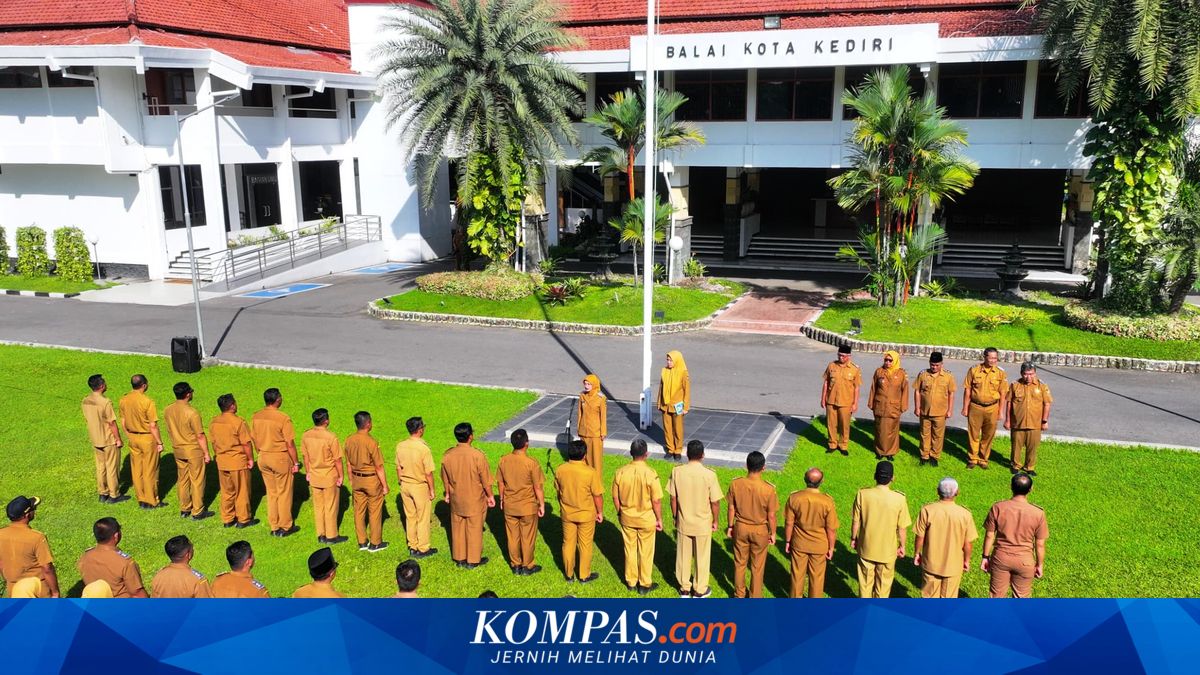
JAKARTA, KOMPAS.com - The policy of working from home (Work From Home/WFH) for the first week has not yet been implemented by several local governments, one of which is the Dompu Regency Government in West Nusa Tenggara (NTB).
That region is still assessing the impact of the policy, including on budget efficiency and public service performance.
According to the local government, all regions need to adapt to their respective conditions.
However, the Ministry of Home Affairs (Kemendagri) emphasises that WFH is a national policy that must be implemented by local governments.
So, why is there still resistance from regions in implementing the WFH policy?
Even though technology is needed to support the monitoring system so that WFH is not exploited for collective holidays.
“Some are already very ready with their monitoring. So they have a special application for attendance based on house coordinates. There’s also an application for filling in tasks, there’s e-Performance there,” said Bima when contacted by Kompas.com on Tuesday (14/6/2026).
“Well, but there are regions that don’t have that application yet. They still haven’t utilised technology, that’s the obstacle,” Bima added.
Those obstacles generally revolve around three things, one of which is the readiness of digital infrastructure and connectivity in some areas, especially regarding attendance proof systems and national-level shared information systems.
Another issue lies in the diverse characteristics of local public services, which require more detailed mapping.
The third issue relates to cross-unit coordination patterns on Fridays, which also need to be refined to maintain the work rhythm.
“These are normal obstacles in a policy transition, and they actually become our roadmap for improvements going forward,” Rini said to Kompas.com on Tuesday.
Nevertheless, she emphasised that those obstacles do not mean WFH is difficult to implement in the regions.
The central government will provide assistance to local governments that need adjustments, as part of the evaluation of implementation in the first week.
The assistance includes mapping positions and preparing standard operational procedures for services on Fridays.
“We will strengthen technical assistance to agencies that are still adjusting, deepen guidelines for position mapping, and ensure monthly reporting from each agency is carried out disciplinedly at the latest by the 25th,” Rini stated.