
One Waterway That Could Shake the Global Economy
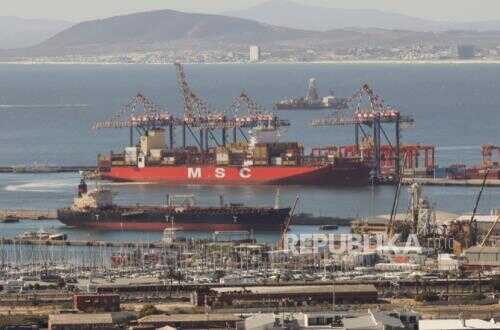
Whenever tensions rise around the Strait of Hormuz, there is one question that almost always emerges in discussions of energy geopolitics: what would actually happen if the strait were to be disrupted? This question may sound like military speculation, but for the global energy system it is a scenario that has long been studied very seriously. The Strait of Hormuz is one of the most sensitive chokepoints in the world energy system. Almost twenty per cent of global oil trade passes through this route each day. Giant tankers carry oil from ports in the Persian Gulf to Asia, Europe, and various world industrial hubs. That is why this waterway, only a hundred kilometres wide, has significance far greater than its size might suggest. If the energy flows from the region were disrupted, the impact would not be confined to the Middle East; it would be felt around the world.
Yet, interestingly, disruption of Hormuz does not have to involve a total closure to generate a global effect. In a modern economy that is highly sensitive to energy-supply risk, mere uncertainty can be enough to trigger major shocks. If a tanker is attacked, or a shipping lane is deemed dangerous by maritime insurers, energy transport costs can surge within a short period. Many shipping companies might choose to delay journeys. The energy markets would respond promptly with higher prices.
At that point, an energy crisis often begins not with a real shortage of oil, but with fear of a shortage. History offers us some indication of how this mechanism works. In the 1973 oil crisis, relatively limited supply disruptions were able to destabilise the global economy for years. Energy prices spiked, inflation climbed, and many industrialised countries experienced a sharp slowdown in growth. If a similar scenario occurred in the Strait of Hormuz — whose volume is much greater than in the previous energy crises — market reactions would almost certainly be much faster.
Many energy simulations estimate that if the Persian Gulf’s oil flows were seriously disrupted, world oil prices could surge to well over 150, even 200 dollars per barrel. But energy prices are only the first layer of a broader impact.
In a modern economy, oil is not merely an energy commodity. It forms the backbone of almost every global production and distribution system. When oil prices rise sharply, transport costs rise, logistics costs soar, and the prices of a range of goods are pulled higher. Consequently, an energy crisis almost always evolves into a global inflationary crisis.
Central banks in many countries then face a difficult dilemma. If they raise interest rates to curb inflation, economic growth may slow. But if they do nothing, the rise in energy prices can spread to the entire economy. In such a situation, the world can enter a phase that is rarely discussed but dangerously consequential: stagflation — the combination of weak growth and high inflation.
Yet there is another dimension often overlooked in discussions about the Strait of Hormuz. Long-term disruption of this energy corridor would not only trigger an economic crisis. It could also speed up changes in the global energy map. Industrialised countries may seek more stable energy sources. Investment in renewable energy could rise. New energy-trade routes could be built to reduce dependence on a single strategic chokepoint. In other words, a crisis in Hormuz could act as a catalyst for structural change in the world energy system.
However, such changes do not happen overnight. In the short term, disruption of this strait is almost certain to create significant pressure on many countries — particularly those heavily dependent on energy imports from the Gulf region.
China, Japan, and South Korea are examples of countries with high energy dependence on the region. For them, the stability of the Strait of Hormuz is not merely a geopolitical issue but a matter of economic sustainability. Even countries that do not directly import oil from the Gulf will feel the impact through global price mechanisms.
In a highly interconnected world today, no economy is truly beyond the reach of energy shocks. That is why many countries view the stability of the Strait of Hormuz as an international priority of great importance.
The strait is not only a shipping lane for oil tankers. It is one of the nodes linking geopolitical stability with global economic stability. When tensions rise in the area, what is at stake is not just regional security in the Middle East. What is at risk is the balance of the global energy system. And from there we begin to understand why a strip of water that looks small on the map holds such significant geopolitical and economic weight. The Strait of Hormuz may be narrow, but in a modern energy-driven world, it is one of the places where the pulse of the global economy is most strongly felt.