
One Iranian cluster missile disperses 80 small 'Gocek' bombs intercepted by Israel's Iron Dome
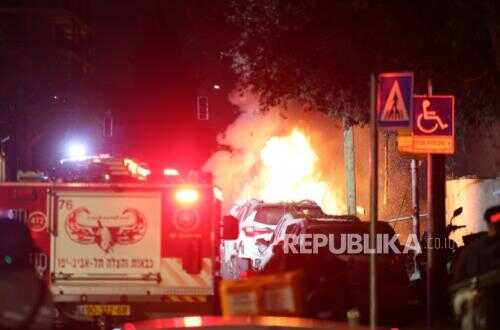
The escalation of the war between Iran and Israel has entered a new phase after the Islamic Revolutionary Guard Corps (IRGC) confirmed the use of cluster-munition warheads in ballistic missiles in an attack on Tel Aviv’s city centre, not long ago. The weapon was reportedly used en masse for the first time to maximise damage in the occupied area. NDTV reported that Iran deployed the Kheibar Shekan (Fort Destroyer) missile system, a third-generation advanced weapons system that has been operational since 2022. The missile carries a manoeuvrable warhead capable of releasing around 20 to 80 submunitions (small bombs) at an altitude of about 7 kilometres above the ground. Unlike conventional missiles that explode at a single point, the Kheibar Shekan warhead detonates in the air and disperses small bombs within a radius of up to eight kilometres. Each submunition carries about 2.5 kg to 7 kg of explosive—comparable in destructive power to short-range rocket strikes by Hamas or Hezbollah. The missile has a range of up to 1,450 km and can perform terminal-phase manoeuvres to evade air-defence systems such as Patriot or Iron Dome. As of this report, the latest attack on Israel’s centre has wounded at least 12 people. One small bomb struck a house in the city of Azor, south of Tel Aviv, causing significant structural damage. NBC News data indicate that since the US-Israel offensive began on February 28, Iranian missile strikes have killed at least 11 people in Israel and wounded more than 1,000 others. There are growing concerns about the dud rate (bombs that fail to explode on impact), which effectively become landmines threatening civilians and rescue teams in the long term.