
Once a Darling, Vegan Meat Now Falling Out of Favour
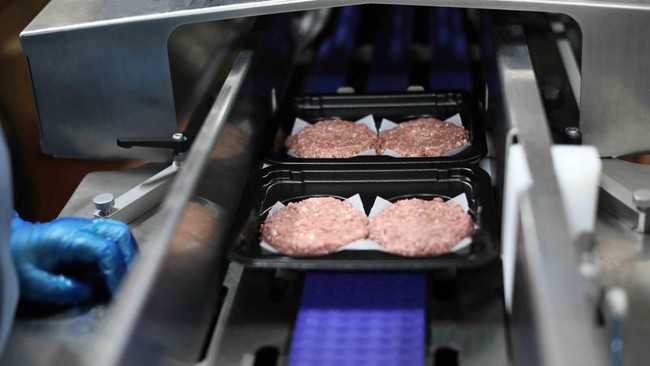
Jakarta — The plant-based meat industry, once championed by investors, is now facing significant pressure. After listing on the stock exchange in 2019 with a valuation of nearly US$4 billion (approximately Rp67.04 trillion), Beyond Meat is now worth less than US$400 million (Rp6.7 trillion) as business performance has declined.
According to The Economist, plant-based meat sales in the United States surged 45% in 2020 to US$1.4 billion, sparking the creation of numerous startups. However, in the first three quarters of 2025, Beyond Meat’s revenue has continued to shrink year-on-year, with a likely further decline in the final quarter. Meanwhile, consumer surveys by YouGov for The Economist show that the proportion of Americans regularly consuming these products remains in the single digits.
In contrast, conventional meat sales have grown rapidly despite rising livestock and feed prices driven by population declines and increased production costs. Industry analysts view the current situation as a correction rather than a collapse, though structural challenges are acknowledged.
One major obstacle is the relatively high price compared to conventional meat, partly due to agricultural subsidies supporting the livestock industry. At Walmart, beef mince is sold for US$7.43 per pound, whilst the plant-based alternative from Impossible Foods is priced at US$9.04.
Taste remains a significant issue, as some products have failed to satisfy consumers. Mark Cuddigan, chief executive of British plant-based meat company This, acknowledged that certain products still taste “poor”, and a single negative experience can deter consumers from trying again.
Plant-based meat products have also become caught in a cultural war in the United States, particularly regarding the “real food” campaigns championed by public figures including Health Minister Robert F. Kennedy Jr. Pro-meat advocates often criticise plant-based products as high in fat, salt, and ultra-processed, though comparisons with plain, unseasoned raw meat are not entirely fair.
Another challenge is the classification of these products as ultra-processed foods due to their lengthy ingredient lists and complex manufacturing processes. David Welch, a food tech investor from Synthesis Capital, believes health-conscious consumers frequently conflate plant-based burgers with snacks such as crisps or Oreo biscuits.
In response to the trend towards high-protein and high-fibre diets, Impossible and Beyond now highlight protein content on product packaging. Impossible has partnered with high-protein bread and pasta manufacturers, whilst Beyond—which dropped “Meat” from its name last year—has expanded into beverages by launching protein-infused fizzy drinks containing 20 grammes of protein per can.
Some companies are also experimenting with hybrid burgers that are half meat and half plant-based to reach a broader consumer base. Tim Dale, a researcher at Food System Innovations, suggests these products could appeal to parents seeking to incorporate vegetables into their children’s meals.
Amid investor caution regarding plant-based meat, some venture capital firms are turning their attention to cultivated meat, or cell-cultured meat, produced in laboratories from animal cells. Although some US states have proposed bans, industry players see regulatory progress at the federal level, and in the United Kingdom, the product has already been approved as pet food.
However, cultivated meat still faces substantial production cost challenges. Uma Valeti, chief executive of Upside Foods, believes the coming decade will be critical for proving that production can be scaled up gradually, ensuring the alternative protein industry does not become trapped in excessive euphoria once again.