
On Wednesday morning, Jakarta's air quality ranks third worst in the world
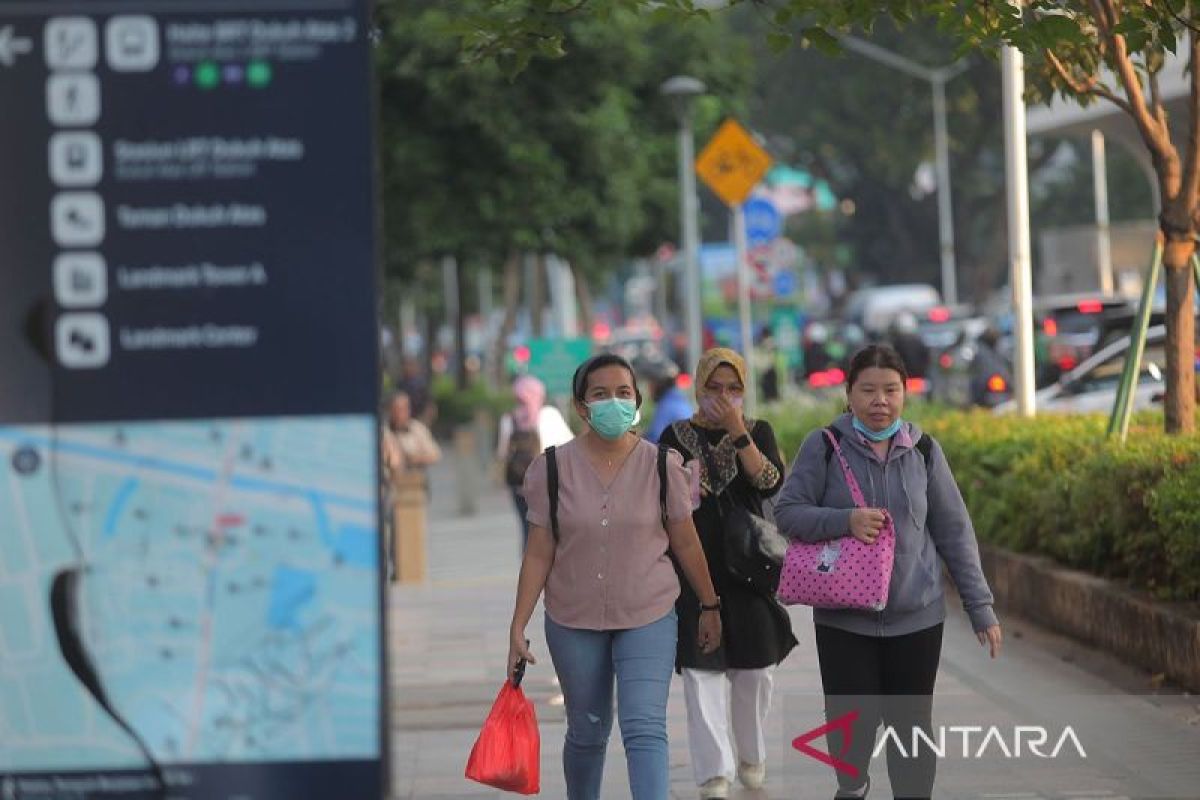
Jakarta (ANTARA) - Air quality in Jakarta entered the unhealthy category and ranked third as the city with the worst air in the world on Wednesday morning. Based on data from the IQAir air quality monitoring website at 05:00 WIB, the Air Quality Index (AQI) in Jakarta stood at 158, falling into the unhealthy category with PM2.5 air pollution and a concentration value of 65 micrograms per cubic metre. This figure indicates that the air quality level is unhealthy for sensitive groups as it can harm humans or sensitive animal groups or cause damage to plants or aesthetic values. The website also provides recommendations regarding the air conditions in Jakarta, namely that the public should avoid outdoor activities. If outdoors, use a mask, and then close windows to avoid dirty outdoor air. Meanwhile, the good category is an air quality level that has no effect on human or animal health and does not affect plants, buildings, or aesthetic values with a PM2.5 range of 0-50. Then, the moderate category is air quality that does not affect human or animal health but affects sensitive plants and aesthetic values with a PM2.5 range of 51-100. Next, the very unhealthy category with a PM2.5 range of 200-299 or air quality that can harm health in several segments of the exposed population. Finally, hazardous (300-500) or in general, air quality that can seriously harm population health. The city with the worst air quality in first place is Delhi (India) with 160; second, Lahore (Pakistan) with 159; fourth, Kinshasa (Democratic Republic of the Congo) at 151; and fifth, Beijing (China) with 144. The DKI Jakarta Provincial Government is preparing a rapid response to tackle air pollution in the capital during the dry season, predicted to occur from early May to August ahead. The quick handling steps for air pollution during the dry season include improving the air quality monitoring system and motor vehicle emission testing. In addition, the DKI Provincial Government also has an Air Pollution Control Strategy (SPPU) that is being evaluated from various aspects, from PM2.5 trends, emission loads per sector to its impact on public health. According to the DKI Provincial Government, controlling air pollution cannot be done by one region partially, so integrated joint actions are needed between regional government organisations as well as cross-regional collaboration around Jakarta.