
On Waste Management, Legislator: Jakarta Must Undergo Total Transformation
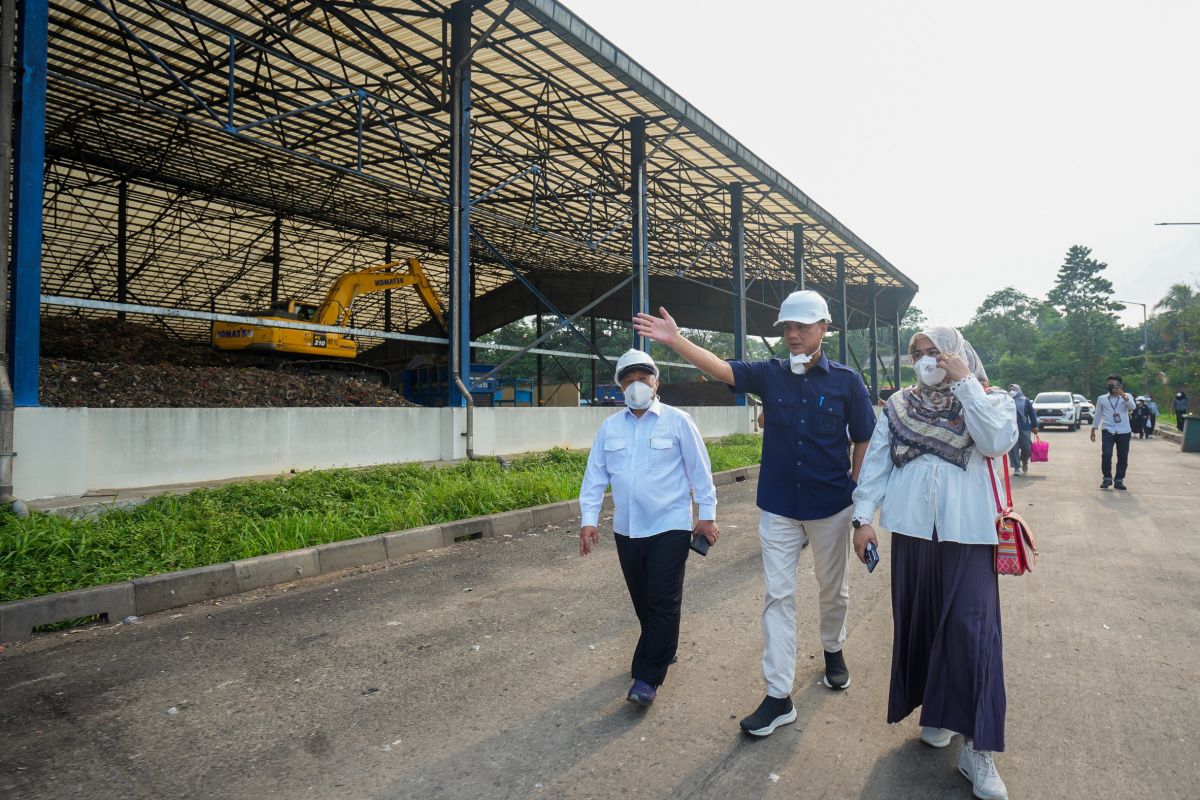
Jakarta (ANTARA) - Member of Commission D of the DKI Jakarta DPRD, Nabilah Aboebakar Alhabsyi, stated that the management of waste in the capital requires comprehensive transformation steps, especially as Jakarta is currently facing a waste emergency.
“Jakarta can no longer rely on Bantargebang. We are facing a waste management emergency,” Nabilah said in Jakarta on Wednesday.
Nabilah said that Jakarta is currently facing a waste emergency, with the situation becoming even more urgent following a letter from the Ministry of Environment and Forestry mandating the cessation of open dumping practices no later than August 2026.
In addition, waste distribution to Bantargebang will be limited to only 50 per cent.
According to her, Jakarta’s continuously increasing waste volume is not commensurate with the existing processing capacity. Even the current system is deemed unable to resolve the issue comprehensively, particularly downstream.
“Solutions can no longer rely solely on downstream technology. We need an upstream approach, especially through changing public behaviour in sorting waste from home,” she said.
Nabilah, along with the Special Committee (Pansus) on Waste Management of the DKI DPRD, inspected the conditions at the Integrated Waste Processing Site (TPST) Bantargebang on Monday (21/4/2026). The visit was to understand the current conditions at Bantargebang.
Nabilah also highlighted the weak implementation of regulations, including the Governor’s Regulation on the obligation to sort waste in the hotel, restaurant, and cafe (HORECA) sector. Suboptimal supervision is seen as one of the causes why the policy has not been effectively implemented.
“So there is much to be resolved; this emergency requires comprehensive reform and collaboration, from institutions, financing, to waste management business models. This must be a joint effort across parties, from the DPRD, Provincial Government, central government, to the public and environmental organisations,” she said.
Nabilah also encouraged the construction of city-scale waste processing facilities as a temporary solution, involving cross-departmental efforts and land utilisation through partnership schemes.
“Waste problems cannot be solved with one approach. There must be transformation from upstream, strengthening of systems at the regional or city level, and innovation downstream,” she added.