
On IMF proposal, Purbaya affirms no change to tax rates
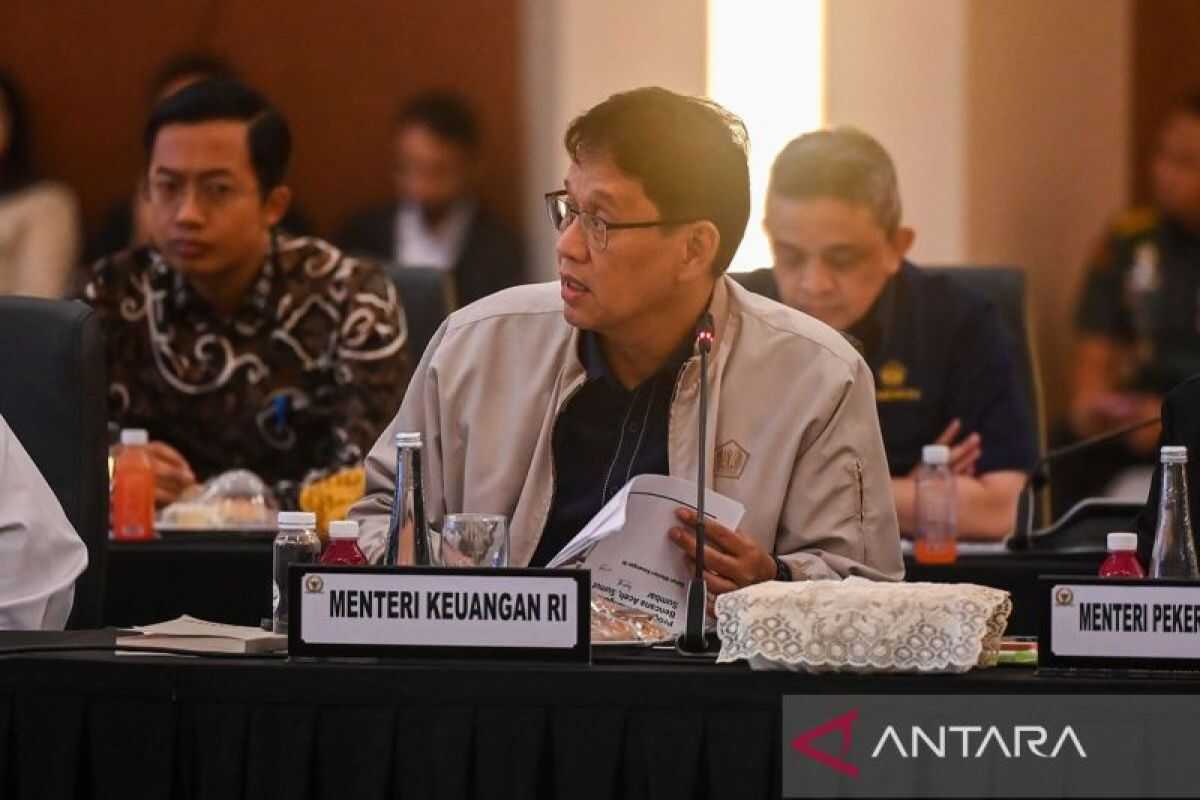
Jakarta (ANTARA) - Finance Minister Purbaya Yudhi Sadewa has affirmed that his ministry will not alter tax rates in the near term until the Indonesian economy has strengthened.
He made the statement in response to a simulation by the International Monetary Fund (IMF) that included a gradual increase in employee income tax (PPh 21) as one financing alternative to bolster public investment.
“The IMF’s proposal to raise taxes is a good one. But as I’ve said, until the economy is strong, we won’t be changing tax rates. Instead, we will pursue extensification, plug tax leakages, and so on,” Purbaya said after a coordination meeting of the Post-Disaster Recovery Task Force for Sumatra in Jakarta on Wednesday.
Rather than raising rates, Purbaya stated his intention to focus on broadening the tax base, improving compliance, and accelerating economic growth to keep the deficit under control without adding to taxpayers’ burden in the near term.
“What I want to ensure is that the economy grows faster, so that my tax revenue is higher. That way, the 3 per cent threshold can be avoided automatically,” he said.
In a report entitled “Golden Vision 2045: Making The Most Out of Public Investment”, the IMF assessed that increasing public investment is key for Indonesia to achieve high-income country status by 2045.
The institution noted that higher investment spending needs to be accompanied by additional revenue mobilisation to remain in line with the fiscal deficit ceiling of 3 per cent of gross domestic product (GDP).
“Additional revenue mobilisation would create the fiscal space needed to scale up public investment, while maintaining compliance with Indonesia’s longstanding fiscal rule,” the IMF wrote in the report.
Throughout 2025, Indonesia’s deficit was recorded near the threshold at approximately 2.92 per cent of GDP.
Nevertheless, the IMF did not explicitly recommend an increase in any specific type of tax. The employee income tax increase featured in the report was presented as a financing simulation within an economic model, not a binding policy recommendation.
In addition to encouraging revenue mobilisation, the IMF also emphasised the importance of improving government expenditure efficiency. In its assessment, the impact of Indonesia’s public investment was deemed relatively limited in the short term due to an efficiency gap.
The IMF therefore recommended that the government improve the quality of public investment management, tighten project selection and evaluation, and ensure spending is better targeted.