
On Fitch, HKI emphasises fiscal discipline to maintain investor confidence
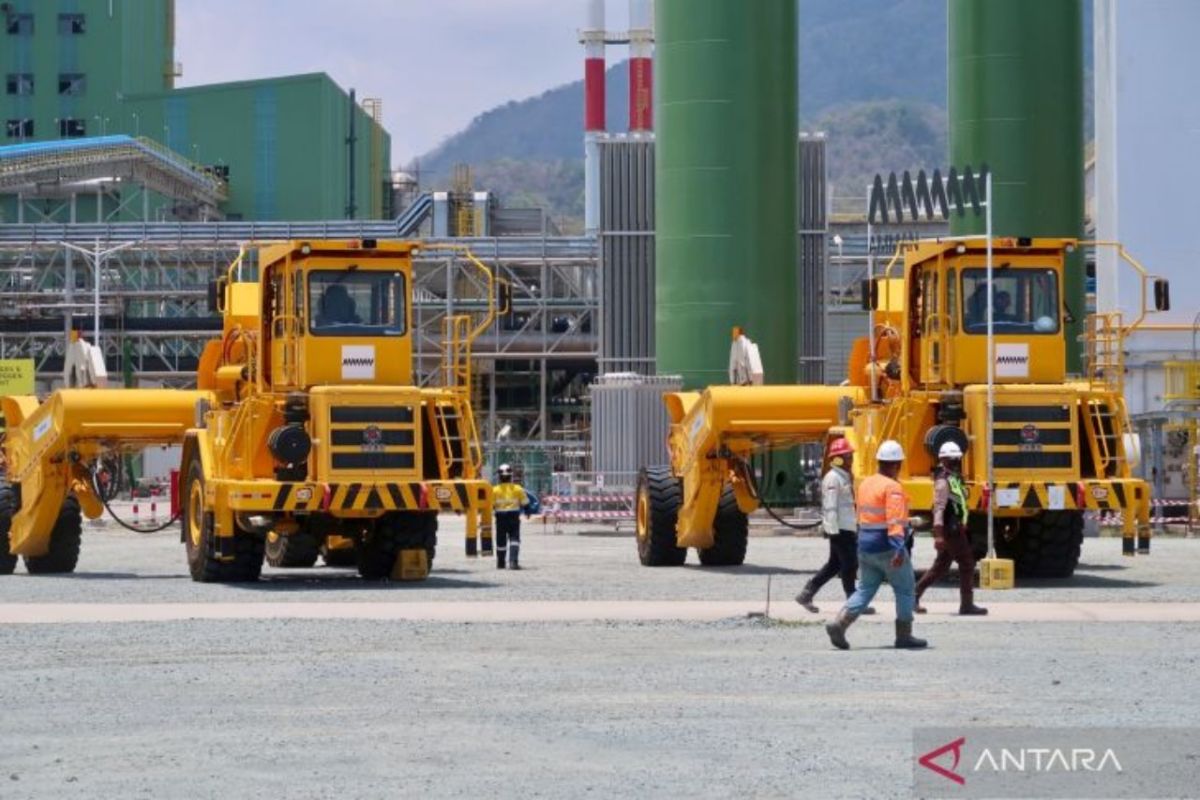
Jakarta — The Indonesian Industrial Zone Association (HKI) has emphasised the importance of fiscal discipline and consistency in economic policy to maintain investor confidence, following international rating agency Fitch Ratings’ revision of Indonesia’s sovereign credit outlook.
HKI General Chairman Akhmad Ma’ruf Maulana stated in Jakarta on Monday that the outlook change represents a serious signal that demands rapid government response, given that country risk perception significantly influences industrial investment decisions.
“If not quickly addressed with clear corrective measures, the impact could be directly felt in industrial investment, project financing costs, and investor confidence,” he said.
Although Indonesia’s credit rating remains at investment grade level (BBB), HKI assessed that the outlook revision reflects growing market concerns regarding the consistency of economic policy and the credibility of fiscal governance in the medium term.
HKI emphasised that Indonesia’s industrialisation process is currently in a critical phase. Several strategic manufacturing sectors including electronics, renewable energy, batteries, and industries based on natural resource beneficiation require long-term investment of substantial value.
In these conditions, stability in fiscal policy, regulatory certainty, and credibility of economic governance have become primary factors in attracting and retaining industrial investment.
HKI also noted that changes in country risk perception can directly impact increased cost of capital for industrial projects. Global investors typically delay or review expansion plans when macroeconomic policy uncertainty emerges.
In the long term, such conditions could reduce Indonesia’s competitive advantage in competing for regional investment, particularly against countries such as Vietnam, Thailand, and Malaysia, which are seen as continuously strengthening policy certainty and investment governance.
Additionally, HKI observed that Fitch’s outlook change occurs amid heightened global economic uncertainty resulting from geopolitical tensions, including conflicts involving Iran, Israel, and the United States in the Middle East region.
The escalation of such conflicts raises concerns regarding the stability of global logistics routes, particularly the Strait of Hormuz, one of the world’s most vital energy trade corridors.
Disruptions to global energy logistics routes could increase international energy and logistics costs, potentially triggering global trade disruptions and creating new imbalances in global trade flows.
In this situation, HKI believes the government should focus on accelerating the realisation of investments that already have commitments.
“In a world facing geopolitical conflict and disruptions to global logistics routes, international investment flows tend to slow. Therefore, the most realistic strategy for Indonesia is to ensure the acceleration of investment realisation that already has commitments,” Ma’ruf said.
The government needs to introduce innovations in accelerating investment implementation, including through simplification of licensing, enhanced regulatory certainty, and strengthened coordination across ministries and regional governments to prevent investment projects from being hindered at the implementation stage.
He stressed that Indonesia actually possesses numerous advantages for attracting industrial investment, ranging from a large domestic market, abundant natural resources, to a strategic position in global supply chains.
Previously, Finance Minister Purbaya Yudhi Sadewa announced plans to travel abroad to present Indonesia’s fiscal policy to global rating agencies, including Fitch Ratings. At a media briefing at the Finance Ministry office in Jakarta on Friday 6 March, Purbaya acknowledged that he had previously focused more on driving domestic economic growth.
However, given that two global rating agencies have revised Indonesia’s debt rating outlook — Fitch and Moody’s Investors Service — Purbaya plans to participate in fiscal discussions abroad.