
On Expiring Quotas, BPKN Chairman Reminds of Quality and Equitable Internet Access
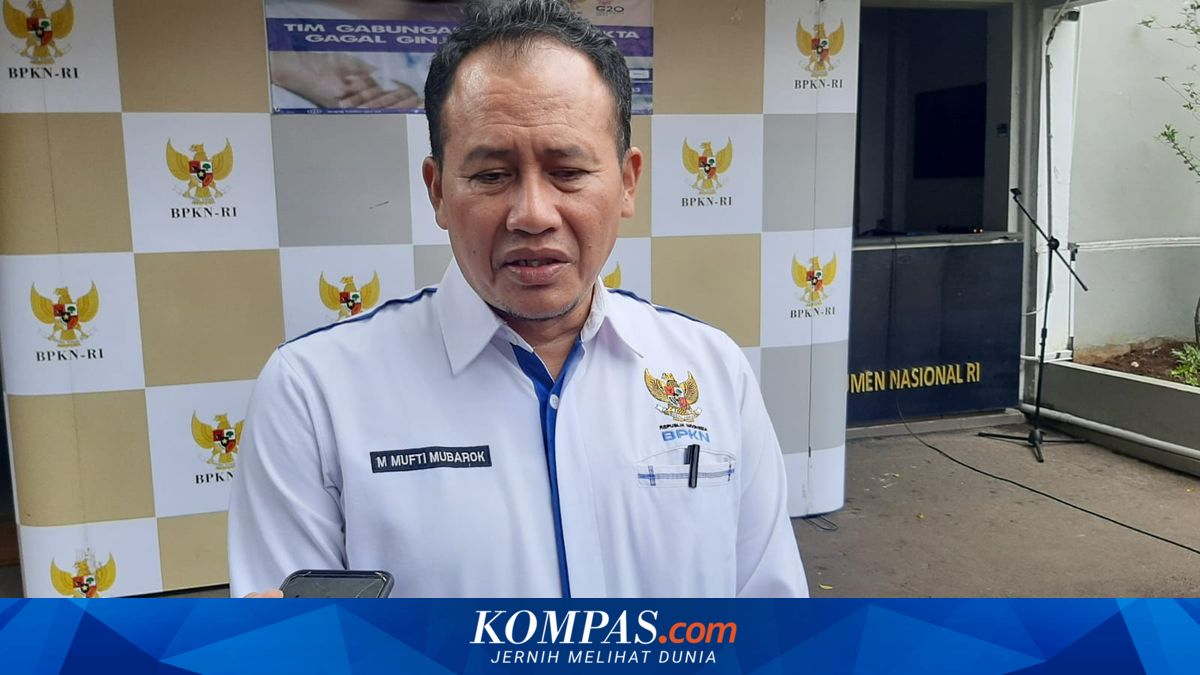
The controversy over “expiring internet quotas” that has resurfaced amid substantive testing at the Constitutional Court (MK) is seen as inseparable from a larger issue, namely the equitable distribution of internet access in Indonesia.
BPKN Chairman Muhammad Mufti Mubarok stressed that public debate should not only focus on individual losses but also consider fair access for the entire society.
“Digital justice is not just about one data package transaction. We are talking about how networks are managed so that internet access can be felt evenly. Not just in big cities, but also in remote areas,” he said in his statement on Friday (24/4/2026).
According to Mufti, Indonesia’s geographical character as an archipelagic nation with more than 17,000 islands poses the main challenge in providing equitable internet services. Building telecommunications infrastructure requires substantial investment, from BTS towers and access networks to data centres.
“If we talk about social justice, the measure is not just ‘me as an individual’, but also ‘access for everyone’, including residents in areas where construction costs are far more expensive and challenging,” Mufti said.
As an illustration, operators like Telkomsel have built more than 280,000 BTS sites and reached about 97 percent of Indonesia’s population, including in frontier, outermost, and underdeveloped (3T) areas. These efforts are also supported by BTS construction through the universal service obligation (USO) programme in collaboration with the government.
On the other hand, Mufti reminded that telecommunications networks operate on shared capacity, so usage by one group of users can affect the service quality for other users.
In mobile networks, capacity is not provided specifically one by one for each person, but is used collectively in the same area and time. Therefore, when network load increases excessively, the impact does not stop at one user but can degrade the service experience for many people. For example, speeds slow down.
This risk of network congestion occurs if accumulated usage happens simultaneously and exceeds available capacity, thereby potentially reducing the quality of service for the wider community. In that framework, network management becomes an instrument to ensure access remains more fairly distributed and service quality is maintained.
“This is where the perspective of social justice comes into play. Justice does not mean giving unlimited space to one party, but ensuring as many people as possible still receive decent services,” he said.
He added that discussions on “expiring quotas” should not stop at emotional aspects but be directed towards strengthening service governance, information transparency, and product innovation that still maintains a balance between consumer interests and service sustainability.
An aspect often unseen by the public, according to Mufti, is that providing networks requires ongoing investment and operational costs, such as electricity, device maintenance, land rental, capacity upgrades, and transmission management. These are operator expenditures even before the service is used by customers.
“If the discussion is to be productive, do not stop at the emotion of ‘expiry’. Maintain service information transparency, continue innovating, and ensure policies still uphold social justice through increasingly equitable internet access and quality that leaves no one behind,” Mufti said.