
On Budget Deficit Widening, Indef Emphasises Prudent Management
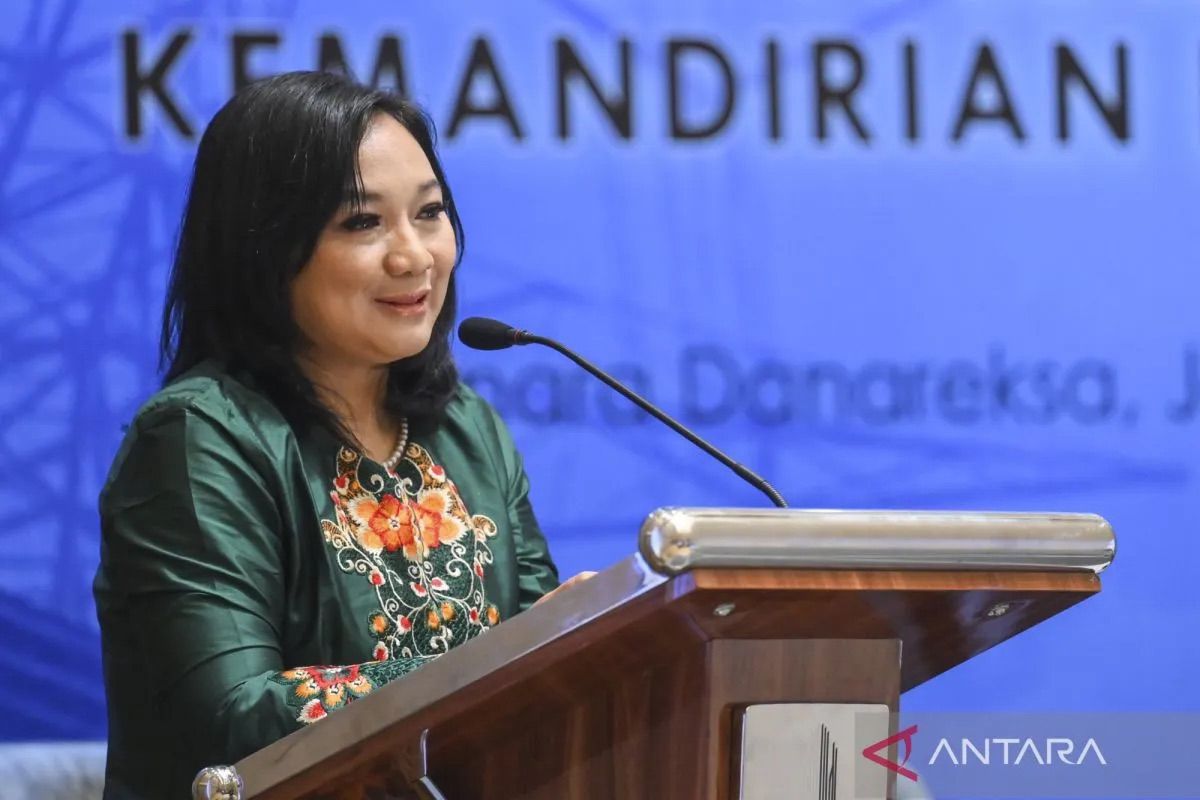
Jakarta – The Institute for Development of Economics and Finance (Indef) has emphasised the importance of prudent management of the state budget and expenditure (APBN) amid growing discourse about widening fiscal deficits due to global economic pressures.
Indef’s Executive Director Esther Sri Astuti assessed that the prospect of expanding the APBN deficit beyond 3 per cent is potentially realistic, particularly if the various macroeconomic assumptions used in drafting the APBN are not realised.
“Yes, it will automatically exceed the limit if all the macro assumptions in the budget fall short,” said Esther.
However, she warned that deficit widening could increase financing requirements through new debt.
Therefore, APBN management must be conducted more carefully to avoid creating fiscal pressures in the future.
“The concern is that this will be used to increase debt. So, prudent APBN budget management should be prioritised to ensure it has a positive economic impact,” she said.
Esther believes the government should be more selective in determining state spending priorities. Programmes with large budget requirements could be prioritised first for regions with special needs.
She also believes state budget allocation would be more effective if directed towards activities capable of delivering broader economic impact, such as promoting exports and the tourism sector.
Additionally, improving the quality of human resources and technological mastery were deemed important for strengthening the competitiveness of the national manufacturing industry.
Previously, Coordinating Minister for Economic Affairs Airlangga Hartarto outlined a worst-case scenario of the impact of conflict in the Middle East on state finances, particularly the APBN deficit, which could reach 4.06 per cent.
At a Full Cabinet Session at the State Palace in Jakarta on Friday, 13 March 2026, Airlangga presented three scenarios if conflict between Iran, Israel and the United States continues for 6 months or even 10 months.
“The worst-case, pessimistic scenario, with crude oil prices at 115 dollars per barrel, our rupiah exchange rate at Rp17,500 per dollar, growth at 5.2 per cent, state securities yield at 7.2 per cent, results in a deficit of 4.06 per cent,” Airlangga told President Prabowo during the Full Cabinet Session.
Two other scenarios, Airlangga continued, are relatively more moderate, but the APBN deficit is also assumed to exceed 3 per cent.
With crude oil prices reaching 90 dollars per barrel if conflict extends for 5 months, and 97 dollars per barrel if conflict extends for 6 months.
“The scenario, first, the Indonesia Crude Price at 86 dollars per barrel, the exchange rate at Rp17,000, sir, our APBN’s exchange rate at Rp16,500, then maintaining our growth, sir. So, this is what we maintain growth at 5.3 per cent, the state securities yield, the figure is higher sir at 6.8 per cent, then the deficit is 3.18 per cent,” said Airlangga.
For the second scenario, the Indonesia Crude Price is projected at 97 dollars per barrel, the rupiah exchange rate against the dollar at Rp17,300 per dollar, the growth rate projected at 5.2 per cent, and state securities yield at 7.2 per cent, resulting in an APBN deficit of 3.53 per cent.
“Maintaining a 3 per cent deficit is difficult for us, unless we are willing to cut spending and reduce growth. These are several scenarios that may need to be discussed in a limited capacity,” Airlangga told Prabowo.