
Ombudsman: Mapping Required to Align Bureaucratic Reform Indicators
Jakarta (ANTARA) - The Ombudsman of the Republic of Indonesia (ORI) believes that mapping is necessary to align the assessment indicators for bureaucratic reform and the quality of public services.
Ombudsman member Robert Na Endi Jaweng stated that mapping could be conducted on the instruments used by each institution to identify interconnections and the division of roles. This follows a Working Meeting and Hearing with Commission II of the Indonesian House of Representatives (DPR RI) regarding the alignment of bureaucratic reform assessment indicators and public service quality, Robert said in a statement confirmed in Jakarta on Friday.
According to Robert, the Ombudsman continues to conduct assessments in accordance with its duties and functions as a public service oversight body. However, he noted that follow-up is required regarding the meeting between Commission II of the DPR RI, the Ministry of Administrative and Bureaucratic Reform (PANRB), the National Institute of Public Administration (LAN), and the Ombudsman held on 7 September 2026, specifically concerning the conclusion on the joint and integrated preparation of assessment indicators.
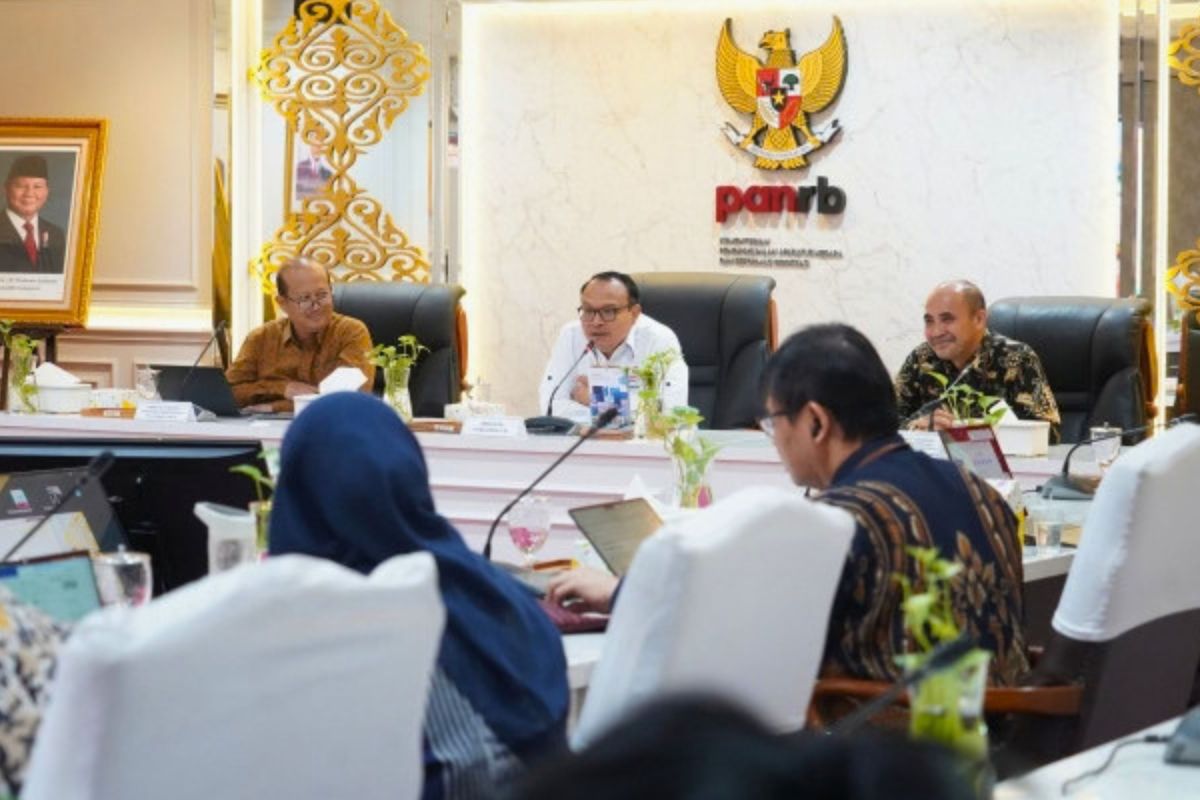
Discussing the follow-up to the hearing, the Ombudsman held a meeting with the Director of Service Quality Improvement Strategy at LAN, as well as the Assistant Deputy for Policy Formulation and Coordination of Bureaucratic Reform Implementation at the Ministry of PANRB in Jakarta on Thursday (24/9).
“We need to determine if a matrix is required for the indicators used by the Ombudsman, the Ministry of PANRB, and LAN, and then divide the responsibilities of who does what. This will become a shared indicator,” he said.
He added that the results of these discussions need to be formulated promptly as follow-up material for the Commission II DPR RI hearing, which will be presented on 7 October 2026.
During the meeting, LAN presented the Policy Quality Index (IKK) as one of the instruments to measure the quality of government policy. LAN’s Director of Service Quality Improvement Strategy, Widhi Novianto, explained that evaluating policy quality also includes measuring the impact of policies on the improvement of public services and governance.
IKK data can be compared with the Public Service Index (IPP) from the Ministry of PANRB and data from the Ombudsman. “This comparison can be conducted based on variables, dimensions, or sub-dimensions to see the link between policy quality and the quality of public services,” Widhi stated.
Meanwhile, the Assistant Deputy for Policy Formulation and Coordination of Bureaucratic Reform Implementation at the Ministry of PANRB, Agus Uji Hantara, stated that alignment is necessary to identify overlaps in assessment instruments. “If there are overlaps regarding the public service index, coordination can be carried out to simplify the process for the ministries, agencies, and local governments being assessed,” said Agus.