
Ombudsman: Digital Transformation to Realise More Humanistic Police Services
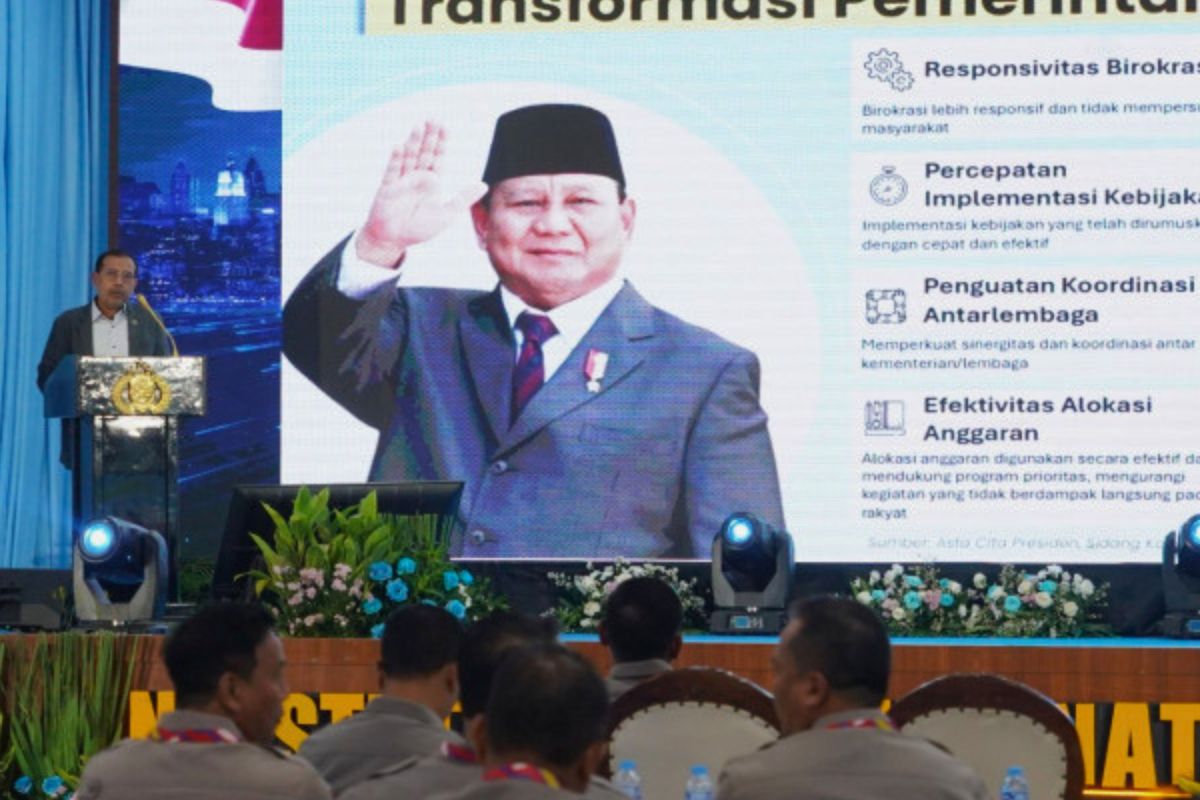
Jakarta (ANTARA) - The Chairman of the Indonesian Ombudsman, Mokhammad Najih, believes that strengthening digital transformation will realise public services from the National Police (Polri) that are more humanistic and free from malaadministration.
At the Working Meeting on General Police Oversight Inspectorate Supervision for 2026 in Jakarta on Thursday (2/4), he stated that public service governance is a crucial issue in the police force.
“In accordance with the mandate of Law No. 25 of 2009, state organisers are required to provide prime and consistent digital service designs,” said Najih, as confirmed in Jakarta on Monday.
According to him, all parties need to fully support President Prabowo Subianto’s directives on digital transformation in public service reform.
He said this is a primary demand as well as a global trend in modernising state administration, particularly in Indonesia’s efforts to meet advanced country standards to join the Organisation for Economic Co-operation and Development (OECD).
Therefore, he encouraged Polri to continue strengthening digital transformation in its oversight system.
To realise responsive and humanistic Polri services in the information technology era, Najih detailed at least four pillars of transformation that must be implemented: organisational transformation, operational transformation, public service transformation, and oversight transformation.
“The Ombudsman will continue to assess how these four aspects are improved,” he stated.
Najih also highlighted the urgency of complaint management that is not yet optimal, both in government agencies and the police.
He opined that the use of automated answering machines (bots) in call centres does not provide concrete solutions for complainants.
Because when the public complains, he continued, their main expectation is resolution, so there must be competent operators who not only record data but also process and communicate reports to obtain quick responses.
“With that, there will be no more derivative complaints regarding poor complaint governance itself,” Najih emphasised.
As evaluation material, Najih presented data on handling public reports related to the police at the Indonesian Ombudsman during the 2024 to 2026 period.
Of the total 1,551 reports received, the most dominant issue was prolonged delays, accounting for 60.4% of total complaints.
He identified two main factors causing the high number of prolonged delays: bureaucratic system constraints and limited human resources (HR).
Therefore, he hopes that the presence of policy transformation in Polri can make the law enforcement institution more adaptive in responding to the dynamics and continuously increasing public expectations.