
Ombudsman calls for improved transparency in Hajj official selection
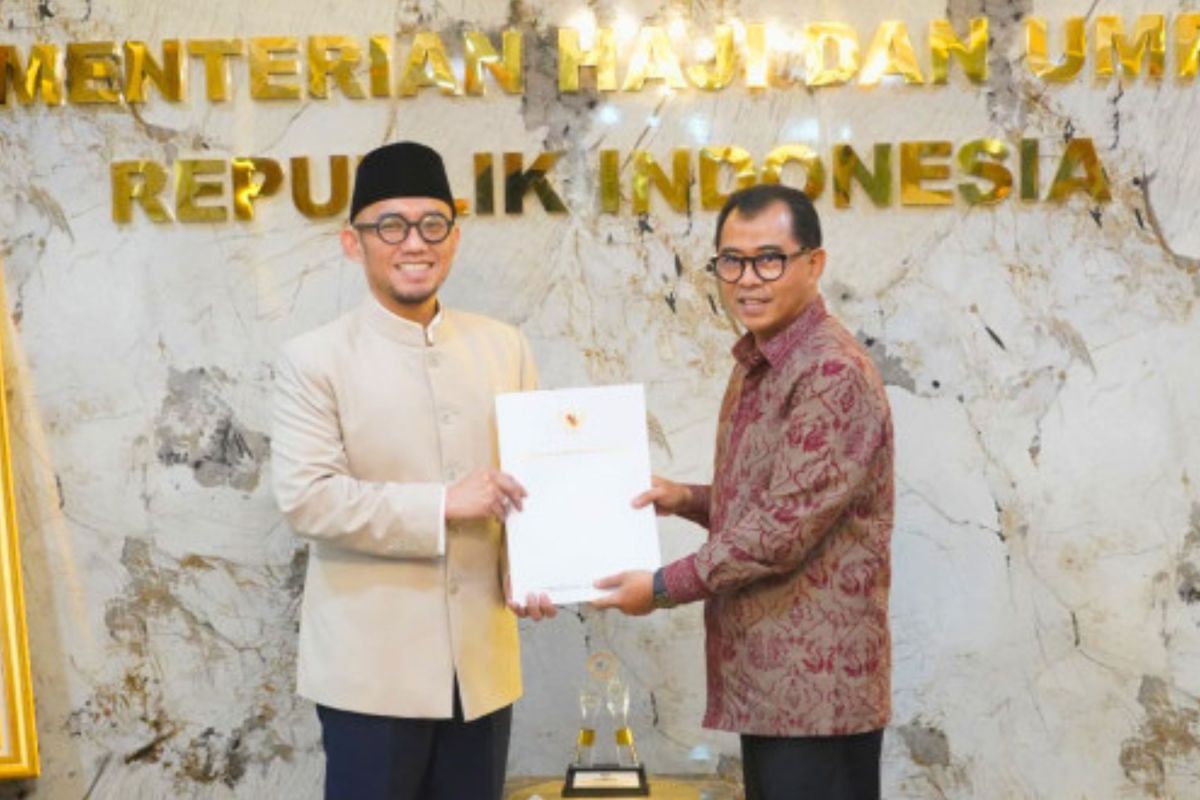
Jakarta (ANTARA) - The Ombudsman of the Republic of Indonesia (ORI) has requested that the Ministry of Hajj and Umrah improve transparency in the selection of Hajj Organising Officers (PPIH).
Through an online complaint post opened during the 2026 Hajj season, the Ombudsman received public reports regarding alleged prolonged delays in the handling of complaints by the Ministry of Hajj and Umrah during the appointment process.
“Regarding the PPIH aspect, the Indonesian Ombudsman assesses that the selection stages still need to be strengthened in terms of transparency and accountability,” said Indonesian Ombudsman member Nuzran Joher, as confirmed in Jakarta on Friday.
In general, he stated that the 2026 Hajj implementation proceeded well. However, the Ombudsman still identified several aspects that require improvement.
The Indonesian Ombudsman has submitted the Hajj Implementation Supervision Report for the year 2026 AD/1447 Hijriah to the Deputy Minister of Hajj and Umrah in Jakarta on Wednesday (23/9).
Supervision was conducted to ensure that the Hajj implementation, during this period of institutional transition, continues to meet public service standards and provides service certainty for pilgrims.
In addition to the transparency of the PPIH selection, the Ombudsman also found issues related to complaint management, healthcare services, and service facilities and infrastructure.
“A number of facilities and infrastructure also do not meet standards in terms of both quantity and quality,” he said.
At one of the embarkation points, he noted that toilet and shower facilities that were not functioning optimally caused queues and impacted pilgrim comfort.
The Indonesian Ombudsman also encouraged the optimisation of screening and early detection of pilgrims’ health conditions in their home regions.
On the other hand, the Ombudsman appreciated the use of the ‘Kawal Haji’ application as a complaint channel, as it facilitates the public in submitting grievances during the Hajj season.
To ensure more accountable complaint management, Nuzran urged the standardisation of procedures, certainty regarding resolution times, and integration with SP4N-LAPOR!, the national public service complaint management system.
He also encouraged the Ministry of Hajj and Umrah (Kemenhaj) to strengthen the fulfilment of service standards through the establishment and publication of service standards, service declarations, SOPs, and service flows.
The provision of infrastructure, the adequacy and competence of human resources, and inclusive services for vulnerable groups, he added, also need to be addressed.
To strengthen supervisory synergy, the Indonesian Ombudsman and the Ministry of Hajj and Umrah have agreed to initiate a Memorandum of Understanding (MoU) regarding the supervision of Hajj, both domestically and in the Holy Land.
“Moving forward, we have agreed that there will be an MoU with the Ministry of Hajj and Umrah so that we will be involved in supervision in the Holy Land,” said Nuzran.
Meanwhile, Deputy Minister of Hajj and Umrah Dahnil Anzar Simanjuntak welcomed the involvement of external agencies in Hajj supervision.
He aims to ensure that the management and services of Hajj and Umrah are free from rent-seeking practices and corruption.
According to him, the involvement of external agencies is highly necessary for the Ministry, including the Indonesian Ombudsman and all relevant parties.
“The Ministry of Hajj and Umrah is in a very open position and even facilitates efforts for law enforcement and the supervision of Hajj implementation. Therefore, we support this,” said Dahnil.