
Old Houses in Menteng and Traces of the City's Fading History
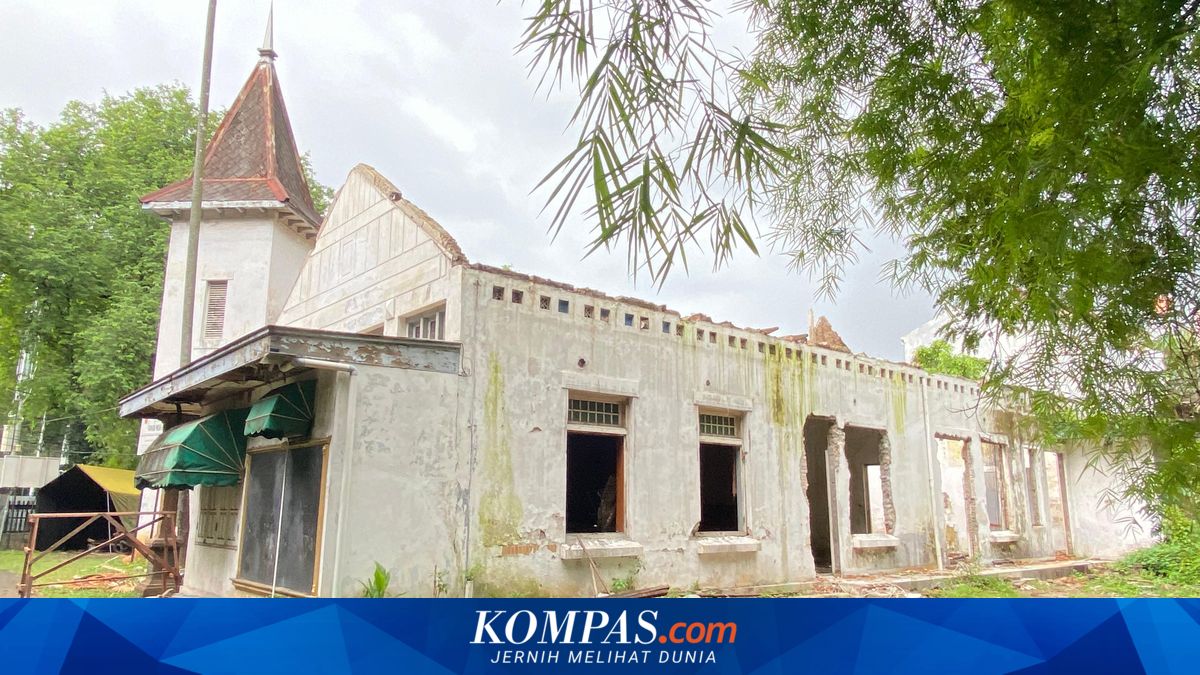
JAKARTA — The Menteng district is recognised as one of Jakarta’s most historically significant residential areas. Throughout this region, colonial buildings stand as witnesses to the city’s development since the early twentieth century.
One building currently drawing attention is the old house at Jalan Teuku Umar number 2, Central Jakarta. This structure, which has stood for over a century, is no longer intact after undergoing a process of functional conversion.
Yet the existence of this building is not merely that of an old property, but rather part of an important historical memory of the city that deserves preservation.
Historian Asep Kambali stated that the building at Jalan Teuku Umar number 2 cannot be separated from the broader historical context of the Menteng district.
“So far as my understanding of the history of Menteng goes, firstly it concerns the historical value of the district in response to your question,” Asep said when contacted on Wednesday.
According to him, Menteng is no ordinary residential district. This area is a heritage zone possessing high historical value.
“So really, it is not only buildings, roads, structures. Everything that exists in the Menteng district is protected,” he said.
However in practice, Asep noted, many historically significant buildings in the district have been lost through demolition or functional conversion.
Nevertheless, some buildings have survived and have even been revitalised, particularly those along Jalan Teuku Umar.
Asep explained that during the colonial period, this road was known by the name Van Hurst Boulevard. The street served as the central axis of Menteng, designed as Indonesia’s first garden city.
“The buildings, the roads, everything exemplified a modern city, an example of a modern garden city from the colonial era in Batavian times,” he said.
He described Menteng as one of the earliest examples of modern urban planning in Indonesia, combining the concept of green space and orderly street layout.
“This was a model. In Dutch it was called twinstad, which means garden city,” he said.
Beyond the garden city concept, buildings in Menteng were also known for their distinctive architectural style, blending European influences with tropical climate considerations.
“The buildings there have quite an interesting style. Blending architectural styles, what I call Indies architectural style, because it combines European and tropical climate elements,” he said.
More than simply a residential area, Asep described Menteng as also possessing an important position in Indonesia’s nationalist movement history.
According to him, many national figures lived and congregated in the district during the colonial period.
“Menteng in my view, as the first garden city, was one of the epicentres of urban planning history, particularly of the garden city model,” he said.
Furthermore, the district also became a meeting space for national figures engaged in the movement towards independence.
He added that a number of colonial-era government centres were also located in this area.
Even the Menteng district was connected to significant events in Indonesia’s history, including the momentum towards independence.
“The independence proclamation also took place in this district. The Pegangsaan area also fell within Menteng at that time,” he said.
Because of this, according to Asep, Menteng’s historical value lay not only in the architectural beauty of its buildings.
“Rather, this district is where national figures, intellectuals and their movements met, engaged in dialogue, then undertook efforts to determine how independence could be realised,” he said.
Asep argued that the demolition of old buildings in Menteng could have serious consequences for collective historical memory.