
Ojol Community Appreciates Traffic Police's Humanistic Approach, Ready to Collaborate in Maintaining Public Security
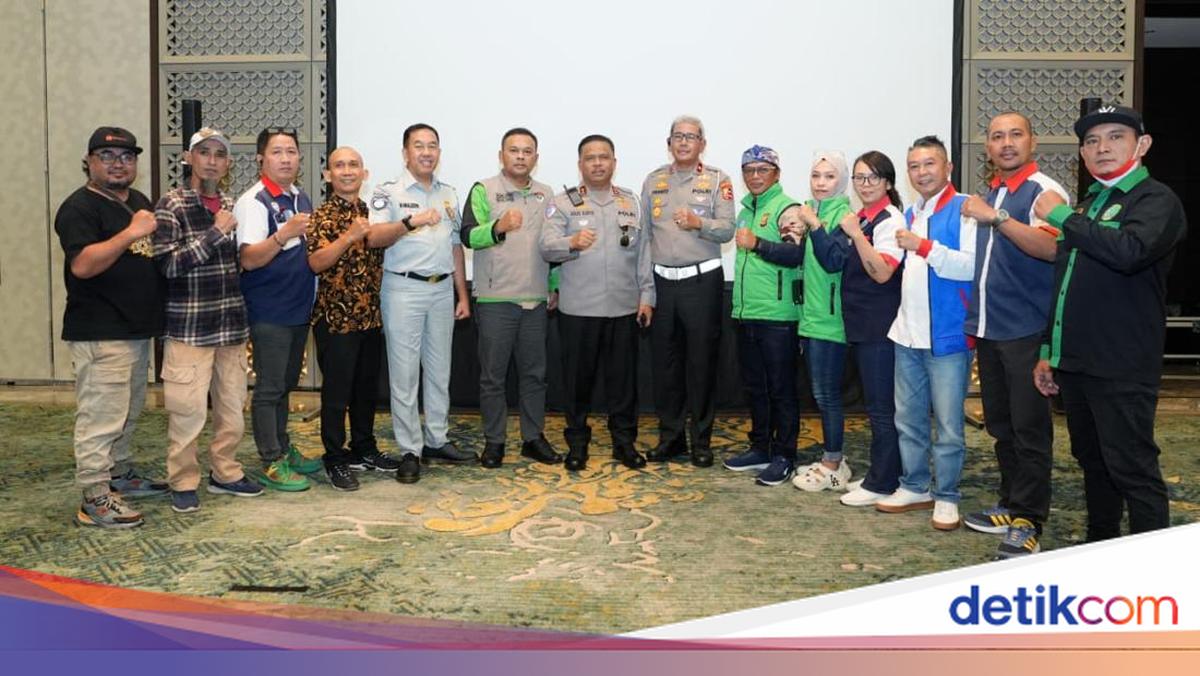
Korlantas Polri Chief Irjen Agus Suryonugroho engaged in a silaturahmi with representatives of online motorcycle taxi (ojol) drivers from various regions across the archipelago in the ‘Polantas Menyapa dan Melayani’ programme. The forum was appreciated by the ojol community and described as a manifestation of Polri’s humanistic approach.
The warm meeting took place at the Padma Hotel in Semarang City on Wednesday (22/4/2026). Attendees included the Chairman of the ojol association from West Java, Iyan; Central Java Ojol Chairman Nugi; East Java Ojol Chairman Asmuin; Bali Ojol Chairman Agus Adi; South Sumatra Online Driver Association Chairman Asrul; and North Sumatra Ojol Godams Chairman Agem Zubir.
The meeting was also attended by traffic directorate officials from several regions, including West Java Provincial Police Traffic Directorate Kombes Raydian Kokrosono, Central Java Provincial Police Traffic Directorate Kombes Pratama Adhyasastra, East Java Provincial Police Traffic Directorate Kombes Iwan Saktiadi, South Sumatra Provincial Police Traffic Directorate Kombes Maesa Soegriwo, North Sumatra Provincial Police Traffic Directorate Kombes Firman Darmansyah, South Kalimantan Provincial Police Traffic Directorate Kombes Fahri Siregar, and East Kalimantan Provincial Police Traffic Directorate Kombes Ahmad Yanuari Insan.
Additionally, key officials from Korlantas Polri were present, including Director of Security and Safety (Dirkamsel) Brigjen Prianto, Director of Law Enforcement (Dirgakkum) Brigjen Faizal, and Head of Operations Korlantas Kombes Aries Syahbudin.
North Sumatra ojol community chairman Agem Zubir revealed the change in the traffic police’s approach, now deemed more humanistic in the era of Police Chief Jenderal Listyo Sigit Prabowo. This difference has been directly felt by ojol drivers in the field over the past few years.
“For us in North Sumatra in particular, we feel a paradigm shift. In the past, we knew the police as touching us with traffic tickets, but now they touch us with heart,” said Agem.
According to him, this change in approach has had a positive impact on relations between ojol and the authorities. The programmes implemented are also seen as more directly addressing community needs, including drivers on the road.
“We see that traffic police now better understand our conditions in the field. This makes us feel embraced,” he added.
Agem noted that ojol drivers have also experienced a decline in accident rates in recent times, in line with various safety programmes run by traffic police.
“The latest programme from you regarding the homecoming and return flow. As ordinary citizens, we feel the accident rate decreasing every year. This is extraordinary; we feel how your programmes are outstanding,” he said.
“Road safety is also well handled. We are grateful for the last two years. This is not made up. The Police Chief repeatedly invited ojol friends, and we have proven and felt it directly,” he continued.
Nevertheless, he acknowledged that challenges remain in the field. One of them is the pressure from application targets that puts some drivers in a dilemma and forces them to take risks on the road. However, he stressed that the ojol community still desires to be orderly and safe.
“But we believe ojol has had the same desire since the beginning, for road safety to be well handled,” he stated.
Agem proposed strengthening digital-based safety systems, such as an emergency button directly connected to the police to speed up handling of incidents on the road.
Agem hopes that collaboration between ojol and the police continues to be strengthened, given the role of online drivers who are on the road every day and can serve as partners in maintaining traffic order.
“Ojol workers who are mobile on the highways 24 hours a day can be the eyes and ears for law enforcement so far. The context is for traffic,” he said.
Meanwhile, West Java Ojol Chairman Iyan also stated that relations between ojol and Polri now feel more tangible in the field. According to him, various programmes implemented are not just ceremonial but truly felt by drivers since the declaration last September.
“The synergy between ojol and Polri is real; it is currently very much felt by ojol drivers in West Java,” said Iyan.
He cited several concrete programmes, such as the establishment of ojol workshops and community stalls in West Java. These facilities are said to help drivers, from vehicle repairs to gathering spaces.
“Specifically in Greater Bandung City and Regency, 23 ojol workshops for engine changes and stalls have been inaugurated to repair light vehicle issues,” he explained.
Iyan also appreciated the police approach, which is seen as increasingly close to the community, including the ojol community. He noted that drivers are no longer hesitant to coordinate with authorities in the field.
Iyan added that synergy between ojol and the police needs to be continuously strengthened, not only in terms of traffic safety but also in maintaining security in public spaces. The ojol community is also ready to collaborate in upholding community security and order.
“We are ready to be part of maintaining public security and order. It’s better for us to help in goodness,” he asserted.
Meanwhile, Korlantas Polri Chief Irjen Agus stated that the forum serves as a platform to directly absorb various issues faced by ojol drivers in the field. This, he said, aligns with directives from Police Chief Jenderal Listyo Sigit.
“In line with the Police Chief’s instructions, the Polantas greeting and serving programme,” said Irjen Agus.
He expressed great appreciation for the representatives of ojol drivers from various regions across the archipelago who have conveyed their complaints and aspirations.
“We always engage in silaturahmi. We absorb the issues and of course will discuss them,” said Irjen Agus.
He emphasised that from this activity, the police can get closer to the community. Various issues raised by the drivers will serve as material for evaluation to improve future policies.
“The most important thing from the Polantas Menyapa dan Melayani programme is how we realise traffic that