
Ojol Commission Cut to 8 Percent, Academics Worry Unemployment Will Rise
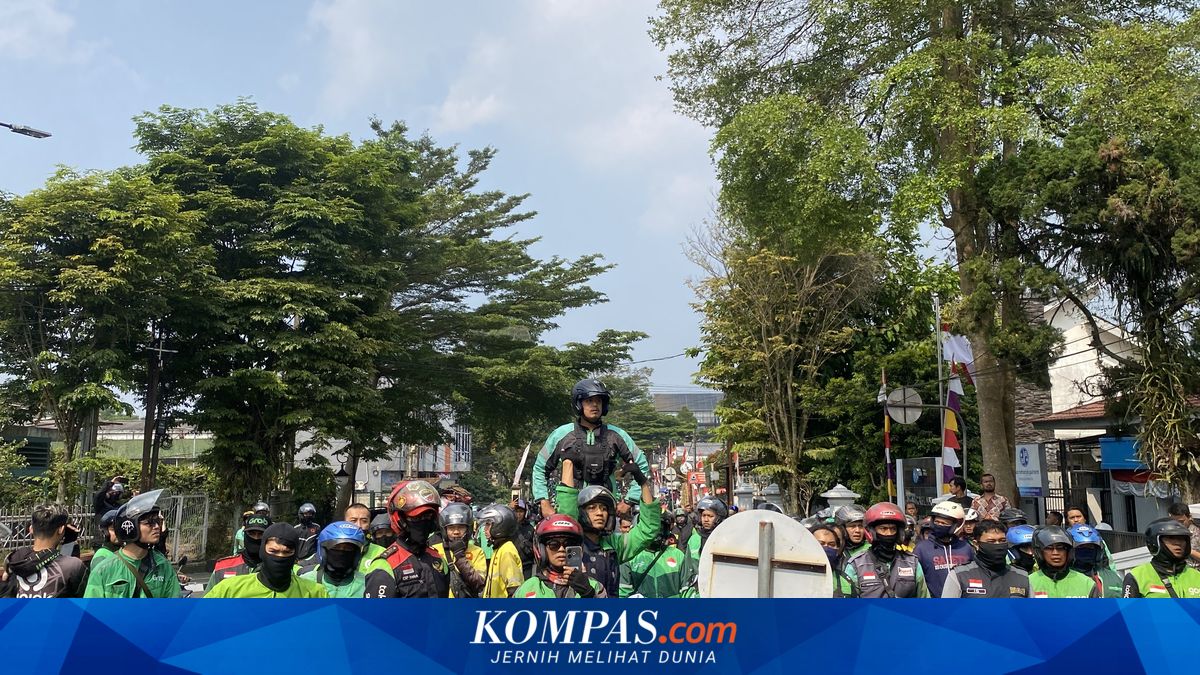
JAKARTA, KOMPAS.com - The policy of reducing the commission charged by online motorcycle taxi (ojol) applications to 8 percent through Presidential Regulation (Perpres) Number 27 of 2026 on the Protection of Online Transport Workers is deemed unlikely to fully resolve the welfare issues faced by drivers.
Djoko Setijowarno, an academic from the Civil Engineering Programme at Soegijapranata Catholic University and Deputy Chair of the Indonesian Transport Society (MTI) Central’s Empowerment and Regional Development division, believes the regulation could give rise to new problems.
According to him, the risks include a reduction in job opportunities and rising unemployment if application providers choose to cut operations or halt services.
Djoko stated that the main problem with online transport is not solely the size of the application commission.
He views the biggest issue as stemming from the excessive number of drivers, which is disproportionate to market needs.
“A rational solution that provides broad positive impacts should be a gradual reduction in the number of ojol drivers. This is the task that should be undertaken, but because it is very challenging and time-consuming, it has never been chosen,” Djoko told Kompas.com on Tuesday (12/5/2026).
Some drivers are also considered more suitable to be directed towards goods delivery or courier services rather than passenger transport.
Djoko believes that the ojol driver profession is not ideal as a primary job.
He opines that drivers’ welfare will be difficult to achieve if the number of drivers continues to grow without clear regulation.
“From the drivers’ perspective, if the demand is for welfare, it will never be achieved because this profession should not be a primary job. If you want prosperity, don’t become an ojek driver,” he said.
Djoko also called on the government to focus more on creating formal and decent employment opportunities rather than allowing society to rely on informal app-based jobs.
“The government is obliged to provide decent jobs, not as ojol drivers,” he said.
Besides welfare aspects, Djoko highlighted the safety of two-wheeled transport as passenger transport.
According to him, using motorcycles for passenger transport still leaves safety issues that are hard to resolve.
“From the users’ side, treating ojol as passenger transport will never be logical, no matter how long. Because the safety aspect will never be fulfilled,” he said.
According to him, if the business model is deemed no longer profitable, application providers may reduce services, ultimately leading to increased unemployment.
“The 8 percent commission through the Perpres on the Protection of Online Transport Workers will not solve the problem. It could lead to application providers closing their businesses, ultimately increasing unemployment,” he stated.
He also encouraged the state to play a greater role in managing online transport.
One idea he proposed is the development of a government-owned online transport application oriented towards public service and driver welfare.
“If the online transport application is owned by the state, profit would not be the main target. The priority would be driver welfare and convenience for the public, so social goals would be more achieved,” said Djoko.