
OJK Welcomes Capital Market Incentive Proposal, Could Boost Stocks, Bonds, and Mutual Funds
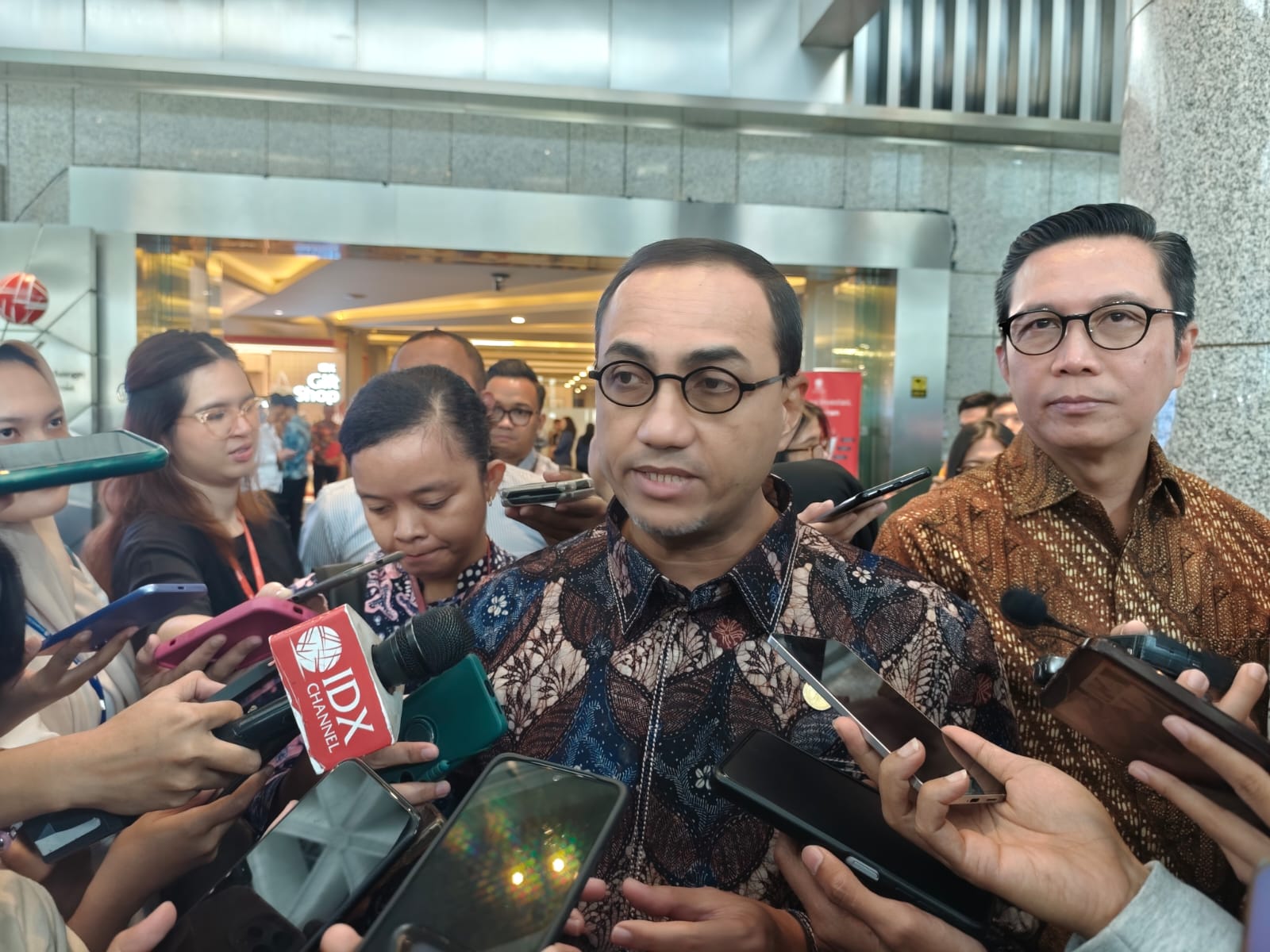
The Financial Services Authority (OJK) has welcomed the government’s signal, from Finance Minister Purbaya Yudhi Sadewa, regarding the possibility of providing fiscal incentives for the capital market industry.
OJK’s Executive Head of Capital Market Supervision, Hasan Fawzi, views this policy as a crucial catalyst to accelerate the deepening of Indonesia’s financial markets, expand the investor base, and increase the competitiveness of the domestic market.
According to Hasan, the government’s support acknowledges the integrity and transparency reforms currently being implemented by the regulator alongside all financial market authorities. “This is good news, positive. We are very grateful, appreciative, and welcome it positively,” Hasan stated at the Inauguration of the Planned and Periodic Investment Programme (PINTAR) for Mutual Funds and the Opening of Mutual Funds Week 2026 at the Indonesia Stock Exchange, on Monday (27/4).
Hasan explained that the ongoing capital market reforms need supporting policies to ensure their benefits are felt more quickly by investors and issuers.
In recent months, OJK and capital market stakeholders have implemented several strategic steps, including:
Transparency of share ownership
Evaluation of increasing issuers’ free float
Supervision of market manipulation
Strengthening exchange governance
Development of new investment products.
In his view, the combination of structural reforms and fiscal stimuli has the potential to bring Indonesia’s capital market into a new growth phase.
OJK Emphasises Ongoing Law Enforcement
Hasan also emphasised that the regulator is serious about improving the quality of the capital market, including eradicating share price manipulation practices commonly known as stock frying.
He mentioned that since February 2026, OJK has imposed sanctions on several parties following examination processes. The violations found include coordinated trading, price manipulation, and involvement of certain influencers.
These steps are deemed important to restore the confidence of domestic and global investors in Indonesia’s capital market.
Stocks, Bonds, and Mutual Funds Likely to Receive Incentives
Hasan explained that the most realistic form of incentives lies in the fiscal realm, particularly taxation. The government is seen to have room to prepare various stimuli to encourage broader public participation in the capital market.
Several instruments mentioned as potentially eligible for incentives include:
Mutual funds
Bonds listed on the exchange
Share transactions
Routine investment programmes such as share saving
Periodic investment products like the Planned and Periodic Investment Programme (PINTAR) for Mutual Funds.
He also mentioned opportunities for special support for regional investors to make capital market access more equitable.
Issuers with Large Free Float Could Receive Special Treatment
One important point highlighted by Hasan is the opportunity for tiered incentives for issuers that increase the portion of public shares or free float.
Currently, several facilities for public companies are already available. However, going forward, the regulator hopes for greater bias so that more quality companies are attracted to list on the exchange and increase public ownership.
This means issuers with larger free float could potentially receive tax reductions or other more competitive incentive forms.
PINTAR Mutual Funds Programme
OJK is currently promoting a planned and periodic investment campaign through the PINTAR Mutual Funds programme. This scheme encourages the public to invest regularly with fixed amounts through a systematic investment plan method.
This concept is seen to be able to:
Reduce market timing risks
Build long-term investment discipline
Ease entry for beginner investors into the capital market
Gradually increase retail participation.
If supported by tax incentives or lower transaction fees, retail investor growth is assessed to have even greater potential.
Positive Impact on the Exchange and Economy
If realised, the fiscal incentive policy for the capital market has the potential to provide positive impacts such as:
Increase in the number of retail investors
Growth in mutual fund assets under management
Greater share transaction liquidity
Deeper bond market
Increased interest in new company IPOs
Healthier market structure through higher free float.
This policy is also seen to help Indonesia compete with regional countries in attracting long-term investment funds.
Conclusion
Hasan Fawzi’s statement clarifies that the government’s incentive signal is not merely general discourse but has the potential to target stocks, bonds, mutual funds, and issuers with large free float. If realised, the combination of market reforms and fiscal stimuli could become a new catalyst for the growth of Indonesia’s capital market in 2026.