
OJK Unveils Two New Roadmaps! Derivatives Market and Green Investment Set to Accelerate Until 2030
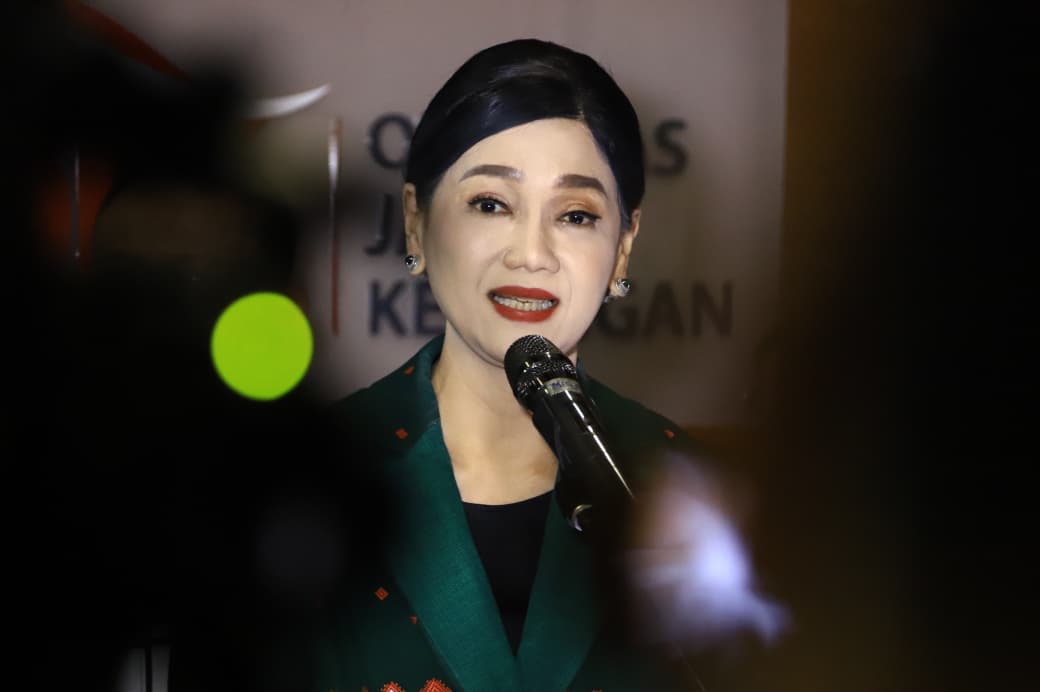
The Financial Services Authority (OJK) has officially launched two strategic roadmaps for the derivatives market and sustainable capital markets for 2026–2030. What does this mean for your investments? Read on for the details!
Bareksa - The Financial Services Authority (OJK) has just released two strategic documents that will serve as benchmarks for Indonesia’s financial industry over the next five years.
The two are the Roadmap for Developing the Derivatives Market Based on Capital Market Instruments 2026–2030 and the Indonesia Sustainable Capital Market Roadmap 2026–2030.
These two roadmaps are more than just ordinary documents. Behind them lies a grand plan to strengthen investor protection, encourage environmentally friendly investments, and make Indonesia’s financial markets more trusted on the global stage.
What is the Derivatives Market and Why is it Important for You?
Simply put, the derivatives market is a place to trade financial contracts whose value is “derived” from other assets — for example, shares, currencies, or commodities. These instruments are often used to protect investment values from the risk of sudden price changes.
Until now, Indonesia’s derivatives market has been considered underdeveloped compared to neighbouring countries. OJK is serious about changing that.
This derivatives roadmap is built on four main pillars:
Investor Protection — OJK will more strictly differentiate between retail and professional investors. There will be leverage restrictions for retail investors, negative balance protection, and safer separation of client assets.
Market Participant Supervision — All intermediaries (brokers, dealers, and the like) will have standardised licences, tighter governance, and mandatory derivatives certification.
Product Development — More types of derivatives contracts will be introduced, both exchange-traded and over-the-counter.
More Efficient Infrastructure — Exchanges and clearing institutions will have their standards elevated to gain international recognition, including meeting global IOSCO and PFMI standards.
Green Investment: Indonesia Chases Net Zero 2060 Target
The second roadmap focuses on sustainable capital markets — that is, investment instruments that consider environmental, social, and corporate governance factors (ESG).
This is not just a trend. OJK is targeting a real and measurable green investment ecosystem.
Interesting facts as of December 2025:
Total issuance of sustainable bonds and sukuk has reached Rp74.14 trillion (approximately USD 4.43 billion).
ESG-based mutual funds have Assets Under Management (AUM) of Rp9.98 trillion.
Index mutual funds dominate with a 52.88% share, followed by fixed income mutual funds at 18.21%, and ETFs at 17.46%.
The four pillars in this roadmap include: strengthening the regulatory foundation, nurturing sustainable products, encouraging market participant involvement, and tightening domestic-international cooperation.
With this roadmap, OJK projects that issuances of sustainable bonds and sukuk will grow at an average of 55.11% per year, while ESG mutual funds are projected to grow at an average of 14.36% per year.
Existing ESG-Based Stock Indices in Indonesia
Indonesia already has several stock indices that consider ESG factors, including:
SRI-KEHATI
IDX ESG Leaders
ESG Sector Leaders IDX KEHATI
ESG Quality 45 IDX KEHATI
IDX LQ45 Low Carbon Leaders
These indices can serve as guides for investors who want to contribute to sustainable development while still seeking profits.
“Through these two roadmaps, OJK hopes to create strong synergy between the development of financial instruments, increased investor protection, and strengthened funding and sustainable investment,” stated Agus Firmansyah, Head of the Surveillance and Integrated Financial Services Sector Policy Department at OJK, in his remarks.
He emphasised that the two roadmaps do not stand alone but complement each other in a grand vision: a deeper, safer, and more environmentally responsible financial market in Indonesia.
OJK also appreciates the contributions of various parties in preparing these roadmaps, including government ministries and agencies, Self-Regulatory Organisations (SROs), financial industry associations, and international development partners such as the Asian Development Bank (ADB).
Conclusion
OJK has launched two major roadmaps for 2026–2030: one to develop a safer and more advanced derivatives market, and another to accelerate ESG-based investments. Both are designed to protect investors, expand financial instrument options, and propel Indonesia towards a low-carbon economy in line with the 2060 net zero target. For investors, this is a signal that Indonesia’s capital markets are undergoing serious improvements — and opportunities in the derivatives and green investment segments will open up even wider.