
OJK States 'Unused Credit' is a Normal Phenomenon in the Banking Cycle
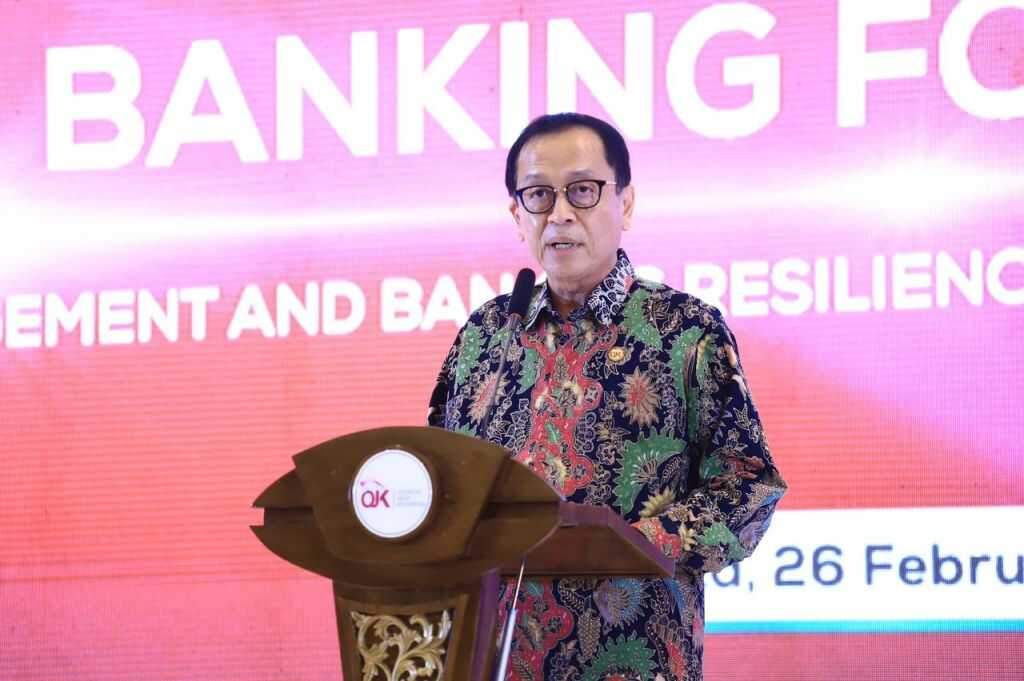
The Head of Banking Supervision at the Financial Services Authority (OJK), Dian Ediana Rae, stated that the phenomenon of undisbursed loans, or unused credit, recorded in private banks is a common occurrence in the banking business cycle.
According to him, this condition often occurs repeatedly from year to year. This is because borrowers who have signed credit agreements usually already have expansion plans. However, the actual disbursement of funds still depends on business calculations and the assessment of the economic situation.
“If we look at it, I think it’s something normal that happens every year. Business people will look for opportunities,” said Dian after the 2nd Indonesia Climate Banking Forum in Jakarta, as quoted by Antara, Thursday, February 26, 2026.
Based on data from Bank Indonesia (BI), the amount of undisbursed loans reached IDR 2,506.47 trillion as of January 2026. Dian further explained that the decision to draw credit is greatly influenced by the business climate, investment prospects, and global and domestic dynamics.
Therefore, he clarified that the large amount of undisbursed loans does not necessarily reflect weak credit demand, but rather part of the borrower’s business strategy in managing expansion.
(Illustration of the OJK logo. Photo: dok MI)
Credit distribution has increased
Dian said that OJK recorded a significant increase in credit last month, especially in the corporate segment.
On the other hand, Bank Indonesia (BI) recorded credit growth of 9.96 percent year-on-year (yoy) in January 2026. Meanwhile, growth in third-party funds (DPK) reached 13.5 percent (yoy).
Regarding the micro, small, and medium enterprise (MSME) sector, Dian said that further encouragement is still needed to optimize its growth.
“So, we do see that last month there was a significant increase, especially in the corporate sector. MSMEs still need to be encouraged. But this is certainly not impossible,” he said.
In the future, the authorities hope that improvements in global and domestic conditions will encourage more expansive credit distribution. Several strategies that have been prepared by the regulator are expected to start having an impact in the coming months.