
OJK Reveals Causes Behind IHSG Crash
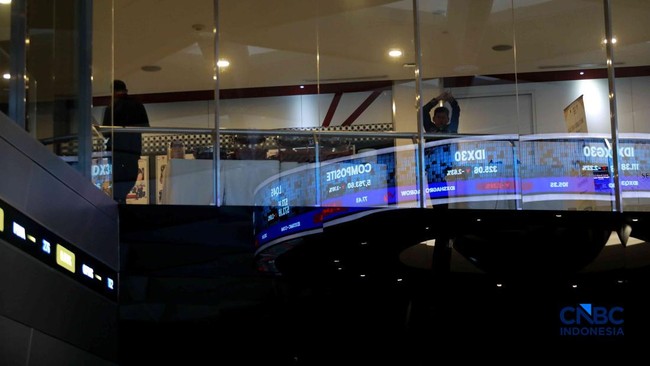
The Financial Services Authority (OJK) has stated that domestic sentiment is contributing to the current downturn in the Indonesian capital market, which remains in the red. This is reflected in the Indonesia Composite Stock Exchange (IHSG) today, which plummeted by more than 4%.
Hasan Fawzi, OJK Executive Head of Capital Market Oversight, Derivatives, and Carbon Exchange, noted that the OJK understands the various views emerging recently regarding the factors influencing market movements and the resulting significant pressure on the stock market. He stated that this reflects a market response that has accounted for a combination of both domestic and global factors.
In addition to the MSCI rebalancing issue, both domestic and global economic factors are being weighed by investors. “However, there are also developments in various economic indicators and sentiments, both domestic and global, which are influencing and being factored in by investors,” he said during a virtual press conference on Friday (5/6/2026).
OJK continues to urge and remind investors to monitor market dynamics objectively, proportionally, and rationally, prioritising adequate analysis and utilising valid, confirmed information. “This is essential so that every investment decision can be made based on the results of such analysis amidst conditions of high market volatility and current pressures,” he added.
According to Fawzi, despite the dynamics and pressures in the stock market, the fundamentals of the Indonesian capital market and the general performance of issuers remain solid. This is reflected in the high levels of transaction value and liquidity in the domestic stock market.
Furthermore, based on the latest financial reports for the first quarter, the aggregate performance has generally recorded positive growth. “These are historical figures, and the majority of listed companies continue to report profits, with aggregate profit growth of more than 21% compared to the same period in the previous year,” he revealed.
To maintain stability within the capital market industry, OJK has issued several policies responsive to market conditions. These include providing flexibility for issuers to conduct share buyback processes without requiring a General Meeting of Shareholders (RUPS).
Additionally, the regulator is closely monitoring market pressures, adjusting Trading Halt parameters, and implementing more limited Auto Rejection Bawah (ARB) limits. Furthermore, OJK has postponed the implementation and prohibited short-selling practices under current conditions, while continuing to consider market readiness and investor protection aspects.