
OJK: Decline in Crypto Transactions Reflects Normalisation After Bitcoin Halving
Jakarta (ANTARA) - The Financial Services Authority (OJK) regards the decline in cryptocurrency asset transactions in Indonesia as part of the normalisation of high price surges following the Bitcoin halving in April 2024.
Cryptocurrency asset transactions recorded a 25.9 per cent year-on-year decline from Rp650.61 trillion in 2024 to Rp482.23 trillion in 2025.
Meanwhile, cryptocurrency asset transactions in March 2026 amounted to Rp22.24 trillion, down 8.51 per cent month-on-month.
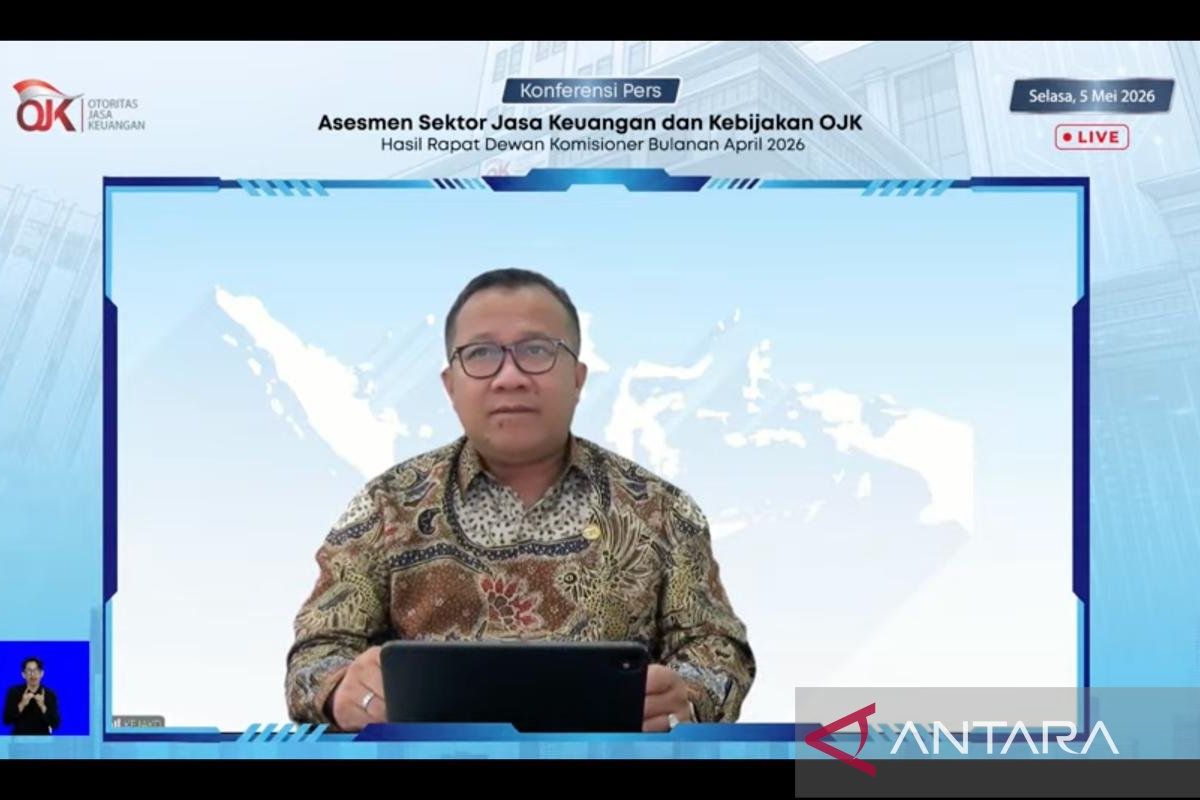
“This is certainly a high base effect, not a fundamental weakening, but it aligns with global conditions, where the crypto market cap has fallen by around 45 per cent from its all-time high of $4.2 trillion in October 2025 to about $2.3 trillion in March 2026,” said Adi Budiarso, Head of the Executive for Supervision of Financial Sector Technology Innovation, Digital Financial Assets, and Crypto Assets at OJK, during a press conference in Jakarta on Tuesday.
Adi added that developments in cryptocurrency asset transactions are also influenced by the ongoing effects of monetary tightening in the United States (US), escalation of the US-China trade war, and conflicts in the Middle East, accompanied by several security incidents on global decentralised finance (DeFi) platforms.
According to him, institutional investors currently have a long-term investment horizon, so market consolidation phases are often viewed as a dual focus: as an attractive entry point for some investors, but still met with caution and a wait-and-see attitude by others.
Adi views Indonesia as currently quite open to accepting institutional investors in the digital financial assets sector, both as consumers of crypto assets and as shareholders in digital financial asset traders.
The current regulatory framework, according to him, is sufficiently ready to accommodate this, with OJK having regulated know your customer (KYC) and know your transaction (KYT) obligations applicable to both individual and institutional consumers.
In addition, all consumers are required to undergo customer due diligence (CDD) and enhanced due diligence (EDD) processes in accordance with applicable provisions.
Adi further noted that the current ecosystem infrastructure provides security guarantees for institutions through the implementation of segregated functions, where the management of fiat and crypto assets is carried out separately by licensed clearing, guarantee, and settlement institutions, as well as custodians from OJK.
Furthermore, the implementation of asset whitelisting by exchanges ensures that only assets meeting certain standards can be traded.
To date, there are around 1,450 crypto assets included in the whitelist out of millions of global tokens as a form of curation and market protection.
He also sees new opportunities that are highly relevant for institutions through the initiative of tokenising real-world assets (RWA).
To date, three RWA tokenisation business models have been successfully validated through the OJK sandbox.
As a follow-up, OJK is preparing a Draft OJK Regulation (RPOJK) on the Offering of Tokenised Assets or Real World Asset (RWA) Tokenisation, which is expected to be issued in the near future.
“Going forward, we hope that crypto assets will not only serve as an alternative investment but can also synergise with products and services in other fields, such as pension funds, to amplify their impact on national economic growth and the broad financial well-being of the public,” said Adi.