
OJK Chief Reveals Indonesia's Financial Sector Stability Remains Maintained
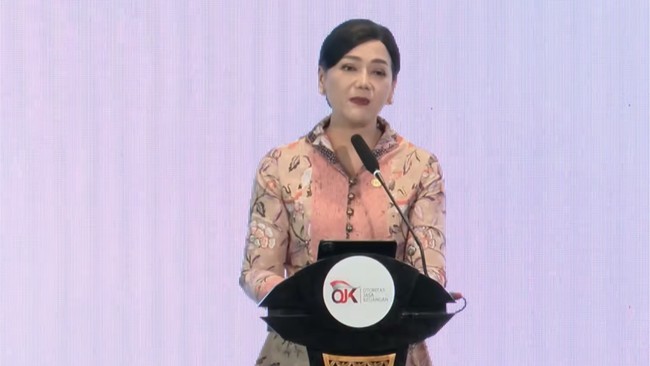
Jakarta, CNBC Indonesia - The Chair of the OJK Board of Commissioners, Friderica Widyasari Dewi, revealed that the stability of the national financial services sector remains steady, even as the global economy in April 2026 faces geopolitical uncertainties.
“Although there is an agreement on a ceasefire between Iran and the US and Israel, the closure of the Strait of Hormuz continues, and the disruptions have not fully subsided, with oil prices remaining volatile,” stated Kiki during the OJK Board of Commissioners Meeting press conference on Tuesday (5/5/2026).
Kiki explained that the IMF, in its World Economic Outlook, has cut the global economic projection to 3.1% for 2026 and assessed that stagflation risks are increasing, accompanied by rising global inflation pressures that are fuelling expectations of monetary tightening in several advanced economies.
“The increase in inflationary pressures is driven by prices of goods and energy, so the Fed decided to hold its benchmark interest rate at the end of April 2026,” she said.
Meanwhile, China’s economy recorded growth in line with targets in the first quarter of 2026, growing above 5%, supported by exports and manufacturing.
“The national economy grew solidly at 5.61%, supported by government contributions and spending, high consumer confidence index, and rising retail sales,” she stated.
Nevertheless, Kiki noted that due to uncertainties in resolving the Iran-US conflict, OJK will continue intensive monitoring, including stress tests, and strengthen financial services institutions (LJK).
“OJK encourages LJK to strengthen risk management, including periodic stress testing, to anticipate future market dynamics,” she explained.