
OJK and Bankers Admit Credit Demand Slows Due to US-Iran Conflict
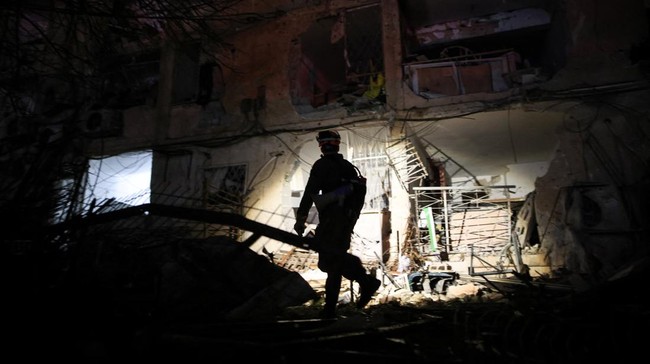
The Financial Services Authority (OJK) has acknowledged that the escalation of the war between the US-Israel and Iran could impact credit demand in the banking industry. OJK’s Executive Head of Banking Supervision, Dian Ediana Rae, stated that there would be ‘disruptions’ in certain sectors, particularly those exposed to the international arena. Among them, she mentioned export credit, import credit, and others. Dian highlighted that Indonesia also imports a significant amount of oil and gas. However, she believes that with various efforts by the government to anticipate this volatility, at the very least, financial stability can be secured. Moreover, Indonesia has experience dealing with various previous crises, such as the Covid-19 pandemic. ‘We see that the efforts we are making, I mean in our sector at least, to secure financial stability, hopefully it won’t be too disruptive, too serious, yes, we have faced heavy crises like Covid,’ said Dian when met at the Supreme Court Building on Wednesday (25/3/2026). Nevertheless, she said that they must prepare to anticipate if the global situation worsens. Dian mentioned the need to take steps such as reviewing policies related to certain sectors. ‘Well, of course we have to see how it develops and I have actually asked, of course, the supervisors and the banks to really look at this global volatility situation as a warning sign for us to always prepare ourselves for the worst,’ she emphasised. On the same occasion, a senior banker as Chairman of the Indonesian Payment System Association (ASPI), Santoso Liem, stated that credit demand in the banking industry is basically still quite good. According to him, not all credit segments are experiencing problems, because the challenges ahead lie on the supply chain side. ‘We know that the supply chain is disrupted in some areas due to the war, as well as certain commodities. Commodities that have long been dependent on Ukraine, like wheat, we know. There are those that are very supportive of derivatives from oil. For example, the plastics industry, the chemical industry, that will definitely be impacted,’ explained Santoso. Therefore, Santoso said that each business player already has their own anticipatory steps. Although it cannot be denied that many businesspeople are declaring force majeure for their operations. As such, Santoso said that there are times to pause and then resume business. ‘So the point is, the industry certainly has times to brake and times to accelerate. So we just wait and see because we also don’t know when this war will end. The important thing is that this time requires a skilled driver to know when to accelerate and when to brake,’ he concluded.