
Oil unlikely to return to US$60, says Ashmore Asset Management
Jakarta, CNBC Indonesia - Managing Director of PT Ashmore Asset Management Indonesia Tbk, Arief Wana, spoke candidly about the current market conditions, which remain volatile due to the unclear global geopolitical situation. He urged market participants to stay vigilant and to seek opportunities amidst global economic uncertainty.
In these conditions, caution is essential, as he sees significant uncertainty amid the geopolitical tensions, including around oil prices.
‘So I’m afraid I cannot loudly say that I am very positive or very optimistic, because the situation we are facing now is full of uncertainty,’ he said at the SMBC Indonesia Economic Forum 2026 seminar on Tuesday 19 May 2026.
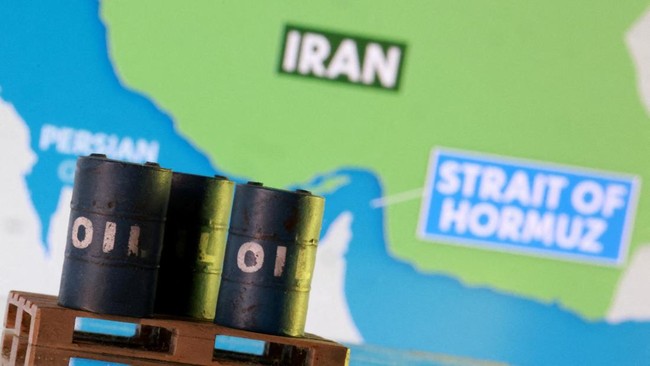
He said oil prices have surged since February, driven mainly by the conflicts involving Iran, Israel and the United States. He regards this rise as having a very negative impact on Indonesia.
Moreover, he sees many major countries no longer respecting sovereignty, making signs that oil prices could return to normal very difficult. Therefore, market participants must be nimble in seeking opportunities arising from the oil price rise.
‘Prices are already very high and this does not have a particularly positive impact on a country like Indonesia. Reversing this will require a fairly long time. So we see this as a phenomenon we must endure. Therefore, how should we view opportunities from investment related to rising oil prices?’ Arief said.
Ashmore Asset Management Indonesia has also conducted simulations and looked at oil shocks occurring over nearly the last 45 years. The result is that it takes between six and seven months for oil prices to return to normal.
‘So we at Ashmore see that oil prices are unlikely to revert to $50 or $60. This, in my view, is very important to consider when deciding how to respond to investments going forward tied to this oil shock,’ he explained.
One investment opportunity that could arise from higher oil prices, he said, is US dollar bonds. Moreover, he noted that the safe haven now is no longer gold during periods of high geopolitical risk.
‘People no longer look to safe havens; they want assets that provide higher yields. One of these is US dollar bonds or 10-year yield bonds, which tend to rise,’ he concluded.