
Oil Prices Surge to 4-Year High, America Throws in the Towel
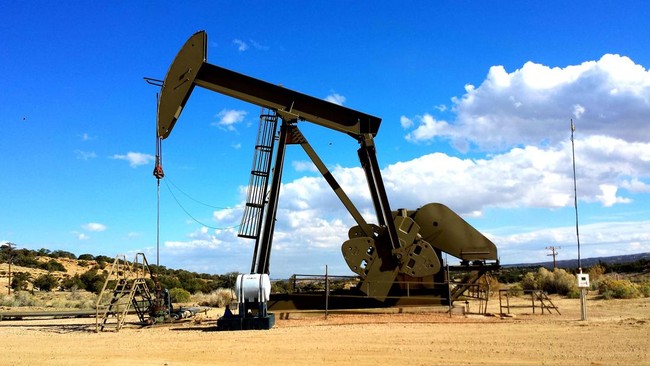
Jakarta, CNBC Indonesia - Oil prices surged and closed at the highest level in nearly four years amid escalating Middle East geopolitics.
The surge followed Iraq declaring force majeure on all oil fields developed by foreign companies, while the Iran war intensifies. The United States (US) is also preparing to deploy thousands of additional marines and sailors to the Middle East.
Brent crude prices in Friday’s final trading (20/3/2026) closed at US$112.19 per barrel, up 3.3%, while WTI crude jumped 2.27% to US$98.32 per barrel.
Yesterday’s Brent closing price was the highest since 4 July 2022, or nearly four years ago.
Over the week, Brent oil prices soared 8.77%, one of the largest weekly gains in the past 10 years.
Year-to-date, Brent oil has risen 84%.
The US-Israel war against Iran shows no signs of abating. Attacks on Iran’s major energy infrastructure continue, as do Iran’s retaliatory strikes on neighbouring countries, including Saudi Arabia, Qatar, and Kuwait.
“This is the worst-case scenario. Not only is there force majeure in Iraq, but also a massive build-up of US forces in the Persian Gulf. Hopes for a quick resolution and the return of supplies to the global market via the Strait of Hormuz are fading,” said John Kilduff, partner at Again Capital, quoted by Reuters.
The oil market is now pricing in expectations of longer supply disruptions due to attacks, as well as the possibility of the Strait of Hormuz being closed for weeks or even longer before it can reopen.
“The potential for a quick reversal in energy prices is unlikely because damage has already occurred to production,” said Ole Hansen, head of commodity strategy at Saxo Bank.
On Friday, US President Donald Trump said there are no longer any Iranian leaders he can talk to regarding the war, as military strikes continue to target Iranian officials. He also reiterated that Iran must not possess nuclear weapons.
Israel and Iran exchanged attacks again on Friday, following a strike on a Kuwaiti oil refinery. On Thursday, Trump said Israel would not repeat attacks on energy facilities.
US Surrenders
US Treasury Secretary Scott Bessent said the Trump administration has issued a 30-day sanctions exemption for purchases of Iranian oil at sea to ease energy supply pressures since the start of the US-Israel war against Iran.
This is the third time the US has granted temporary sanctions relief in about two weeks.
Previously, the US also eased sanctions on Russian oil. On Friday, the US issued a general licence allowing the sale of Iranian crude oil and petroleum products loaded on ships during the period from 20 March to 19 April, according to the licence published on the US Treasury Department’s website.
“By temporarily opening these existing supplies to the world, the United States will soon add about 140 million barrels of oil to the global market, increasing world energy supplies and helping to temporarily alleviate pressures from supply disruptions from Iran,” Bessent said in a statement on X.
“Essentially, we will use Iranian oil barrels to counter Tehran by keeping prices low, as we continue Operation Epic Fury,” he added.
Bessent had previously hinted at the possibility of sanctions relief in an interview with Fox Business on Thursday, prompting analysts to criticise the policy as potentially benefiting Iran’s war efforts.
“In short, this is crazy. Essentially, we’re allowing Iran to sell oil, which could then be used to fund war efforts,” David Tannenbaum of Blackstone Compliance Services told the BBC.
Bessent refuted that analysis in his Friday statement. He said the short-term temporary authorisation is very limited to oil already in transit and does not permit new purchases or production.
“Iran will have difficulty accessing the revenue generated, and the United States will continue to maintain maximum pressure on Iran and limit its ability to access the international financial system,” he said.
On Friday, US Energy Secretary Chris Wright said lifting sanctions on stranded Iranian oil cargoes at sea could flow supplies to Asia in three to four days. The day before, Treasury Secretary Scott Bessent had signalled the move.
Bessent also stated that the release of additional oil from the US Strategic Petroleum Reserve remains possible. Wright added that such a release would occur over the coming months.
All Eyes on the Strait of Hormuz
Analysts say prices will remain high as long as traffic through the Strait of Hormuz is disrupted, and potentially even afterwards.
Around 20% of the world’s oil and LNG supplies pass through the strait.
“As long as oil flows through the Strait of Hormuz remain limited, the direction of oil prices tends to be upwards,” said UBS analyst Giovanni Staunovo.
International Energy Agency (IEA) head Fatih Birol warned in an interview with the Financial Times that restoring oil and gas flows from the Middle East Gulf could take up to six months.
The Trump administration is also considering plans to occupy or blockade Iran’s Kharg Island to pressure Tehran into reopening the Strait of Hormuz, according to an Axios report, which could further strain supplies.
On Thursday, Brent prices briefly surged above US$119 per barrel, nearing the 9 March peak, after Iran retaliated against Israel’s attack on a major gas field by disabling 17% of Qatar’s LNG capacity. The damage is estimated to take up to five years to repair.
Elsewhere, Russia attacked oil and gas facilities in Ukraine.