
Oil Prices Surge Again as Global Supply Begins to Tighten
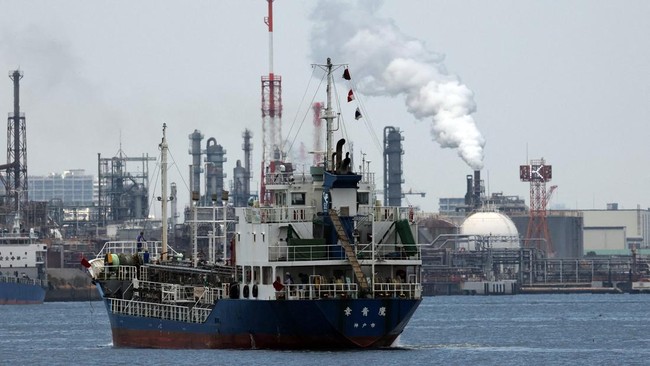
Oil prices rose again as investors worried that the United States and Iran had failed to reach a peace deal that could restore traffic through the Strait of Hormuz. In the latest week’s trading, Friday (22 May 2026), Brent crude closed up 0.94% at US$103.54 per barrel. Meanwhile, West Texas Intermediate (WTI) crude rose 0.26% to US$96.60 per barrel. The two benchmarks had previously surged more than 3% at the opening of the session.
The rise broke a bad run for oil prices, with Brent down 8.5% and WTI down 11.3% over the previous three sessions. For the week, Brent fell 5.24%, reversing a gain of 7.87% from the previous week. WTI fell 6.74%, in contrast to a 28.03% jump in the prior week.
“We are being bombarded by headlines that keep changing, making it hard to keep up. The current narrative is that Iran will surrender uranium in exchange for sanctions relief. But the stories keep changing before the ink dries,” said Phil Flynn, a senior analyst at Price Futures Group, quoted by Refinitiv.
Diplomatic sources in Islamabad told the Iranian news agency IRNA that Pakistan’s Chief of the Army Staff had travelled to Iran.
Earlier, senior Iranian sources said that differences with the US were narrowing, while US Secretary of State Marco Rubio spoke of there being “some positive signs” in the negotiations. “There is progress. I don’t want to overstate it, but I don’t want to underplay it either. There is still a lot of work to be done. We have not reached it yet, but I hope we can get there,” Rubio told reporters after a NATO ministers meeting in Sweden. Rubio added that the US continues to be in contact with Pakistan, which is helping to facilitate negotiations with Iran.
Nevertheless, the two countries remain at odds over Iran’s uranium stockpiles and control of the Strait of Hormuz. Rubio also emphasised that the US has not asked NATO partners to reopen the Strait of Hormuz.
PVM Oil Associates analyst Tamas Varga said global oil stocks are shrinking rapidly as flows through the Strait of Hormuz slow sharply. “Optimism about a possible ceasefire in the near term and bearish sentiment as Brent nears US$110 are limiting further gains in oil prices,” he said.
Separately, Qatar’s negotiating team arrived in Tehran on Friday with coordination from the US to assist in securing a peace agreement.
World Worried about Oil Inflation
Six weeks after the fragile ceasefire in the US–Israel war against Iran, high energy prices are heightening investor concerns about inflation and the global economy’s outlook. BMI, a unit of Fitch Solutions, raised its forecast for Brent’s average price in 2026 to US$90 per barrel from US$81.50 previously. The rise reflects a supply deficit, the time needed to repair damaged Gulf energy infrastructure, and the period of normalisation in the six to eight weeks after the conflict.
Before the war, around 20% of global energy supply moved through the Strait of Hormuz. The current conflict has removed around 14 million barrels per day, or about 14% of global supply from the market, including exports from Saudi Arabia, Iraq, the United Arab Emirates and Kuwait.
ADNOC Chief Executive said full oil flow through the Strait of Hormuz is likely to recover only in the first or second quarter of 2027 even if the conflict ends now.
Meanwhile, seven major OPEC+ producers are expected to approve a modest production increase for July at the June 7 meeting, although shipments by some countries remain disrupted due to the war.
According to Eurasia Group, the risk of escalation remains high despite ongoing diplomatic efforts. After all, Iran and the US still have major differences in negotiations, notably regarding the US demand that Iran fully suspend its nuclear programme and surrender 400 kilograms of enriched uranium to Washington.
Market participants also fear potential new attacks on Iran’s energy infrastructure that could tighten global oil supplies. Meanwhile, the Strait of Hormuz remains blocked by Iran. The longer the blockade lasts, the greater the need to rely on oil reserves.
When Will Supply Recover?
The International Energy Agency (IEA) had previously warned on 13 May of a decline in global oil stocks to a record level amid the prolonged Middle East conflict. Heightened geopolitical tensions continue to support oil prices after Reuters reported Pakistan had deployed 8,000 troops, a squadron of fighter jets and air defence systems to Saudi Arabia to aid Riyadh if attacked again.
In its monthly report last week, the IEA said global oil inventories fell by about 4 million barrels per day in March and April, and the market is expected to remain severely undersupplied through October, even if the conflict ends next month.
Goldman Sachs estimated that oil production in the Persian Gulf has fallen by about 14.5 million barrels per day, and current disruptions have drained almost 500 million barrels of global oil stocks, potentially reaching 1 billion barrels by June. Gulf producers have also had to cut production by around 6% due to the Hormuz closure and rising local storage constraints.
The IEA notes that more than 80 energy facilities were damaged during the conflict, with recovery potentially taking up to two years. However, a negative factor for oil prices is that OPEC is believed to still favour a continued increase in quotas in the coming months. The group has approved restoring around two-thirds of the 1.65 million barrels per day of cuts enacted since 2023.
On 3 May, OPEC+ said it would raise production by 188