
Oil Prices Surge 7% Despite IEA Plan to Release 400 Million Barrels into Market
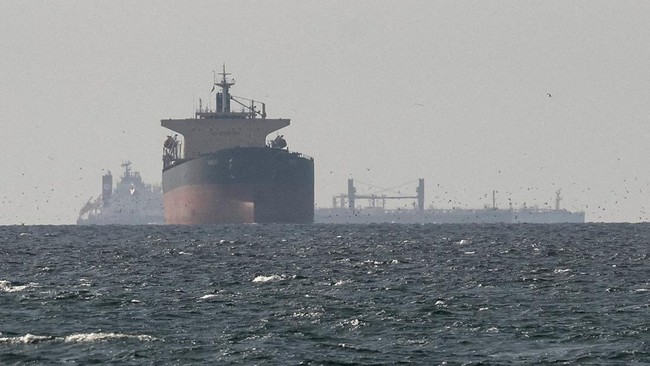
Jakarta — Oil prices surged more than 7% on Thursday as traders appeared unconvinced that the US government and allied nations’ strategic reserves could offset the massive supply shock triggered by conflict in the Middle East.
West Texas Intermediate crude jumped 7.5% to US$93.8 per barrel, whilst the global Brent benchmark traded approximately 7.74% higher at US$99.1 per barrel, even following the International Energy Agency’s (IEA) announcement of the largest emergency crude oil reserve release in its history.
On Wednesday, the IEA announced that its 32 member nations would release 400 million barrels of oil from emergency reserves, marking the largest coordinated withdrawal since the agency’s formation following the 1973 oil embargo.
The United States announced it would release 172 million barrels from its Strategic Petroleum Reserve, with Energy Secretary Chris Wright stating that deliveries could begin next week and would take approximately 120 days to complete.
The oil market disregarded the announcement as prices continued climbing, highlighting trader scepticism that such measures would bridge what analysts describe as a supply gap should flows through the Strait of Hormuz remain disrupted.
“Current prices are still in panic mode. There is a lot of emotion, fear, and uncertainty priced into the figures we are seeing,” said Pavel Molchanov, senior investment strategist at Raymond James, as quoted by CNBC International on Thursday, 12 March 2026.
The record-breaking IEA strategic stock release would add much-needed volume to the market, though it would only cover roughly one-quarter of the estimated 20 million barrel-per-day supply gap caused by Strait of Hormuz closure, according to Saul Kavonic, energy analyst at MST Marquee.
“However, the IEA’s decision also signals how acute the oil shortage risk is, indicating that the IEA does not expect the conflict to end soon, and the stock withdrawal now will need to be replaced later, signalling higher prices even after the war ends,” he told CNBC.
Approximately one-fifth of global oil supply passes through the Strait of Hormuz, which connects the Persian Gulf to global markets.
One key reason the market remains anxious is uncertainty about how quickly oil will reach the market, said industry veterans.
Although the IEA announcement represents an unprecedented intervention, the agency provided no details on how quickly individual nations would release their reserves or how the oil would be distributed.
“That is one of the major question marks—how long it will take for those 400 million barrels of oil to physically reach the market,” said Molchanov.
“Four hundred million is a large figure… but this is the largest oil supply disruption at least since the 1970s, so we need a lot of oil, and we need it quickly,” he said.
Strategic reserves are held separately by each IEA member nation, meaning technical and logistical constraints could slow oil flows.
Molchanov estimated it would take 60 to 90 days before oil actually reaches the market—longer than traders hoped for immediate relief.