
Oil Prices Remain Elevated, Now At US$84 Per Barrel
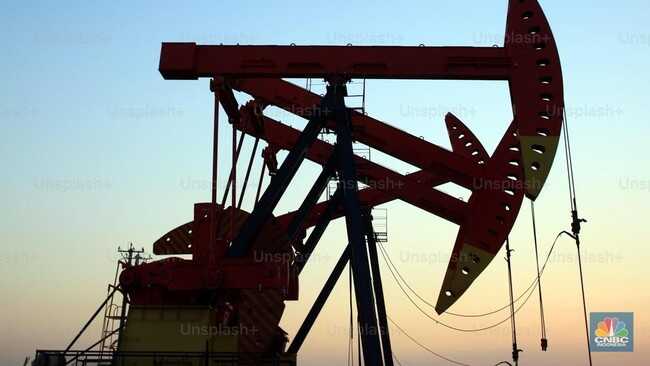
Oil prices remain elevated, now at US$84 per barrel according to Refinitiv data, as of 10:00 WIB on Friday (6 March 2026). Brent crude stood at US$84.22 per barrel, while West Texas Intermediate (WTI) traded at US$79.49 per barrel. This comes after a sharp rally in recent days; on 5 March 2026, Brent closed at US$85.41 per barrel and WTI at US$81.01 per barrel, among the highest levels since mid-2024. The rise followed energy markets’ reactions to global supply disruptions triggered by the conflict among the United States, Israel, and Iran.
Tensions are beginning to affect global energy distribution routes. A series of attacks on oil tanker ships were reported in the Gulf region, while shipping traffic through the Strait of Hormuz faced significant disruption. The Strait is a vital corridor for global energy trade, as around one-fifth of the world’s oil passes through its waters.
Shipping disruptions have directly impacted energy production in the region. Several producing countries have started to face storage constraints as tankers cannot sail out of the area. Iraq was reported to have cut its oil production to around 1.5 million barrels per day, while liquefied natural gas production was also affected because transport vessels cannot traverse the main shipping lanes.
On the demand side, supply uncertainty is also affecting the energy processing sector. Some refineries in the Middle East have reduced operating capacity, with some halting production temporarily due to supply and distribution constraints. This tightens the market for refined energy products such as diesel and other fuels.
Market pressure has also intensified as several importing countries took pre-emptive steps. Some industry players in Asia were reported to begin withholding fuel exports to safeguard domestic supplies amid the risk of global disruption.
The heated geopolitical situation makes market participants more sensitive to every development in the Middle East. As long as the main shipping routes remain disrupted and energy production has not returned to normal, oil price volatility is expected to stay high in the near term.
Against the backdrop of the price spike, the United States government is said to be considering measures to curb energy price gains, including potential intervention in the oil futures market. However, the effectiveness of such a policy remains debated among market participants, as energy price movements are ultimately influenced by the physical global supply conditions.
CNBC Indonesia
(emb/emb) Add as a preferred source on Google [Gambas:Video CNBC]