
Oil Prices Reach 100 Dollars, Shake Stock Markets
Oil prices continue to surge due to the US-Israel conflict against Iran and the increasingly volatile situation in the Middle East. The price of one barrel (159 litres) of Brent crude oil from the North Sea rose 29 percent in the early hours of Monday to $120 per barrel (2 million rupiah). On Monday morning, the price fell to $107 (1.8 million rupiah), but this remained 15 percent higher than trading levels on Friday.
The increase in US-based WTI oil was slightly steeper. WTI crude jumped 21 percent in the early hours of Monday to $120 per barrel (2 million rupiah) and last traded around $113 (1.9 million rupiah), approximately one-quarter higher than Friday evening’s price.
Based on both price benchmarks, oil prices have surged nearly 50 percent since the US-Israel war against Iran began on 28 February.
Indonesian Domestic Oil Prices Remain Stable
According to information released by Antara news agency, Indonesian domestic oil prices remained stable from the beginning of March 2026. The rise in global crude oil prices has not directly translated into increased domestic fuel prices in Indonesia. This is related to the government’s price formula determined through the Indonesian Crude Price (ICP) indicator, the US dollar exchange rate, and government fuel subsidies.
In an interview with Reuters on Monday (9/3), Indonesian Finance Minister Purbaya Yudhi Sadewa plans to absorb the impact of rising oil prices using the state budget and by increasing allocations to finance fuel subsidies.
Indonesia has budgeted 381.3 trillion rupiah for energy subsidies and compensation to state-owned energy company Pertamina and utility company PLN to maintain affordable fuel prices and electricity tariffs. This budget was based on assumptions of average Indonesian crude oil prices of $70 per barrel and an average rupiah exchange rate of 16,500 per dollar in 2026.
“Even if global oil prices rise, we will absorb the crisis with the budget and will do our best to control its impact,” said Finance Minister Purbaya.
In the Reuters interview, Purbaya added that if crude oil prices reach $90-$92 per barrel this year, the budget deficit could potentially widen to approximately 3.6 percent of GDP, above the government’s deficit ceiling of 3 percent of GDP.
In that scenario, he added that the government would cut spending to ensure compliance with the deficit limit.
Asian Stock Markets Plummet
Stock markets in East Asia plummeted due to the surge in oil prices. In Tokyo, the Nikkei index, comprising 225 major Japanese stocks, fell more than five percent at closing.
Significant losses also occurred in South Korea’s stock market. In Seoul, share prices fell nearly six percent. In Indonesia, the IHSG recorded a decline of approximately 3.27 percent at close, with nearly all stock sectors weakening—the transport and logistics sector crashed by 5.22 percent. Germany’s main index, the DAX, also began the week with sharp trading declines.
Asia is heavily dependent on oil and gas imports from the Middle East. “Japan and South Korea are massive industrial engines powered by imported oil. If crude oil prices surge, the impact is directly felt by companies,” explained analyst Stephen Innes from SPI Asset Management.
Japanese media reported that Tokyo is considering releasing its strategic oil reserves.
Strait of Hormuz Closure Impacts Production Decline
The Strait of Hormuz cannot remain closed indefinitely, yet it remains the core of oil market turmoil. Since US and Israeli attacks on Iran and Iran’s retaliatory strikes against Israel and Gulf states, virtually no ships can transit the strait located between the Persian Gulf and the Gulf of Oman.
Before the war, approximately one-fifth of global oil trade was transported daily through this strategic route. The route is also critical for liquefied natural gas transportation, for example from Qatar. Many investors worry that the situation in the Middle East will continue to deteriorate, disrupting and reducing oil production in the region.
Serious Consequences for Energy Supply
Last weekend, Qatar’s Energy Minister Saad al-Kaabi warned in an interview with the Financial Times of serious consequences from the Middle East war on energy supply from the region. He stated there is a possibility that all producers in the Persian Gulf may have to halt production within a few weeks. If this occurs, he said oil prices could rise to $150 per barrel.
Qatar is one of the world’s largest liquefied natural gas producers, supplying one-fifth of global liquefied natural gas demand. The war that erupted in late February caused the Arab country to halt its liquefied natural gas exports for several days.
Iran Attacks Oil Refinery in Bahrain
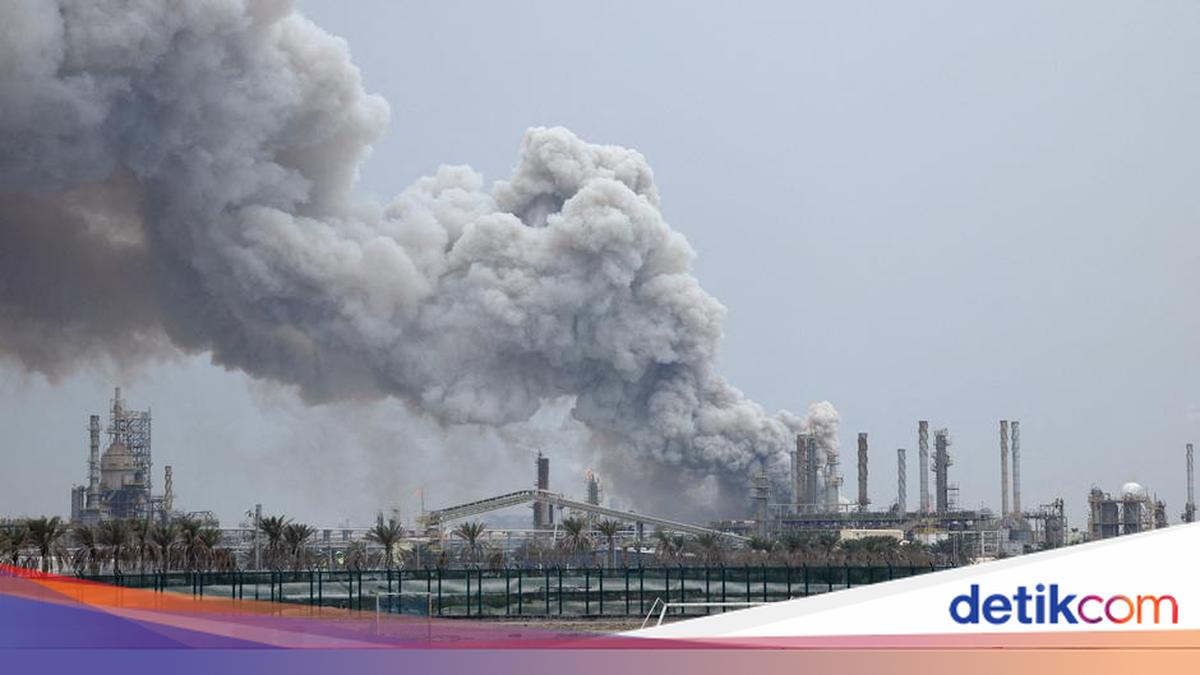
Following Iran’s latest attack on an oil refinery in Bahrain, state-owned oil and gas company Bapco Energies declared a “force majeure” condition regarding its energy shipments. This declaration legally exempts the party in the contract from delivery obligations.
In the attack, Bahrain’s large Maameer oil refinery complex was damaged. The facility had also been attacked by Iran days earlier. Bahrain is the smallest oil producer among Gulf states, but is part of the OPEC+ oil producers alliance.
Natural Gas Prices Rise 30 Percent
European natural gas prices also surged due to the Middle East war. On the Amsterdam exchange, TTF, the benchmark for European gas markets, showed a jump of up to 30 percent, reaching 69.70 euros (1.3 million rupiah) per megawatt hour (MWh). Afterwards, the price fell to 61.80 euros (1.2 million rupiah). This price was approximately 16 percent higher than Friday’s price (6/3).
With this latest price, European natural gas has increased significantly and represents a substantial jump.