
Oil Prices Prompt Foreign Investors to Flee with Funds from Asian Markets
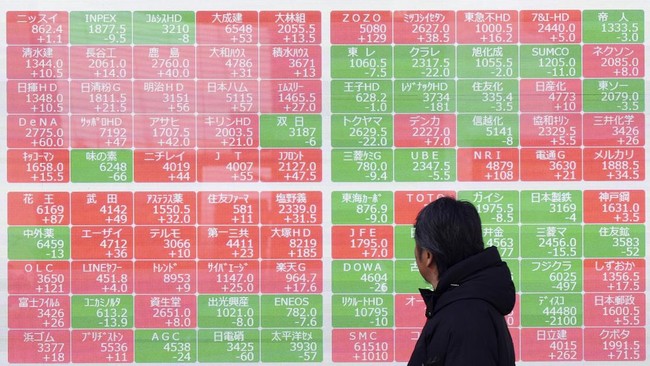
Foreign investors have recorded massive sell-offs in Asian stock markets amid a surge in oil prices triggered by conflicts in the Middle East, which are shaking the region’s economic outlook. This capital outflow marks the largest since the 2008 global financial crisis. Data from LSEG, cited by Reuters, indicates that foreign investors have offloaded a net US$50.45 billion worth of shares in several major Asian markets throughout March, including South Korea, Taiwan, Thailand, India, Indonesia, Vietnam, and the Philippines. This represents the largest monthly sell-off in those exchanges at least since 2008. The heaviest selling pressure occurred in Taiwan, with outflows reaching US$25 billion throughout March, also the highest level in at least 18 years. Meanwhile, global investors withdrew US$13.5 billion from South Korea and US$10.17 billion from the Indian stock market. Citing Investing.com on Friday (27/3/2026), Asian stock markets have been under pressure this month due to the worst energy supply disruptions in oil market history, with widespread impacts on the region as a major importer of energy from the Middle East. The oil price surge and high volatility have obscured economic growth prospects and triggered stagflation concerns in various Asian countries. Expectations of earlier interest rate hikes amid the energy price surge have forced investors to readjust projections for economic performance and stock markets. This situation has worsened sentiment towards risk assets in the region. Analysts warn that rising fuel and input costs due to prolonged conflicts could force several technology companies to delay expansions. Yet, technology stocks and the artificial intelligence trend had previously been the main drivers of Asian stock market performance last year. At the start of the conflict, South Korea’s Kospi index even plunged by up to 12% in a single day, marking the worst daily drop in history. At the same time, foreign capital outflows from emerging Asian markets are occurring at the fastest pace in the last four years due to concerns over the impact of oil shocks on growth and monetary policy.