
Oil Prices Poised to Surge, Indonesia Urged to Prepare Anticipatory Measures
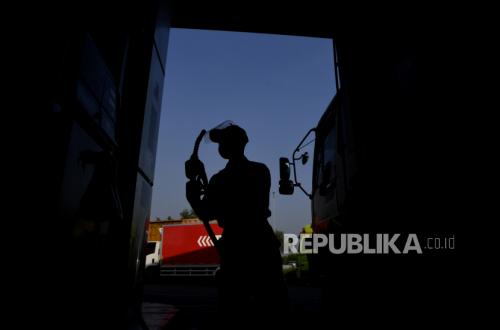
Director of the Energy Shift Institute, Putra Adhiguna, believes the government needs to evaluate and prepare strategies to address the potential surge in global oil prices. This follows the failure of negotiations between the United States (US) and Iran in Islamabad, Pakistan, on Sunday (12/4/2025). “The intention to hold subsidised fuel prices is commendable, but now we need to anticipate price factors because since the crisis began, there has been a significant difference between oil prices in the Middle East physical market and the circulating reference prices,” said Putra on Tuesday (14/4/2026). He explained that since the start of the conflict until now, there remains a gap between prices in the Middle East physical market and circulating reference prices, so global oil prices still have the potential to continue rising. This gap, he continued, is influenced by the movement of oil tanker ships from the Middle East that are still en route, so the impact of the latest prices has not yet fully reflected in the market. “Reference oil prices like Brent appear not yet to have internalised the changes because there is still a time lag from ships that have been sailing since early March,” he stated. Putra added that several countries have begun adjusting fuel prices gradually. Therefore, the Indonesian government needs to evaluate the energy budget posture in the State Revenue and Expenditure Budget (APBN). “Other countries are slowly trying to adjust prices gradually, so the government needs to continuously evaluate APBN capacity and be cautious not to shift the burden to Pertamina,” explained Putra. He projected that if the conflict does not subside, global oil prices could potentially breach the $110–120 per barrel range. Previously, Finance Minister Purbaya Yudhi Sadewa assured that subsidised fuel prices would not rise until the end of this year, despite the increase in global oil prices due to escalating geopolitical conflicts. However, he emphasised that the government cannot predict or guarantee the dynamics of non-subsidised fuel prices as they are not included in the government’s price control scheme. “We are prepared not to raise prices until the end of the year for subsidised fuel, assuming an average oil price of $100 per barrel until year-end, which has already been calculated,” said Purbaya during a working meeting with Commission XI of the House of Representatives (DPR RI) in Jakarta on Monday. He added that the government has prepared mitigation steps and calculated APBN resilience in various oil price scenarios, both at $80 per barrel and $100 per barrel.